
Historical · U.S. House · Florida · District 21
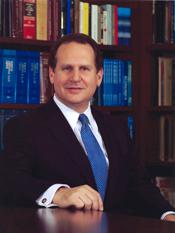
Lincoln Diaz-Balart
Former U.S. Representative · Florida District 21 · 1993–2011 · Republican
Lincoln Diaz-Balart represented Florida's District 21 in the United States House of Representatives (1993–2011) for the Republican party. The page below collects sourced biographical facts, term history, committee roles, and provenance for Diaz-Balart.
Bioguide ID: D000299
Key facts
- Full name
- Lincoln Diaz-Balart
- State
- Florida
- District
- District 21
- Party
- Republican
- House service
- 1993–2011
- First House term
- 1993
- Status
- Left office
- Current term ends
- —
- Born
- 1954
- Bioguide ID
- D000299
- Committee assignments
- —
- Dataset version
- 1.20260605
Biographical narrative
980 words · sourced from the Wikipedia REST extract
Lincoln Diaz-Balart is a former U.S. Representative who served Florida's 21st congressional district from 1993 until 2011. A member of the Republican Party, Diaz-Balart's political career spanned nearly two decades, during which he held various positions in both state and federal government. He is recognized for his involvement in key legislative initiatives, particularly those concerning immigration and U.S.-Cuba relations. After leaving Congress, he transitioned into private practice as an attorney and established a consulting firm in Miami, Florida.
Early life and career
Lincoln Diaz-Balart was born on August 13, 1954, in Havana, Cuba, into a politically active family. His father, Rafael Díaz-Balart, was a notable Cuban politician, while his mother, Hilda Caballero Brunet, contributed to his early exposure to political discourse. His familial connections extended to significant figures in Cuban history, including his aunt, Mirta Díaz-Balart, who was married to Fidel Castro, and his cousin, Dr. Fidel Ángel "Fidelito" Castro Díaz-Balart.
For his education, Diaz-Balart attended the American School of Madrid in Spain, which provided him with an international perspective. He later studied at New College of Florida and earned a Juris Doctor degree from Case Western Reserve University. Following his education, he practiced law in Miami, where he developed a foundation for his future political career.
Diaz-Balart's initial foray into politics occurred in 1982 when he ran for a seat in the Florida House of Representatives as a Democrat. He lost that election to Republican Humberto Cortina. Despite this setback, he remained active in the Democratic Party, serving as president of the Dade County Young Democrats and the Florida Young Democrats, and participating in the Dade County Democratic Party's executive committee.
In a significant political shift, Diaz-Balart, along with his wife and brother Mario, changed their party affiliation to Republican on April 24, 1985. This transition marked the beginning of his career as a Republican politician. He served in the Florida House of Representatives from 1986 to 1989 and then in the Florida Senate from 1989 until 1992. His experience in state politics laid the groundwork for his successful campaign for the U.S. House of Representatives.
House tenure
In 1992, Diaz-Balart won election to the U.S. House of Representatives, representing Florida's newly established 21st congressional district. His tenure in Congress lasted until January 3, 2011, during which he was re-elected multiple times. His initial victory was notable as he faced no opposition from other parties, securing his position in a Republican-leaning district.
Throughout his time in the House, Diaz-Balart was involved in various legislative efforts and served on several committees. He was a member of the Committee on Rules, where he chaired the Subcommittee on Legislative and Budget Process from 2005 to 2007. Additionally, he served on the Committee on Homeland Security and chaired the Subcommittee on Rules from 2003 to 2005. His role in these committees allowed him to influence significant legislative processes.
Diaz-Balart's voting record was generally considered moderate by Republican standards. He held a lifetime rating of 73 from the American Conservative Union, reflecting a blend of conservative and moderate positions. Notably, he was one of only three Republican incumbents who did not sign the Republican Contract with America in 1994, citing concerns about provisions that would affect legal immigrants' access to federal programs.
His legislative focus included immigration reform, where he was a sponsor of the DREAM Act, which aimed to facilitate access to post-secondary education for undocumented students. He also played a significant role in U.S.-Cuba relations, advocating for policies that aligned with the interests of the Cuban-American community. Diaz-Balart was a member of the Congressional Cuba Democracy Caucus and was instrumental in the passage of the codification of the U.S. embargo against Cuba in 1996, which mandated the release of political prisoners and the establishment of multi-party elections in Cuba.
In addition to his work on immigration and Cuba, Diaz-Balart was involved in various other legislative initiatives. He voted against the Federal Marriage Amendment in 2006 and supported the Matthew Shepard and James Byrd, Jr. Hate Crimes Prevention Act in 2009, which expanded federal hate crime laws. He also opposed the "Don't Ask, Don't Tell" policy regarding openly gay service members in the military, voting for its repeal in December 2010.
Legislative focus and committees
During his congressional career, Diaz-Balart's legislative focus encompassed a range of issues, with a particular emphasis on immigration reform and U.S.-Cuba relations. His involvement in the Cuban-American community and advocacy for Cuban democracy were defining aspects of his political identity. He actively participated in efforts to influence U.S. policy towards Cuba, reflecting the interests and concerns of his constituents.
Diaz-Balart's role in the House included significant committee assignments that allowed him to shape policy on critical issues. His leadership positions on the Committee on Rules and the Committee on Homeland Security provided him with platforms to advocate for his legislative priorities. His chairmanship of the Subcommittee on Legislative and Budget Process further underscored his influence in shaping budgetary and legislative processes.
In the context of the 2008 financial crisis, Diaz-Balart expressed his opposition to the Emergency Economic Stabilization Act, arguing against the use of taxpayer funds to bail out financial institutions. His stance on healthcare was also notable; he publicly criticized the Patient Protection and Affordable Care Act, characterizing it as detrimental to the United States.
Throughout his tenure, Diaz-Balart maintained a focus on issues affecting his constituents, balancing his legislative responsibilities with the interests of the communities he represented. His ability to navigate complex political landscapes and advocate for diverse issues contributed to his long-standing presence in Congress.
After retiring from Congress in 2011, Diaz-Balart transitioned to private practice, establishing a law firm and a consulting business in Miami. His departure from public office marked the end of a significant chapter in his political career, but his influence on legislative matters, particularly concerning immigration and U.S.-Cuba relations, remains a notable aspect of his legacy.
Notable legislation
Sponsored and co-sponsored legislation for Lincoln Diaz-Balart is pending operator curation. The biographical narrative above carries the same provenance trail until per-bill rows are written.
Sources
- [1]https://en.wikipedia.org/wiki/Lincoln_D%C3%ADaz-BalartWikipedia · retrieved 2026-06-05
Notable quotes
Sourced quotes for Lincoln Diaz-Balart are pending operator curation. Narrative-scope provenance remains attached below.
Sources
- [1]https://en.wikipedia.org/wiki/Lincoln_D%C3%ADaz-BalartWikipedia · retrieved 2026-06-05
Key positions
Curated policy positions for Lincoln Diaz-Balart are pending operator review. The biographical narrative above carries the same provenance trail until per-topic positions are written.
Sources
- [1]https://en.wikipedia.org/wiki/Lincoln_D%C3%ADaz-BalartWikipedia · retrieved 2026-06-05
Terms served
- 1993–1995U.S. House · Term 1 · Republican
- 1995–1997U.S. House · Term 2 · Republican
- 1997–1999U.S. House · Term 3 · Republican
- 1999–2001U.S. House · Term 4 · Republican
- 2001–2003U.S. House · Term 5 · Republican
- 2003–2005U.S. House · Term 6 · Republican
- 2005–2007U.S. House · Term 7 · Republican
- 2007–2009U.S. House · Term 8 · Republican
- 2009–2011U.S. House · Term 9 · Republican
Sources & provenance
Every attributable claim above carries a per-section [N] marker that resolves to the corresponding URL below. Each entry records the upstream provider, the canonical URL, and the timestamp at which the source was retrieved by the ingest pipeline.
Key facts
- https://bioguide.congress.gov/search/bio/D000299bioguide · retrieved 2026-06-05
- http://www.house.gov/diaz-balarthouse.gov · retrieved 2026-06-05
Biographical narrative
- https://en.wikipedia.org/wiki/Lincoln_D%C3%ADaz-Balartwikipedia · retrieved 2026-06-05
Find your representative
Every U.S. state elects representatives by district. Browse Florida’s delegation, the full former-representative roster, or explore the role and term length.
Related on The Candidate
- Augustus MaxwellFormer U.S. Representative · Florida District 1 · DemocraticOpen
- Charles HamiltonFormer U.S. Representative · Florida District 1 · RepublicanOpen
- Chester McMullenFormer U.S. Representative · Florida District 1 · DemocraticOpen
- Courtney CampbellFormer U.S. Representative · Florida District 1 · DemocraticOpen
- Republican PartyFederal candidates and office holders on the Republican line.Open
- Representatives from FloridaEvery former U.S. Representative who has represented Florida.Open