
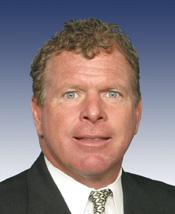
Historical · U.S. House · Florida · District 24
Tom Feeney
Former U.S. Representative · Florida District 24 · 2003–2009 · Republican
Tom Feeney represented Florida's District 24 in the United States House of Representatives (2003–2009) for the Republican party. The page below collects sourced biographical facts, term history, committee roles, and provenance for Feeney.
Bioguide ID: F000447
Key facts
- Full name
- Tom Feeney
- State
- Florida
- District
- District 24
- Party
- Republican
- House service
- 2003–2009
- First House term
- 2003
- Status
- Left office
- Current term ends
- —
- Born
- 1958
- Bioguide ID
- F000447
- Committee assignments
- —
- Dataset version
- 1.20260605
Biographical narrative
911 words · sourced from the Wikipedia REST extract
Thomas Charles Feeney III, commonly known as Tom Feeney, is a former American politician who served as a U.S. Representative for Florida's 24th congressional district from 2003 until 2009. A member of the Republican Party, Feeney's political career includes notable positions in both state and federal legislatures, where he was recognized for his conservative viewpoints and legislative initiatives. His tenure in Congress concluded when he was defeated in the 2008 election by Democrat Suzanne Kosmas.
Early life and career
Tom Feeney was born on May 21, 1958, in Abington, Pennsylvania, a suburb of Philadelphia. He pursued higher education at Penn State University, where he earned a degree in 1980. Following his undergraduate studies, Feeney attended the University of Pittsburgh School of Law, obtaining his Juris Doctor degree in 1983. After completing his education, he relocated to Oviedo, Florida, a suburb of Orlando, where he established a private law practice.
Feeney's political career began in the early 1990s when he was elected to the Florida House of Representatives in 1990, representing Seminole County as a Republican. During his time in the Florida legislature, he served two terms before running for the position of lieutenant governor in 1994 as the running mate of Jeb Bush. Although the Bush-Feeney ticket narrowly lost the election, Feeney continued his political involvement by joining the James Madison Institute, a conservative think tank, as a director.
In 1996, Feeney returned to the Florida House and was elected Speaker of the House in 2000. His leadership during this period brought him into the national spotlight, particularly during the contentious 2000 presidential election. Feeney played a significant role in the certification of Florida's Republican presidential electors amidst the uncertainty surrounding the election results between George W. Bush and Al Gore. His actions, along with those of other Republican leaders, were aimed at ensuring Florida's electoral votes were not disregarded during the election process.
House tenure
Feeney's transition to the U.S. House of Representatives occurred after Florida gained two additional congressional districts following the 2000 census. He was elected to represent Florida's 24th congressional district in 2002, a district that encompassed much of his previous state House territory. His initial election to Congress was successful, and he was re-elected unopposed in 2004. In the 2006 election, he secured approximately 58% of the vote, demonstrating a solid base of support within his district.
Throughout his time in the House, Feeney was known for his conservative stance on various issues. He was considered one of the more conservative members of Congress and actively sought to align legislation with conservative principles. Feeney developed a "Principles Card" while serving as Speaker of the Florida House, which he later adapted into a "Conservative Check Card" for his colleagues in Congress. This tool was designed to help fellow Republicans evaluate proposed legislation against their conservative values.
Feeney's congressional career was marked by his advocacy for a federal prohibition on online gambling. He was involved in various legislative efforts to restrict internet gambling, including co-sponsoring the Internet Gambling Prohibition and Enforcement Act in 2006 and voting in favor of related measures in subsequent years. His opposition to the expansion of online gambling was a consistent theme throughout his time in office.
Despite his close ties to the Bush administration, Feeney diverged from the White House on certain issues, notably opposing the Medicare reform package of 2003. He expressed concerns about the financial implications of the proposed prescription drug benefit for seniors. Additionally, he was a founding member of Washington Waste Watchers, a group focused on monitoring government spending.
Feeney's tenure in the House also included involvement in various committees. He served on the Financial Services Committee, where he participated in subcommittees related to capital markets, insurance, and consumer credit. He was also a member of the Judiciary Committee, contributing to discussions on courts, intellectual property, and commercial law. His role as the ranking member of the Space and Aeronautics Subcommittee within the Committee on Science and Technology highlighted his interest in space-related issues.
Legislative focus and committees
Throughout his congressional career, Tom Feeney's legislative focus reflected his conservative ideology and commitment to specific policy areas. He was particularly active in issues related to taxation, government spending, and regulatory reform. His alignment with conservative organizations was evident in his receipt of accolades such as the "Taxpayer Superhero" award from Citizens Against Government Waste and a perfect score from Americans for Tax Reform.
Feeney's legislative actions included co-sponsoring a non-binding resolution aimed at limiting the influence of foreign law in federal courts, showcasing his commitment to upholding what he viewed as American legal principles. His engagement with the legal and judicial aspects of governance was further demonstrated through his work on the Judiciary Committee, where he participated in discussions surrounding antitrust issues and competition policy.
Despite his achievements, Feeney's career was not without controversy. He was named one of the "20 Most Corrupt Members of Congress" by Citizens for Responsibility and Ethics in Washington due to ethical concerns related to travel and gift rules, as well as undisclosed rental property ownership. These allegations were part of a broader scrutiny of his actions while in office, which persisted throughout his congressional tenure.
Feeney's time in the U.S. House of Representatives concluded with his defeat in the 2008 election, marking the end of his legislative career. His legacy includes a record of conservative policymaking and a commitment to principles that resonated with his constituents during his time in office.
Notable legislation
Sponsored and co-sponsored legislation for Tom Feeney is pending operator curation. The biographical narrative above carries the same provenance trail until per-bill rows are written.
Sources
- [1]https://en.wikipedia.org/wiki/Tom_FeeneyWikipedia · retrieved 2026-06-05
Notable quotes
Sourced quotes for Tom Feeney are pending operator curation. Narrative-scope provenance remains attached below.
Sources
- [1]https://en.wikipedia.org/wiki/Tom_FeeneyWikipedia · retrieved 2026-06-05
Key positions
Curated policy positions for Tom Feeney are pending operator review. The biographical narrative above carries the same provenance trail until per-topic positions are written.
Sources
- [1]https://en.wikipedia.org/wiki/Tom_FeeneyWikipedia · retrieved 2026-06-05
Terms served
- 2003–2005U.S. House · Term 1 · Republican
- 2005–2007U.S. House · Term 2 · Republican
- 2007–2009U.S. House · Term 3 · Republican
Sources & provenance
Every attributable claim above carries a per-section [N] marker that resolves to the corresponding URL below. Each entry records the upstream provider, the canonical URL, and the timestamp at which the source was retrieved by the ingest pipeline.
Key facts
- https://bioguide.congress.gov/search/bio/F000447bioguide · retrieved 2026-06-05
- http://www.house.gov/feeneyhouse.gov · retrieved 2026-06-05
Biographical narrative
- https://en.wikipedia.org/wiki/Tom_Feeneywikipedia · retrieved 2026-06-05
Find your representative
Every U.S. state elects representatives by district. Browse Florida’s delegation, the full former-representative roster, or explore the role and term length.
Related on The Candidate
- Succeeded by Suzanne KosmasLater holder of the Florida District 24 House seat · Democratic.Open
- Augustus MaxwellFormer U.S. Representative · Florida District 1 · DemocraticOpen
- Charles HamiltonFormer U.S. Representative · Florida District 1 · RepublicanOpen
- Chester McMullenFormer U.S. Representative · Florida District 1 · DemocraticOpen
- Courtney CampbellFormer U.S. Representative · Florida District 1 · DemocraticOpen
- Republican PartyFederal candidates and office holders on the Republican line.Open