
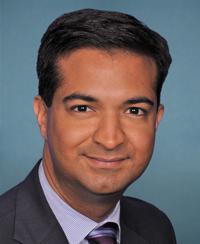
Historical · U.S. House · Florida · District 26
Carlos Curbelo
Former U.S. Representative · Florida District 26 · 2015–2019 · Republican
Carlos Curbelo represented Florida's District 26 in the United States House of Representatives (2015–2019) for the Republican party. The page below collects sourced biographical facts, term history, committee roles, and provenance for Curbelo.
Bioguide ID: C001107
Key facts
- Full name
- Carlos Curbelo
- State
- Florida
- District
- District 26
- Party
- Republican
- House service
- 2015–2019
- First House term
- 2015
- Status
- Left office
- Current term ends
- —
- Born
- 1980
- Bioguide ID
- C001107
- Committee assignments
- —
- Dataset version
- 1.20260605
Biographical narrative
931 words · sourced from the Wikipedia REST extract
Carlos Curbelo is a former American politician who served as the U.S. Representative for Florida's 26th congressional district from 2015 until 2019. A member of the Republican Party, Curbelo was known for his moderate stance on various issues and his bipartisan approach during his time in office. He was born to Cuban exiles in Miami and has a background in public administration, having previously served on the Miami-Dade County School Board before his election to Congress. Curbelo's congressional career concluded with a narrow defeat in the 2018 election.
Early life and career
Carlos Curbelo was born on March 1, 1980, in Miami, Florida. He is the son of Cuban exiles who fled their home country, which has influenced his political perspectives and advocacy throughout his career. Curbelo attended Belen Jesuit Preparatory School, a private Catholic school in Miami, where he received a foundational education. He later pursued higher education at the University of Miami, where he earned both a bachelor's degree and a master's degree in public administration. This academic background equipped him with the skills necessary for a career in public service and governance.
Before entering the U.S. House of Representatives, Curbelo served on the Miami-Dade County Public Schools board from 2010 to 2015. He was elected to this position after winning a seat that had been vacated by Ana Rivas Logan, representing the 7th district. His tenure on the school board focused on educational policy and administration, and he was succeeded by Lubby Navarro. In addition to his role on the school board, Curbelo founded Capitol Gains, a government and public relations firm, and served as the state director for former U.S. Senator George LeMieux of Florida, further solidifying his experience in political and public affairs.
House tenure
Curbelo's political career in the U.S. House of Representatives began in 2015 when he won election to represent Florida's 26th congressional district. His initial election came in the 2014 midterms, where he defeated incumbent Joe Garcia of the Democratic Party with a narrow margin, securing approximately 52% of the vote. Curbelo's victory was significant as it marked a shift in representation for a district that had been competitive in previous elections.
In the 2016 election, Curbelo sought re-election and faced Garcia again in a rematch. He was unopposed in the Republican primary and successfully retained his seat, receiving about 53% of the vote in the general election. His time in Congress was characterized by a moderate Republican stance, and he was recognized for his willingness to collaborate across party lines on various issues.
Curbelo's congressional career came to an end following the 2018 elections, where he faced a challenging campaign against Democrat Debbie Mucarsel-Powell. The race was one of the most closely watched contests in Florida, particularly as national Democratic organizations invested significant resources into the campaign. Ultimately, Curbelo was defeated, receiving approximately 49.1% of the vote compared to Mucarsel-Powell's 50.9%. His loss was reflective of broader trends in the political landscape, particularly in districts that had shifted toward Democratic candidates in the wake of the 2016 presidential election.
Legislative focus and committees
During his time in the U.S. House, Curbelo served on several key committees, including the Committee on Ways and Means, where he participated in discussions and decisions regarding taxation and economic policy. He was also a member of the Subcommittee on Human Resources and the Subcommittee on Oversight, which allowed him to engage in a range of legislative issues affecting social services and government accountability.
Curbelo was noted for his moderate approach to various legislative matters, often breaking ranks with his party on contentious issues such as climate change, immigration, and health care. His bipartisan efforts earned him recognition as one of the more collaborative members of Congress, and he was ranked as the fourth most bipartisan member during the first session of the 115th Congress by the Bipartisan Index. This index, created by The Lugar Center and the McCourt School of Public Policy, assesses congressional bipartisanship based on voting patterns and legislative behavior.
In November 2017, Curbelo sought to join the Congressional Hispanic Caucus, which is primarily composed of Democratic members. His application was met with resistance, as a majority of the caucus members voted against his admission, citing his support for certain Republican policies, including a vote to repeal the Affordable Care Act. The decision to exclude him from the caucus was met with criticism from some quarters, highlighting the complexities of party affiliation and representation within minority groups.
Throughout his congressional career, Curbelo sponsored various pieces of legislation, including the Affordable College Textbook Act and the Market Choice Act, reflecting his interests in education and economic policy. His voting record indicated a tendency to align with Republican positions, as he voted with his party approximately 86.3% of the time during the 115th Congress. However, he also supported initiatives aimed at addressing environmental concerns and renewable energy development, demonstrating a nuanced approach to policy-making.
Curbelo's political positions included support for anti-abortion legislation, opposition to income tax increases, and advocacy for lower taxes to stimulate economic growth. He also expressed support for same-sex marriage and increased American intervention in foreign conflicts, indicating a blend of traditional conservative values with more progressive stances on social issues.
In summary, Carlos Curbelo's tenure as a U.S. Representative was marked by a commitment to bipartisan cooperation and a focus on a range of legislative issues. His background in public administration and experience in local governance provided a foundation for his work in Congress, where he navigated the complexities of representing a diverse constituency in a politically competitive environment.
Notable legislation
Sponsored and co-sponsored legislation for Carlos Curbelo is pending operator curation. The biographical narrative above carries the same provenance trail until per-bill rows are written.
Sources
- [1]https://en.wikipedia.org/wiki/Carlos_CurbeloWikipedia · retrieved 2026-06-05
Notable quotes
Sourced quotes for Carlos Curbelo are pending operator curation. Narrative-scope provenance remains attached below.
Sources
- [1]https://en.wikipedia.org/wiki/Carlos_CurbeloWikipedia · retrieved 2026-06-05
Key positions
Curated policy positions for Carlos Curbelo are pending operator review. The biographical narrative above carries the same provenance trail until per-topic positions are written.
Sources
- [1]https://en.wikipedia.org/wiki/Carlos_CurbeloWikipedia · retrieved 2026-06-05
Terms served
- 2015–2017U.S. House · Term 1 · Republican
- 2017–2019U.S. House · Term 2 · Republican
Sources & provenance
Every attributable claim above carries a per-section [N] marker that resolves to the corresponding URL below. Each entry records the upstream provider, the canonical URL, and the timestamp at which the source was retrieved by the ingest pipeline.
Key facts
- https://bioguide.congress.gov/search/bio/C001107bioguide · retrieved 2026-06-05
- https://curbelo.house.govhouse.gov · retrieved 2026-06-05
Biographical narrative
- https://en.wikipedia.org/wiki/Carlos_Curbelowikipedia · retrieved 2026-06-05
Find your representative
Every U.S. state elects representatives by district. Browse Florida’s delegation, the full former-representative roster, or explore the role and term length.
Related on The Candidate
- Preceded by Joe GarciaEarlier holder of the Florida District 26 House seat · Democratic.Open
- Succeeded by Debbie Mucarsel-PowellLater holder of the Florida District 26 House seat · Democratic.Open
- Augustus MaxwellFormer U.S. Representative · Florida District 1 · DemocraticOpen
- Charles HamiltonFormer U.S. Representative · Florida District 1 · RepublicanOpen
- Chester McMullenFormer U.S. Representative · Florida District 1 · DemocraticOpen
- Courtney CampbellFormer U.S. Representative · Florida District 1 · DemocraticOpen