
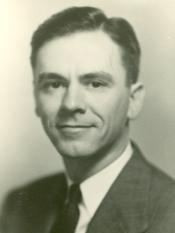
Historical · U.S. House · Florida · District 3
Charles Bennett
Former U.S. Representative · Florida District 3 · 1949–1993 · Democratic
Charles Bennett represented Florida's District 3 in the United States House of Representatives (1949–1993) for the Democratic party. The page below collects sourced biographical facts, term history, committee roles, and provenance for Bennett.
Bioguide ID: B000371
Key facts
- Full name
- Charles Bennett
- State
- Florida
- District
- District 3
- Party
- Democratic
- House service
- 1949–1993
- First House term
- 1949
- Status
- Left office
- Current term ends
- —
- Born
- 1910
- Bioguide ID
- B000371
- Committee assignments
- —
- Dataset version
- 1.20260605
Biographical narrative
1,214 words · sourced from the Wikipedia REST extract
Charles E. Bennett was an American politician who served as a member of the United States House of Representatives from Florida's 3rd congressional district from 1949 until 1993. A member of the Democratic Party, Bennett is recognized as the longest-serving member of either house of Congress in Florida's history. His tenure in Congress was marked by a commitment to ethical governance and a focus on defense policy, reflecting the interests of his constituents in Jacksonville, Florida.
Early life and career
Charles Edward Bennett was born on December 2, 1910, in Canton, New York. He spent his formative years in Florida, where he graduated from high school in Tampa. During his youth, Bennett was an active participant in the Boy Scouts of America, achieving the rank of Eagle Scout and later receiving the Distinguished Eagle Scout Award. His early involvement in leadership roles continued at the University of Florida, where he made history by serving as both the editor of the student newspaper, The Independent Florida Alligator, and as the president of the student body. During his time as editor, he expressed views advocating for isolationism and caution against U.S. involvement in foreign conflicts.
Bennett earned his bachelor's degree from the University of Florida in 1932 and subsequently enrolled in the university's law school. He graduated with a Juris Doctor in 1934 and began practicing law in Jacksonville. His political career commenced in 1941 when he was elected to the Florida state legislature. However, his legislative career was interrupted when he resigned in March 1942 to serve in the United States Army during World War II. Bennett served with distinction in New Guinea, where he fought as a guerrilla fighter against the Japanese occupation of the Philippines. During his service, he contracted polio, which resulted in paralysis of his legs for the remainder of his life. After 16 months of rehabilitation at a military hospital in Arkansas, he adapted to his disability by using leg braces, canes, or crutches.
Upon his discharge from the Army in 1947 with the rank of captain, Bennett returned to Jacksonville and resumed his legal career. He married Dorothy Jean in 1953, and the couple had four children: Lucinda, Charles Junior, James, and Bruce. Charles Junior tragically passed away in 1977 due to a drug overdose.
House tenure
Bennett's congressional career began when he was elected to represent Florida's 2nd congressional district in 1949. He was re-elected 21 additional times, serving in what was renumbered as the 3rd congressional district starting in 1967. Throughout his lengthy tenure, he rarely faced significant opposition, even as the political landscape shifted in favor of the Republican Party nationally. Notably, in 1972, he secured 82 percent of the vote against a nominal Republican challenger, despite the district supporting Richard Nixon by a substantial margin.
Bennett's commitment to ethical governance was evident early in his congressional career. In 1951, he began advocating for a code of ethics for government employees, which became known as The Ten Commandments. This initiative culminated in the adoption of the first formal code of ethics for government service in 1958, following the Sherman Adams affair. He also sponsored legislation in 1955 that led to the inclusion of the phrase "In God We Trust" on U.S. currency.
Throughout his time in Congress, Bennett's voting record reflected a complex relationship with civil rights legislation. He signed the 1956 Southern Manifesto and voted against several key civil rights acts in the late 1950s and 1960s, including the Civil Rights Acts of 1957, 1960, 1964, and 1968. However, he did support the Voting Rights Act of 1965, indicating a nuanced approach to the evolving civil rights landscape.
Bennett was known for his dedication to his constituents and his commitment to demonstrating that his physical handicap did not hinder his ability to serve. He achieved a record for the longest unbroken string of recorded roll call votes without being absent, showcasing his determination and work ethic. Each year, he returned his veteran's disability pension and Social Security checks to the U.S. Treasury, reflecting his belief in fiscal responsibility. He also donated leftover campaign funds to the National Park Service, further emphasizing his commitment to public service.
Despite his reputation for ethical governance, Bennett's principled stance sometimes led to tensions with his colleagues. He earned the nickname "Mr. Clean" due to his strong ethical beliefs and opposition to unofficial office accounts, outside income for members, and congressional pay raises. However, his efforts to establish a temporary committee on ethics in the House did not result in his appointment to the first formal ethics committee when it was created.
Bennett's long-standing association with defense policy was influenced by the significant military presence in the Jacksonville area. He served on the House Armed Services Committee for nearly his entire congressional career and was in line to become its chairman in 1985. However, he was ultimately defeated for the position by Les Aspin, whose views on defense policy aligned more closely with the Democratic Caucus at that time.
As Bennett approached the end of his congressional career, he announced his intention to run for a 23rd term in 1992 in the newly renumbered 4th District. However, he withdrew from the race when his wife fell ill in the spring of that year. His departure from the political scene allowed his Republican opponent, Tillie Fowler, to win the election easily. At the time of his retirement, Bennett was the second longest-serving member of the House, surpassed only by fellow Democrat Jamie Whitten.
Legislative focus and committees
Throughout his congressional tenure, Bennett's legislative focus encompassed a variety of issues, with a particular emphasis on ethical governance and defense policy. His early advocacy for a code of ethics for government employees laid the groundwork for ongoing discussions about integrity in public service. The adoption of the first formal code of ethics for government service in 1958 marked a significant milestone in his legislative career and reflected his commitment to transparency and accountability.
Bennett's sponsorship of the legislation that added "In God We Trust" to U.S. currency also highlighted his interest in the intersection of governance and national identity. This initiative resonated with many constituents and contributed to his reputation as a representative who was attuned to the values of his district.
His service on the House Armed Services Committee was a defining aspect of his legislative focus, given the importance of defense policy to his constituents in Jacksonville. Bennett's long-standing involvement in defense issues underscored his commitment to ensuring the security and well-being of the nation, particularly in light of the military presence in his district.
In addition to his legislative work, Bennett was a historical scholar who authored nine books on the history of north Florida. His contributions to historical research included works such as "General MacGregor: Hero or Rogue," "Laudonniere & Fort Caroline," and "Three Voyages and Twelve on the River St. Johns." His efforts in historical preservation were recognized through the establishment of the Fort Caroline National Memorial and the Timucuan Ecological and Historic Preserve.
Bennett's legacy is marked not only by his lengthy service in Congress but also by his commitment to ethical governance, defense policy, and historical scholarship. His contributions to the state of Florida and the nation continue to be recognized and remembered.
Notable legislation
Sponsored and co-sponsored legislation for Charles Bennett is pending operator curation. The biographical narrative above carries the same provenance trail until per-bill rows are written.
Sources
- [1]https://en.wikipedia.org/wiki/Charles_E._Bennett_(politician)Wikipedia · retrieved 2026-06-05
Notable quotes
Sourced quotes for Charles Bennett are pending operator curation. Narrative-scope provenance remains attached below.
Sources
- [1]https://en.wikipedia.org/wiki/Charles_E._Bennett_(politician)Wikipedia · retrieved 2026-06-05
Key positions
Curated policy positions for Charles Bennett are pending operator review. The biographical narrative above carries the same provenance trail until per-topic positions are written.
Sources
- [1]https://en.wikipedia.org/wiki/Charles_E._Bennett_(politician)Wikipedia · retrieved 2026-06-05
Terms served
- 1949–1951U.S. House · Term 1 · Democratic
- 1951–1953U.S. House · Term 2 · Democratic
- 1953–1955U.S. House · Term 3 · Democratic
- 1955–1957U.S. House · Term 4 · Democratic
- 1957–1959U.S. House · Term 5 · Democratic
- 1959–1961U.S. House · Term 6 · Democratic
- 1961–1963U.S. House · Term 7 · Democratic
- 1963–1965U.S. House · Term 8 · Democratic
- 1965–1967U.S. House · Term 9 · Democratic
- 1967–1969U.S. House · Term 10 · Democratic
- 1969–1971U.S. House · Term 11 · Democratic
- 1971–1973U.S. House · Term 12 · Democratic
- 1973–1975U.S. House · Term 13 · Democratic
- 1975–1977U.S. House · Term 14 · Democratic
- 1977–1979U.S. House · Term 15 · Democratic
- 1979–1981U.S. House · Term 16 · Democratic
- 1981–1983U.S. House · Term 17 · Democratic
- 1983–1985U.S. House · Term 18 · Democratic
- 1985–1987U.S. House · Term 19 · Democratic
- 1987–1989U.S. House · Term 20 · Democratic
- 1989–1991U.S. House · Term 21 · Democratic
- 1991–1993U.S. House · Term 22 · Democratic
Sources & provenance
Every attributable claim above carries a per-section [N] marker that resolves to the corresponding URL below. Each entry records the upstream provider, the canonical URL, and the timestamp at which the source was retrieved by the ingest pipeline.
Key facts
- https://bioguide.congress.gov/search/bio/B000371bioguide · retrieved 2026-06-05
- https://www.govtrack.us/congress/members/401363govtrack · retrieved 2026-06-05
Biographical narrative
- https://en.wikipedia.org/wiki/Charles_E._Bennett_(politician)wikipedia · retrieved 2026-06-05
Find your representative
Every U.S. state elects representatives by district. Browse Florida’s delegation, the full former-representative roster, or explore the role and term length.
Related on The Candidate
- Preceded by Millard CaldwellEarlier holder of the Florida District 3 House seat · Democratic.Open
- Succeeded by Ted YohoLater holder of the Florida District 3 House seat · Republican.Open
- Augustus MaxwellFormer U.S. Representative · Florida District 1 · DemocraticOpen
- Charles HamiltonFormer U.S. Representative · Florida District 1 · RepublicanOpen
- Chester McMullenFormer U.S. Representative · Florida District 1 · DemocraticOpen
- Courtney CampbellFormer U.S. Representative · Florida District 1 · DemocraticOpen