
Historical · U.S. House · Florida · District 4
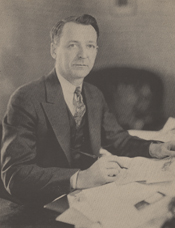
James Wilcox
Former U.S. Representative · Florida District 4 · 1933–1939 · Democratic
James Wilcox represented Florida's District 4 in the United States House of Representatives (1933–1939) for the Democratic party. The page below collects sourced biographical facts, term history, committee roles, and provenance for Wilcox.
Bioguide ID: W000455
Key facts
- Full name
- James Wilcox
- State
- Florida
- District
- District 4
- Party
- Democratic
- House service
- 1933–1939
- First House term
- 1933
- Status
- Left office
- Current term ends
- —
- Born
- 1890
- Bioguide ID
- W000455
- Committee assignments
- —
- Dataset version
- 1.20260605
Biographical narrative
943 words · sourced from the Wikipedia REST extract
James Wilcox was a notable U.S. Representative from Florida, serving in the House of Representatives during the 1930s. A member of the Democratic Party, he represented Florida's 4th congressional district and was known for his legislative contributions, particularly in the area of municipal bankruptcy. His tenure in Congress spanned from 1933 until 1939, during which he authored significant legislation aimed at addressing financial challenges faced by municipalities. After his congressional career, he returned to the practice of law and continued to be active in legal and civic matters until his death in 1956.
Early life and career
James Mark Wilcox was born on May 21, 1890, in Willacoochee, Georgia. He was the second son of Dr. Jefferson Taylor Wilcox and Marian Henson Wilcox. Wilcox's early education took place in public schools, where he laid the foundation for his future academic pursuits. He later attended Emory University, a prominent institution in Georgia, where he completed his undergraduate studies. Following his graduation from Emory, Wilcox transitioned into a career in education, working as a teacher before deciding to pursue a legal career.
To further his legal education, Wilcox enrolled at Mercer University, where he studied law. He graduated in 1910 and was admitted to the bar the same year, marking the beginning of his legal practice in Hazlehurst, Georgia. His legal career was complemented by his personal life; he married Lyde Christine Helm from Birmingham, Alabama, on November 27, 1910. The couple had two sons, James Mark Wilcox, Jr. and Joel C. Wilcox, Sr.
Wilcox's professional journey included serving as the solicitor of Jeff Davis County, Georgia, from 1911 until 1918. This role provided him with valuable experience in the legal system and public service. In 1919, he relocated to Brunswick, Georgia, and later moved to West Palm Beach, Florida, in 1925, where he continued his legal practice. His involvement in local governance included serving as the city attorney for West Palm Beach from 1928 until 1933. During this time, he also participated in President Herbert Hoover's Conference on Home Ownership in 1931, where he was a member of the taxation committee, further demonstrating his commitment to public service and civic engagement.
House tenure
Wilcox's political career took a significant turn when he was elected to the U.S. House of Representatives in 1932. He won the Democratic primary, defeating the incumbent, Ruth Bryan Owen, who had served two terms. His election marked the beginning of his congressional service, which lasted from March 4, 1933, to January 3, 1939. During his time in Congress, Wilcox was elected to three consecutive terms, representing the Seventy-third, Seventy-fourth, and Seventy-fifth Congresses.
Throughout his congressional tenure, Wilcox was involved in various legislative efforts. He is particularly recognized for authoring the Wilcox Municipal Bankruptcy Act, which became law in 1934. This legislation was significant as it allowed cities facing financial difficulties, such as West Palm Beach, to adjust their bonded indebtedness and avoid bankruptcy. The act provided a framework for municipalities to manage their debts more effectively, and it was later invoked in 1972 to assist New York City in navigating its own financial crisis.
In addition to the municipal bankruptcy legislation, Wilcox was also involved in military matters. In 1937, he authored a bill that recommended separating the Air Corps from the Army, advocating for the establishment of an independent air service. This initiative reflected the evolving nature of military organization during a time of significant global change.
Despite his legislative accomplishments, Wilcox chose not to seek re-election in 1938. Instead, he pursued the Democratic nomination for the United States Senate, although this campaign was ultimately unsuccessful. His decision to run for the Senate marked a shift in his political aspirations, but it also indicated his continued commitment to public service at a higher level.
Legislative focus and committees
During his time in the House of Representatives, Wilcox's legislative focus was primarily on issues related to municipal governance and financial management. His authorship of the Wilcox Municipal Bankruptcy Act underscored his interest in providing solutions for cities grappling with economic challenges. This act was particularly relevant during the Great Depression, a period marked by widespread financial instability and hardship for many municipalities across the United States.
Wilcox's involvement in the taxation committee of President Hoover's Conference on Home Ownership also highlighted his engagement with economic issues, particularly those affecting home ownership and municipal finance. His work in this area reflected a broader concern for the economic well-being of his constituents and the need for effective governance during a time of economic distress.
In addition to his legislative initiatives, Wilcox's views on social issues, particularly concerning race, were evident during congressional discussions. He expressed concerns about maintaining wage disparities among races in the context of the Fair Labor Standards Act of 1937. His perspective on this issue was shaped by the socio-economic dynamics of the South, where he believed that federal intervention could disrupt established practices regarding labor and wages.
After his congressional career, Wilcox returned to the practice of law in Miami, Florida, where he continued to contribute to the legal community. He later served as the attorney for the Dade County Port Authority and the Greater Miami Traffic Association from 1945 until his passing. Wilcox died on February 3, 1956, at his farm in White Springs, Florida. He was interred at Woodlawn Park Cemetery in Miami.
Wilcox's legacy includes his contributions to municipal law and governance, as well as his role in shaping legislation that addressed the financial challenges faced by cities. His name is also associated with Miami International Airport, which is officially designated as J. Mark Wilcox Field, commemorating his impact on the region.
Notable legislation
Sponsored and co-sponsored legislation for James Wilcox is pending operator curation. The biographical narrative above carries the same provenance trail until per-bill rows are written.
Sources
- [1]https://en.wikipedia.org/wiki/J._Mark_WilcoxWikipedia · retrieved 2026-06-05
Notable quotes
Sourced quotes for James Wilcox are pending operator curation. Narrative-scope provenance remains attached below.
Sources
- [1]https://en.wikipedia.org/wiki/J._Mark_WilcoxWikipedia · retrieved 2026-06-05
Key positions
Curated policy positions for James Wilcox are pending operator review. The biographical narrative above carries the same provenance trail until per-topic positions are written.
Sources
- [1]https://en.wikipedia.org/wiki/J._Mark_WilcoxWikipedia · retrieved 2026-06-05
Terms served
- 1933–1935U.S. House · Term 1 · Democratic
- 1935–1937U.S. House · Term 2 · Democratic
- 1937–1939U.S. House · Term 3 · Democratic
Sources & provenance
Every attributable claim above carries a per-section [N] marker that resolves to the corresponding URL below. Each entry records the upstream provider, the canonical URL, and the timestamp at which the source was retrieved by the ingest pipeline.
Key facts
- https://bioguide.congress.gov/search/bio/W000455bioguide · retrieved 2026-06-05
- https://www.govtrack.us/congress/members/411612govtrack · retrieved 2026-06-05
Biographical narrative
- https://en.wikipedia.org/wiki/J._Mark_Wilcoxwikipedia · retrieved 2026-06-05
Find your representative
Every U.S. state elects representatives by district. Browse Florida’s delegation, the full former-representative roster, or explore the role and term length.
Related on The Candidate
- Preceded by Ruth OwenEarlier holder of the Florida District 4 House seat · Democratic.Open
- Succeeded by Pat CannonLater holder of the Florida District 4 House seat · Democratic.Open
- Augustus MaxwellFormer U.S. Representative · Florida District 1 · DemocraticOpen
- Charles HamiltonFormer U.S. Representative · Florida District 1 · RepublicanOpen
- Chester McMullenFormer U.S. Representative · Florida District 1 · DemocraticOpen
- Courtney CampbellFormer U.S. Representative · Florida District 1 · DemocraticOpen