
Historical · U.S. House · Florida · District 5
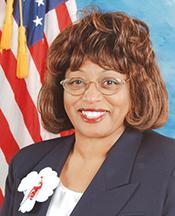
Corrine Brown
Former U.S. Representative · Florida District 5 · 1993–2017 · Democratic
Corrine Brown represented Florida's District 5 in the United States House of Representatives (1993–2017) for the Democratic party. The page below collects sourced biographical facts, term history, committee roles, and provenance for Brown.
Bioguide ID: B000911
Key facts
- Full name
- Corrine Brown
- State
- Florida
- District
- District 5
- Party
- Democratic
- House service
- 1993–2017
- First House term
- 1993
- Status
- Left office
- Current term ends
- —
- Born
- 1946
- Bioguide ID
- B000911
- Committee assignments
- —
- Dataset version
- 1.20260605
Biographical narrative
814 words · sourced from the Wikipedia REST extract
Corrine Brown is a former American politician who served as a U.S. Representative for Florida's 5th congressional district from 1993 until 2017. A member of the Democratic Party, Brown's political career spanned over two decades, during which she became known for her advocacy on various issues, particularly those affecting her constituents. Her tenure in Congress was marked by significant electoral victories, as well as challenges related to redistricting and legal issues that ultimately led to her departure from office.
Early life and career
Corrine Brown was born on November 11, 1946, in Jacksonville, Florida. She pursued higher education at Florida A&M University, where she earned a Bachelor of Science degree in 1969. Following her undergraduate studies, she continued her education at the same institution, obtaining a master's degree in 1971. Brown furthered her academic qualifications by earning an educational specialist degree from the University of Florida in 1974.
Before entering politics, Brown had a career in education, where she worked as a teacher and administrator. Her initial foray into the political arena came in 1980 when she ran for a seat in the Florida House of Representatives but was unsuccessful. However, two years later, she successfully secured a position in the Florida House, representing a newly drawn district. Over the next decade, she served in the Florida legislature, gaining experience and visibility that would later aid her congressional ambitions.
House tenure
Brown's congressional career began after the 1990 census, which led to the creation of a new congressional district in Florida. The 3rd congressional district was designed to encompass a majority African-American population, providing an opportunity for the election of Florida's first African-American representative since Reconstruction. In 1992, Brown entered the Democratic primary for this newly established district, facing several opponents, including notable candidate Andy Johnson. She won the primary and subsequently the general election, marking the beginning of her twelve terms in the U.S. House of Representatives.
Throughout her time in Congress, Brown faced various challenges, including significant changes to her district due to redistricting. In 1995, the United States Supreme Court ruled that the 3rd district was an unconstitutional racial gerrymander, leading to a reconfiguration of the district's boundaries. Despite these changes, Brown successfully won reelection in 1996, demonstrating her resilience as a candidate.
In the years that followed, Brown continued to represent her constituents, navigating the complexities of congressional politics. In 2012, following another round of redistricting, her district was renumbered as the 5th district, which retained much of its previous shape but was identified as one of the most gerrymandered districts in the nation. Legal challenges arose regarding the redistricting process, with claims that the new boundaries were drawn to favor the incumbent and the Republican Party. In 2015, the Florida Supreme Court ruled the redistricting plan violated the Fair Districts Amendment, prompting further changes to the district's configuration.
In 2016, Brown sought reelection in a district that had undergone substantial alterations, with over 62 percent of its constituents being new to her. However, her campaign was overshadowed by legal troubles, as she faced a federal indictment on multiple felony charges. Ultimately, she was defeated in the Democratic primary by Al Lawson, a former state senator, who went on to win the general election.
Legislative focus and committees
During her tenure in the House, Brown was involved in various legislative initiatives and served on multiple committees. Her voting record reflected her positions on several key issues, particularly those related to social justice, healthcare, and education. Brown was known for her strong support of reproductive rights, receiving high ratings from pro-choice organizations such as the Florida Alliance of Planned Parenthood Affiliates and NARAL Pro-Choice America.
In terms of specific legislation, Brown voted against several significant bills, including the Child Custody Protection Act and the Military Commissions Act. She did, however, support the Emergency Economic Stabilization Act of 2008, which aimed to address the financial crisis at that time. Her legislative focus often aligned with the interests of her constituents, particularly in areas affecting African-American communities and other marginalized groups.
Despite her legislative achievements, Brown's career was marred by controversy, particularly in the latter years. Following her defeat in the 2016 primary, she faced legal consequences stemming from her indictment. In December 2017, she was sentenced to five years in prison for fraud and ordered to pay restitution. Although her conviction was later overturned on appeal, she ultimately pleaded guilty to the charges in 2022 to avoid a retrial. The court sentenced her to the time already served, along with a restitution order to the Internal Revenue Service.
Brown's political journey reflects the complexities of serving in public office, particularly for a figure who navigated both significant electoral successes and serious legal challenges. Her long tenure in the U.S. House of Representatives left a notable mark on Florida's political landscape, particularly in the context of representation for African-American communities.
Notable legislation
Sponsored and co-sponsored legislation for Corrine Brown is pending operator curation. The biographical narrative above carries the same provenance trail until per-bill rows are written.
Sources
- [1]https://en.wikipedia.org/wiki/Corrine_BrownWikipedia · retrieved 2026-06-05
Notable quotes
Sourced quotes for Corrine Brown are pending operator curation. Narrative-scope provenance remains attached below.
Sources
- [1]https://en.wikipedia.org/wiki/Corrine_BrownWikipedia · retrieved 2026-06-05
Key positions
Curated policy positions for Corrine Brown are pending operator review. The biographical narrative above carries the same provenance trail until per-topic positions are written.
Sources
- [1]https://en.wikipedia.org/wiki/Corrine_BrownWikipedia · retrieved 2026-06-05
Terms served
- 1993–1995U.S. House · Term 1 · Democratic
- 1995–1997U.S. House · Term 2 · Democratic
- 1997–1999U.S. House · Term 3 · Democratic
- 1999–2001U.S. House · Term 4 · Democratic
- 2001–2003U.S. House · Term 5 · Democratic
- 2003–2005U.S. House · Term 6 · Democratic
- 2005–2007U.S. House · Term 7 · Democratic
- 2007–2009U.S. House · Term 8 · Democratic
- 2009–2011U.S. House · Term 9 · Democratic
- 2011–2013U.S. House · Term 10 · Democratic
- 2013–2015U.S. House · Term 11 · Democratic
- 2015–2017U.S. House · Term 12 · Democratic
Sources & provenance
Every attributable claim above carries a per-section [N] marker that resolves to the corresponding URL below. Each entry records the upstream provider, the canonical URL, and the timestamp at which the source was retrieved by the ingest pipeline.
Key facts
- https://bioguide.congress.gov/search/bio/B000911bioguide · retrieved 2026-06-05
- https://corrinebrown.house.govhouse.gov · retrieved 2026-06-05
Biographical narrative
- https://en.wikipedia.org/wiki/Corrine_Brownwikipedia · retrieved 2026-06-05
Find your representative
Every U.S. state elects representatives by district. Browse Florida’s delegation, the full former-representative roster, or explore the role and term length.
Related on The Candidate
- Preceded by Richard KellyEarlier holder of the Florida District 5 House seat · Republican.Open
- Succeeded by Al Lawson Jr.Later holder of the Florida District 5 House seat · Democratic.Open
- Augustus MaxwellFormer U.S. Representative · Florida District 1 · DemocraticOpen
- Charles HamiltonFormer U.S. Representative · Florida District 1 · RepublicanOpen
- Chester McMullenFormer U.S. Representative · Florida District 1 · DemocraticOpen
- Courtney CampbellFormer U.S. Representative · Florida District 1 · DemocraticOpen