
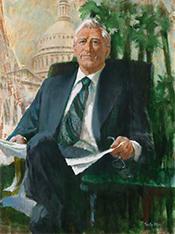
Historical · U.S. House · Florida · District 8
James Haley
Former U.S. Representative · Florida District 8 · 1953–1977 · Democratic
James Haley represented Florida's District 8 in the United States House of Representatives (1953–1977) for the Democratic party. The page below collects sourced biographical facts, term history, committee roles, and provenance for Haley.
Bioguide ID: H000041
Key facts
- Full name
- James Haley
- State
- Florida
- District
- District 8
- Party
- Democratic
- House service
- 1953–1977
- First House term
- 1953
- Status
- Left office
- Current term ends
- —
- Born
- 1899
- Bioguide ID
- H000041
- Committee assignments
- —
- Dataset version
- 1.20260605
Biographical narrative
957 words · sourced from the Wikipedia REST extract
James A. Haley was an American politician and World War I veteran who served as a U.S. Representative from Florida's 8th congressional district for twelve consecutive terms from 1953 to 1977. A member of the Democratic Party, Haley's political career was marked by his involvement in various legislative matters and his leadership roles within congressional committees. His life before entering politics included significant experiences in the military, business, and local governance.
Early life and career
James Andrew Haley was born on January 4, 1899, in Jacksonville, Alabama. He received his education in the public school system and later attended the University of Alabama. Following his academic pursuits, Haley began his professional career as an accountant in Sarasota, Florida, where he worked from 1920 until 1933. His early career laid the groundwork for his later ventures in business and politics.
During World War I, Haley enlisted in the United States Army, serving with Troop A of the Second Cavalry. He was deployed to France in April 1917, where he participated in combat operations. This military experience would later influence his public service and commitment to veterans' issues.
After the war, Haley transitioned into the business sector, becoming the general manager of the John Ringling estate from 1933 to 1943. His role in this position was significant, as he managed the affairs of one of the most prominent figures in American circus history. In December 1942, he married Aubrey Ringling, the widow of Richard T. Ringling, further intertwining his life with the Ringling legacy.
Haley continued to rise in the circus industry, serving as the first vice president of Ringling Circus and later as president and director of Ringling Bros. and Barnum & Bailey from 1943 to 1945. His tenure was marred by a tragic incident in 1944 when a fire at a circus performance in Hartford, Connecticut, resulted in the deaths of 169 people. As the highest-ranking executive present at the event, Haley faced legal consequences and, along with other officials, pleaded no contest to charges of involuntary manslaughter. He served eight months in prison before returning to Florida, where he received a pardon from Governor Millard F. Caldwell in 1945.
After his time with the circus, Haley engaged in newspaper publishing and later ventured into the general printing business. His diverse career experiences contributed to his understanding of both the private sector and public service.
House tenure
Haley's political journey began in earnest when he was elected as a member of the Florida House of Representatives, serving from 1949 to 1952. His involvement in local politics paved the way for his election to the U.S. House of Representatives. He was elected as a Democrat to the Eighty-third Congress and subsequently re-elected to eleven additional terms, serving from January 3, 1953, until January 3, 1977.
During his time in Congress, Haley was a signatory to the 1956 Southern Manifesto, a document that opposed the Supreme Court's ruling in Brown v. Board of Education, which mandated the desegregation of public schools. This affiliation with the Southern Manifesto reflected the prevailing attitudes of some Southern Democrats during that era regarding civil rights and education.
Haley's legislative career was characterized by his leadership roles, particularly as chairman of the Committee on Interior and Insular Affairs during the Ninety-third and Ninety-fourth Congresses. In this capacity, he played a significant role in shaping policies related to natural resources, public lands, and territories. His committee work allowed him to influence a range of issues that affected both his constituents in Florida and the broader national landscape.
Despite his long tenure and involvement in various legislative matters, Haley chose not to seek re-election for the Ninety-fifth Congress in 1976. His decision marked the end of a significant chapter in his political career, concluding over two decades of service in the U.S. House of Representatives.
Legislative focus and committees
Throughout his congressional career, Haley's legislative focus encompassed a variety of issues, reflecting both his personal interests and the needs of his constituents. His role as chairman of the Committee on Interior and Insular Affairs positioned him at the forefront of discussions regarding land use, environmental policy, and the management of federal territories. This committee oversight was crucial during a time when issues related to conservation and resource management were becoming increasingly prominent.
Haley's political alignment with the Democratic Party influenced his legislative priorities, particularly in the context of the civil rights movement and social issues. His signature on the Southern Manifesto indicated his alignment with certain Southern Democratic values, which often conflicted with the national Democratic Party's evolving stance on civil rights during the 1960s and 1970s.
In addition to his committee work, Haley was active in various initiatives that aimed to address the concerns of veterans, a reflection of his own military background. His experiences in World War I likely informed his advocacy for veterans' benefits and services, contributing to his reputation as a representative who understood the challenges faced by those who had served in the armed forces.
Haley's legacy extends beyond his legislative accomplishments. Following his death on August 6, 1981, in Sarasota, Florida, the United States Department of Veterans Affairs honored him by naming the James A. Haley VA Medical Center in Tampa after him. This facility serves as a testament to his commitment to veterans and his contributions to public service, ensuring that his impact continues to be felt long after his time in office.
In summary, James A. Haley's life and career reflect a complex interplay of military service, business acumen, and political engagement. His twelve terms in the U.S. House of Representatives were marked by significant legislative contributions and leadership roles, leaving a lasting imprint on Florida's political landscape and the broader context of American governance.
Notable legislation
Sponsored and co-sponsored legislation for James Haley is pending operator curation. The biographical narrative above carries the same provenance trail until per-bill rows are written.
Sources
- [1]https://en.wikipedia.org/wiki/James_A._HaleyWikipedia · retrieved 2026-06-05
Notable quotes
Sourced quotes for James Haley are pending operator curation. Narrative-scope provenance remains attached below.
Sources
- [1]https://en.wikipedia.org/wiki/James_A._HaleyWikipedia · retrieved 2026-06-05
Key positions
Curated policy positions for James Haley are pending operator review. The biographical narrative above carries the same provenance trail until per-topic positions are written.
Sources
- [1]https://en.wikipedia.org/wiki/James_A._HaleyWikipedia · retrieved 2026-06-05
Terms served
- 1953–1955U.S. House · Term 1 · Democratic
- 1955–1957U.S. House · Term 2 · Democratic
- 1957–1959U.S. House · Term 3 · Democratic
- 1959–1961U.S. House · Term 4 · Democratic
- 1961–1963U.S. House · Term 5 · Democratic
- 1963–1965U.S. House · Term 6 · Democratic
- 1965–1967U.S. House · Term 7 · Democratic
- 1967–1969U.S. House · Term 8 · Democratic
- 1969–1971U.S. House · Term 9 · Democratic
- 1971–1973U.S. House · Term 10 · Democratic
- 1973–1975U.S. House · Term 11 · Democratic
- 1975–1977U.S. House · Term 12 · Democratic
Sources & provenance
Every attributable claim above carries a per-section [N] marker that resolves to the corresponding URL below. Each entry records the upstream provider, the canonical URL, and the timestamp at which the source was retrieved by the ingest pipeline.
Key facts
- https://bioguide.congress.gov/search/bio/H000041bioguide · retrieved 2026-06-05
- https://www.govtrack.us/congress/members/404926govtrack · retrieved 2026-06-05
Biographical narrative
- https://en.wikipedia.org/wiki/James_A._Haleywikipedia · retrieved 2026-06-05
Find your representative
Every U.S. state elects representatives by district. Browse Florida’s delegation, the full former-representative roster, or explore the role and term length.
Related on The Candidate
- Succeeded by Bill McCollumLater holder of the Florida District 8 House seat · Republican.Open
- Augustus MaxwellFormer U.S. Representative · Florida District 1 · DemocraticOpen
- Charles HamiltonFormer U.S. Representative · Florida District 1 · RepublicanOpen
- Chester McMullenFormer U.S. Representative · Florida District 1 · DemocraticOpen
- Courtney CampbellFormer U.S. Representative · Florida District 1 · DemocraticOpen
- Democratic PartyFederal candidates and office holders on the Democratic line.Open