
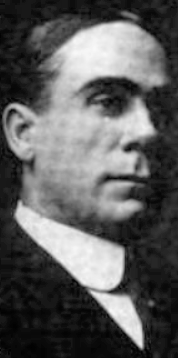
Historical · U.S. House · Iowa · District 1
Charles Kennedy
Former U.S. Representative · Iowa District 1 · 1907–1921 · Republican
Charles Kennedy represented Iowa's District 1 in the United States House of Representatives (1907–1921) for the Republican party. The page below collects sourced biographical facts, term history, committee roles, and provenance for Kennedy.
Bioguide ID: K000104
Key facts
- Full name
- Charles Kennedy
- State
- Iowa
- District
- District 1
- Party
- Republican
- House service
- 1907–1921
- First House term
- 1907
- Status
- Left office
- Current term ends
- —
- Born
- 1869
- Bioguide ID
- K000104
- Committee assignments
- —
- Dataset version
- 1.20260606
Biographical narrative
874 words · sourced from the Wikipedia REST extract
Charles Augustus Kennedy was a Republican politician who served as a U.S. Representative for Iowa's 1st congressional district from 1907 until 1921. Over the course of his political career, he was elected to seven consecutive terms in the House of Representatives, where he was known for his conservative political stance. His tenure coincided with a period of significant change in American politics, and he played a role in various legislative efforts during his time in office.
Early life and career
Charles Kennedy was born on March 24, 1869, in Montrose, Iowa. He pursued preparatory studies in his early years, which laid the groundwork for his future endeavors. Kennedy developed an interest in horticulture, which led him to engage in business as a nurseryman. This experience in horticulture likely influenced his understanding of agricultural issues, a significant aspect of Iowa's economy.
In addition to his business pursuits, Kennedy became involved in local politics. He served as the mayor of Montrose from 1890 to 1895, a position that allowed him to gain experience in governance and public service. Following his tenure as mayor, he was elected to the Iowa House of Representatives, where he served a single two-year term from 1903 to 1905. His time in the state legislature provided him with further insights into the political process and the needs of his constituents.
Kennedy's political career took a significant turn in 1906 when he was elected as a Republican to the Sixtieth Congress. His nomination was characterized by a political philosophy that aligned with the "stand-patters" faction of the Republican Party, which advocated for a conservative approach to governance. This faction stood in contrast to the more progressive elements within the party, reflecting the broader ideological divides that were present in American politics at the time.
House tenure
Kennedy's first term in the U.S. House of Representatives began on March 4, 1907. Over the next fourteen years, he was re-elected six times, serving a total of seven terms until his last term ended on March 3, 1921. His lengthy tenure in the House was marked by a commitment to the interests of his constituents in Iowa's 1st congressional district, which encompasses a region in southeastern Iowa.
During his time in Congress, Kennedy held several important positions within the House. He served as the chairman of the Committee on Mileage during both the Sixtieth and Sixty-first Congresses. This committee was responsible for overseeing matters related to the reimbursement of members of Congress for travel expenses incurred while conducting official business. Additionally, he chaired the Committee on Rivers and Harbors during the Sixty-sixth Congress, a role that involved addressing issues related to the nation's waterways and infrastructure.
Kennedy's involvement in these committees reflects his engagement with key issues of the time, particularly those related to transportation and infrastructure development. His leadership in these areas likely had implications for both local and national policies, as transportation infrastructure was crucial for economic growth and development during the early 20th century.
After serving in Congress, Kennedy transitioned to a career in banking, where he continued to be active in his community and the financial sector. He eventually retired from public life, concluding a lengthy and impactful career in both politics and business.
Legislative focus and committees
Throughout his congressional career, Kennedy's legislative focus was shaped by his political philosophy and the needs of his constituents. As a member of the Republican Party and a representative of the "stand-patters," he generally supported conservative policies that aligned with the interests of traditional Republican values. His committee assignments, particularly as chairman of the Committee on Mileage and the Committee on Rivers and Harbors, indicate a focus on practical issues that affected both the governance of Congress and the infrastructure of the nation.
Kennedy's role in the Committee on Mileage, for instance, would have involved considerations related to the financial aspects of congressional travel, which was a significant concern for lawmakers. His leadership in this area suggests that he was attentive to the operational needs of Congress and the importance of managing resources effectively.
In his capacity as chairman of the Committee on Rivers and Harbors, Kennedy was involved in discussions and decisions regarding the development and maintenance of the nation's waterways. This committee played a vital role in shaping policies that impacted transportation, commerce, and regional development. Given Iowa's agricultural economy, issues related to rivers and harbors would have been particularly relevant to his constituents, as efficient transportation routes were essential for the movement of goods and agricultural products.
Kennedy's legislative contributions during his time in the House reflected a commitment to addressing the practical needs of his district while adhering to the conservative principles of his political faction. His ability to navigate the complexities of congressional committees and engage with pressing issues of the day underscores his role as a dedicated public servant.
After concluding his service in Congress, Kennedy returned to Montrose, where he continued to be involved in local affairs until his retirement. He passed away on January 10, 1951, in Montrose, Iowa, and was interred in Montrose Cemetery. His legacy as a long-serving member of the U.S. House of Representatives remains a part of the historical narrative of Iowa's political landscape during the early 20th century.
Notable legislation
Sponsored and co-sponsored legislation for Charles Kennedy is pending operator curation. The biographical narrative above carries the same provenance trail until per-bill rows are written.
Sources
- [1]https://en.wikipedia.org/wiki/Charles_A._KennedyWikipedia · retrieved 2026-06-06
Notable quotes
Sourced quotes for Charles Kennedy are pending operator curation. Narrative-scope provenance remains attached below.
Sources
- [1]https://en.wikipedia.org/wiki/Charles_A._KennedyWikipedia · retrieved 2026-06-06
Key positions
Curated policy positions for Charles Kennedy are pending operator review. The biographical narrative above carries the same provenance trail until per-topic positions are written.
Sources
- [1]https://en.wikipedia.org/wiki/Charles_A._KennedyWikipedia · retrieved 2026-06-06
Terms served
- 1907–1909U.S. House · Term 1 · Republican
- 1909–1911U.S. House · Term 2 · Republican
- 1911–1913U.S. House · Term 3 · Republican
- 1913–1915U.S. House · Term 4 · Republican
- 1915–1917U.S. House · Term 5 · Republican
- 1917–1919U.S. House · Term 6 · Republican
- 1919–1921U.S. House · Term 7 · Republican
Sources & provenance
Every attributable claim above carries a per-section [N] marker that resolves to the corresponding URL below. Each entry records the upstream provider, the canonical URL, and the timestamp at which the source was retrieved by the ingest pipeline.
Key facts
- https://bioguide.congress.gov/search/bio/K000104bioguide · retrieved 2026-06-06
- https://www.govtrack.us/congress/members/406272govtrack · retrieved 2026-06-06
Biographical narrative
- https://en.wikipedia.org/wiki/Charles_A._Kennedywikipedia · retrieved 2026-06-06
Find your representative
Every U.S. state elects representatives by district. Browse Iowa’s delegation, the full former-representative roster, or explore the role and term length.
Related on The Candidate
- Preceded by Thomas HedgeEarlier holder of the Iowa District 1 House seat · Republican.Open
- Succeeded by William KoppLater holder of the Iowa District 1 House seat · Republican.Open
- Abby FinkenauerFormer U.S. Representative · Iowa District 1 · DemocraticOpen
- Augustus HallFormer U.S. Representative · Iowa District 1 · DemocraticOpen
- Benton HallFormer U.S. Representative · Iowa District 1 · DemocraticOpen
- Bernhart HennFormer U.S. Representative · Iowa District 1 · DemocraticOpen