
Historical · U.S. House · Iowa · District 1
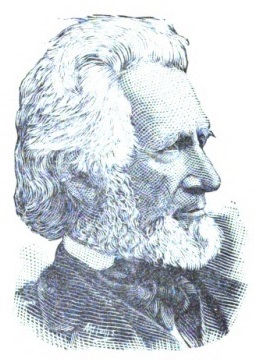
Daniel Miller
Former U.S. Representative · Iowa District 1 · 1849–1851 · Whig
Daniel Miller represented Iowa's District 1 in the United States House of Representatives (1849–1851) for the Whig party. The page below collects sourced biographical facts, term history, committee roles, and provenance for Miller.
Bioguide ID: M000721
Key facts
- Full name
- Daniel Miller
- State
- Iowa
- District
- District 1
- Party
- Whig
- House service
- 1849–1851
- First House term
- 1849
- Status
- Left office
- Current term ends
- —
- Born
- 1814
- Bioguide ID
- M000721
- Committee assignments
- —
- Dataset version
- 1.20260606
Biographical narrative
825 words · sourced from the Wikipedia REST extract
Daniel Miller was a notable figure in the early political landscape of Iowa, serving as a U.S. Representative for Iowa's 1st congressional district during a brief but significant period in the early 1850s. A member of the Whig Party, Miller's political career was marked by his involvement in a contentious congressional election that ultimately led to a special election, which he won. His legal career and subsequent political endeavors reflect the dynamic changes occurring in the United States during the antebellum period.
Early life and career
Daniel Miller was born on October 4, 1814, in Cumberland, Maryland. His family relocated to Wayne County, Ohio, in 1816, where he spent his formative years. Miller received his early education in public schools and later took on teaching roles, which provided him with valuable experience in leadership and communication. Following his teaching career, he ventured into journalism, working in a newspaper office in Wooster, Ohio. This experience likely honed his writing and public speaking skills, which would serve him well in his later political career.
In 1830, Miller moved to Pittsburgh, Pennsylvania, where he worked as a clerk in various stores. His interest in law led him to study the field, and he was admitted to the bar in 1839. Shortly thereafter, he began practicing law in what is now Fort Madison, Iowa, at that time part of the Iowa Territory. His legal career began to take shape as he became involved in the political landscape of the region. In 1840, he was elected to the Iowa territorial house of representatives, marking the beginning of his formal political involvement.
House tenure
Miller's tenure in the U.S. House of Representatives began in 1849 when he was nominated by the Whig Party to run against the incumbent Democratic Congressman William H. Thompson in the 1st congressional district of Iowa. The election was contentious, with Thompson initially declared the winner by the state's election canvassers. However, Miller contested the results, alleging that Thompson had absconded with the voting rolls, which led to a prolonged dispute over the election outcome.
The U.S. House of Representatives ultimately resolved the election contest more than two years after the initial election, determining that neither Thompson nor Miller was entitled to the seat. This decision necessitated a special election, which Miller won, allowing him to serve as the duly elected representative for Iowa's 1st congressional district from December 20, 1850, to March 3, 1851. His time in Congress was brief, but it was significant in that it highlighted the challenges and complexities of electoral politics during that era.
Following his congressional service, Miller returned to the practice of law, continuing to build his legal career. His experience in Congress likely influenced his subsequent political activities and engagements within the community.
Legislative focus and committees
During his time in the House, Miller's legislative focus was shaped by the political climate of the period, which was characterized by significant national debates over issues such as slavery, states' rights, and economic development. As a member of the Whig Party, he aligned with the party's platform, which generally advocated for internal improvements, a strong national bank, and the promotion of economic growth.
Although specific details regarding the committees on which Miller served or the legislation he sponsored are not extensively documented, his involvement in the political discourse of the time would have included engagement with the pressing issues facing the nation. The Whig Party, during Miller's tenure, was known for its opposition to the expansion of slavery into new territories, and it played a crucial role in the political realignment that would eventually lead to the formation of the Republican Party.
After his congressional service, Miller continued to engage in public life. In 1856, he served as a presidential elector on the Republican ticket, casting his vote for John C. Fremont, who had successfully carried Iowa. This involvement reflects Miller's adaptability to the evolving political landscape, as he transitioned from the Whig Party to align with the emerging Republican Party.
Miller's local political engagements included serving as mayor of Fort Madison in 1859 and later as mayor of Keokuk in 1873. His commitment to public service extended into the Iowa House of Representatives, where he served as a Democratic member in 1894. These roles demonstrated his sustained involvement in local governance and his dedication to the communities he served.
In conclusion, Daniel Miller's political career, though brief at the federal level, was marked by significant events that reflected the tumultuous nature of American politics in the mid-19th century. His legal background and political engagements at both the state and federal levels contributed to the shaping of Iowa's political landscape during a pivotal time in U.S. history. After retiring from active practice in 1895, he moved to Omaha, Nebraska, where he passed away on December 9, 1895. He was interred in Oakland Cemetery in Keokuk, leaving behind a legacy intertwined with the early development of Iowa's political identity.
Notable legislation
Sponsored and co-sponsored legislation for Daniel Miller is pending operator curation. The biographical narrative above carries the same provenance trail until per-bill rows are written.
Sources
- [1]https://en.wikipedia.org/wiki/Daniel_F._MillerWikipedia · retrieved 2026-06-06
Notable quotes
Sourced quotes for Daniel Miller are pending operator curation. Narrative-scope provenance remains attached below.
Sources
- [1]https://en.wikipedia.org/wiki/Daniel_F._MillerWikipedia · retrieved 2026-06-06
Key positions
Curated policy positions for Daniel Miller are pending operator review. The biographical narrative above carries the same provenance trail until per-topic positions are written.
Sources
- [1]https://en.wikipedia.org/wiki/Daniel_F._MillerWikipedia · retrieved 2026-06-06
Terms served
- 1849–1851U.S. House · Term 1 · Whig
Sources & provenance
Every attributable claim above carries a per-section [N] marker that resolves to the corresponding URL below. Each entry records the upstream provider, the canonical URL, and the timestamp at which the source was retrieved by the ingest pipeline.
Key facts
- https://bioguide.congress.gov/search/bio/M000721bioguide · retrieved 2026-06-06
- https://www.govtrack.us/congress/members/407702govtrack · retrieved 2026-06-06
Biographical narrative
- https://en.wikipedia.org/wiki/Daniel_F._Millerwikipedia · retrieved 2026-06-06
Find your representative
Every U.S. state elects representatives by district. Browse Iowa’s delegation, the full former-representative roster, or explore the role and term length.
Related on The Candidate
- Succeeded by Bernhart HennLater holder of the Iowa District 1 House seat · Democratic.Open
- Abby FinkenauerFormer U.S. Representative · Iowa District 1 · DemocraticOpen
- Augustus HallFormer U.S. Representative · Iowa District 1 · DemocraticOpen
- Benton HallFormer U.S. Representative · Iowa District 1 · DemocraticOpen
- Representatives from IowaEvery former U.S. Representative who has represented Iowa.Open
- All former U.S. RepresentativesEvery individual who has served in the U.S. House and since left office.Open