
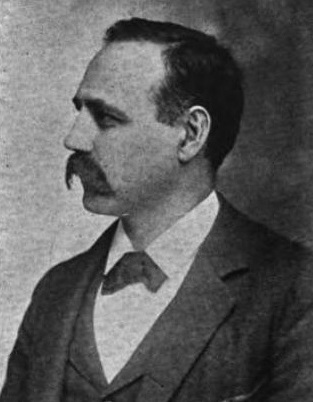
Historical · U.S. House · Iowa · District 1
John Seerley
Former U.S. Representative · Iowa District 1 · 1891–1893 · Democratic
John Seerley represented Iowa's District 1 in the United States House of Representatives (1891–1893) for the Democratic party. The page below collects sourced biographical facts, term history, committee roles, and provenance for Seerley.
Bioguide ID: S000226
Key facts
- Full name
- John Seerley
- State
- Iowa
- District
- District 1
- Party
- Democratic
- House service
- 1891–1893
- First House term
- 1891
- Status
- Left office
- Current term ends
- —
- Born
- 1852
- Bioguide ID
- S000226
- Committee assignments
- —
- Dataset version
- 1.20260606
Biographical narrative
839 words · sourced from the Wikipedia REST extract
John Seerley was a Democratic politician who served as a U.S. Representative for Iowa's 1st congressional district from 1891 to 1893. His political career was marked by a significant electoral victory during a Democratic surge in the early 1890s, although his tenure in Congress was relatively brief. Seerley was also a lawyer and educator, contributing to his community through various roles in public service and local governance. He was born in Illinois and moved to Iowa at a young age, where he would later establish his career in law and politics.
Early life and career
John Seerley was born on March 13, 1852, near Toulon, Illinois. His family relocated to Iowa in 1854 when he was just two years old, settling on a farm in Keokuk County. This early agricultural upbringing would influence his later interests in banking and agricultural pursuits. Seerley received his education in the common schools of Iowa, which laid the foundation for his academic and professional endeavors.
In 1875, Seerley graduated from the University of Iowa in Iowa City, a significant achievement that marked the beginning of his professional journey. Following his graduation, he took on the role of principal at Iowa City High School in 1876. During this period, he furthered his education by enrolling in the University of Iowa College of Law, where he completed his studies and graduated in 1877. Shortly thereafter, he was admitted to the bar and began his legal practice in Burlington, Iowa.
Seerley’s legal career progressed as he became involved in local governance. From 1885 to 1890, he served as the City Solicitor of Burlington, a position that allowed him to gain valuable experience in municipal law and public service. His involvement in the legal and educational sectors would later inform his political career, as he developed a reputation for his commitment to his community and his expertise in legal matters.
House tenure
Seerley's political career took a significant turn in the late 1880s when he sought to enter the U.S. House of Representatives. In 1888, he won the Democratic nomination to challenge the incumbent Republican Representative John H. Gear, who was running for re-election in Iowa's 1st congressional district. This election marked the beginning of a competitive political rivalry between the two men, as they would face each other in three consecutive elections.
Despite Seerley's efforts, he was unsuccessful in the 1888 general election, with Gear retaining his seat. However, the political landscape shifted dramatically in the 1890 elections, which were characterized by a Democratic landslide. Seerley capitalized on this momentum and successfully unseated Gear, winning his seat in the Fifty-second Congress. He served in the House from March 4, 1891, until March 3, 1893.
During his time in Congress, Seerley was one of six Democratic representatives from Iowa, reflecting the broader political trends of the time. His tenure was marked by the challenges faced by new members of Congress, particularly those from the Democratic Party, as they navigated the complexities of legislative processes and party dynamics. However, Seerley’s time in office was relatively short-lived, as he lost his bid for re-election in 1892 to Gear, who had returned to challenge him once again.
Legislative focus and committees
While specific details about Seerley's legislative focus and committee assignments during his time in Congress are not provided, it can be inferred that his background in law and local governance would have influenced his interests and priorities as a legislator. Given the era in which he served, it is likely that he engaged with issues pertinent to his constituents in Iowa, including agricultural policy, economic development, and local governance.
After his congressional tenure, Seerley returned to Burlington, where he resumed his legal practice. He continued to serve as City Solicitor from 1893 to 1895, reinforcing his commitment to public service and community involvement. In addition to his legal career, Seerley maintained an interest in banking and agricultural pursuits, reflecting the economic realities of his constituents and the region.
Seerley remained active in the Democratic Party long after his time in Congress. His engagement included serving as a delegate to the 1920 Democratic National Convention, which underscored his ongoing commitment to the party and its principles. This involvement allowed him to remain connected to the evolving political landscape and to participate in significant national discussions.
John Seerley passed away on February 23, 1931, in Burlington, Iowa. He was interred in Aspin Grove Cemetery, leaving behind a legacy of public service and community engagement. His family continued to honor his memory, with his son, Major John Joseph Seerley Jr., serving with distinction in both World War I and World War II, ultimately losing his life in the latter conflict. Seerley was also the grandfather of George Irving Bell, further extending his family's legacy.
In summary, John Seerley’s life and career reflect the experiences of a late 19th-century politician navigating the complexities of American governance. His contributions as a lawyer, educator, and public servant illustrate the interconnectedness of local and national politics during a transformative period in U.S. history.
Notable legislation
Sponsored and co-sponsored legislation for John Seerley is pending operator curation. The biographical narrative above carries the same provenance trail until per-bill rows are written.
Sources
- [1]https://en.wikipedia.org/wiki/John_J._SeerleyWikipedia · retrieved 2026-06-06
Notable quotes
Sourced quotes for John Seerley are pending operator curation. Narrative-scope provenance remains attached below.
Sources
- [1]https://en.wikipedia.org/wiki/John_J._SeerleyWikipedia · retrieved 2026-06-06
Key positions
Curated policy positions for John Seerley are pending operator review. The biographical narrative above carries the same provenance trail until per-topic positions are written.
Sources
- [1]https://en.wikipedia.org/wiki/John_J._SeerleyWikipedia · retrieved 2026-06-06
Terms served
- 1891–1893U.S. House · Term 1 · Democratic
Sources & provenance
Every attributable claim above carries a per-section [N] marker that resolves to the corresponding URL below. Each entry records the upstream provider, the canonical URL, and the timestamp at which the source was retrieved by the ingest pipeline.
Key facts
- https://bioguide.congress.gov/search/bio/S000226bioguide · retrieved 2026-06-06
- https://www.govtrack.us/congress/members/409731govtrack · retrieved 2026-06-06
Biographical narrative
- https://en.wikipedia.org/wiki/John_J._Seerleywikipedia · retrieved 2026-06-06
Find your representative
Every U.S. state elects representatives by district. Browse Iowa’s delegation, the full former-representative roster, or explore the role and term length.
Related on The Candidate
- Preceded by Benton HallEarlier holder of the Iowa District 1 House seat · Democratic.Open
- Succeeded by Samuel ClarkLater holder of the Iowa District 1 House seat · Republican.Open
- Abby FinkenauerFormer U.S. Representative · Iowa District 1 · DemocraticOpen
- Augustus HallFormer U.S. Representative · Iowa District 1 · DemocraticOpen
- Bernhart HennFormer U.S. Representative · Iowa District 1 · DemocraticOpen
- Democratic PartyFederal candidates and office holders on the Democratic line.Open