
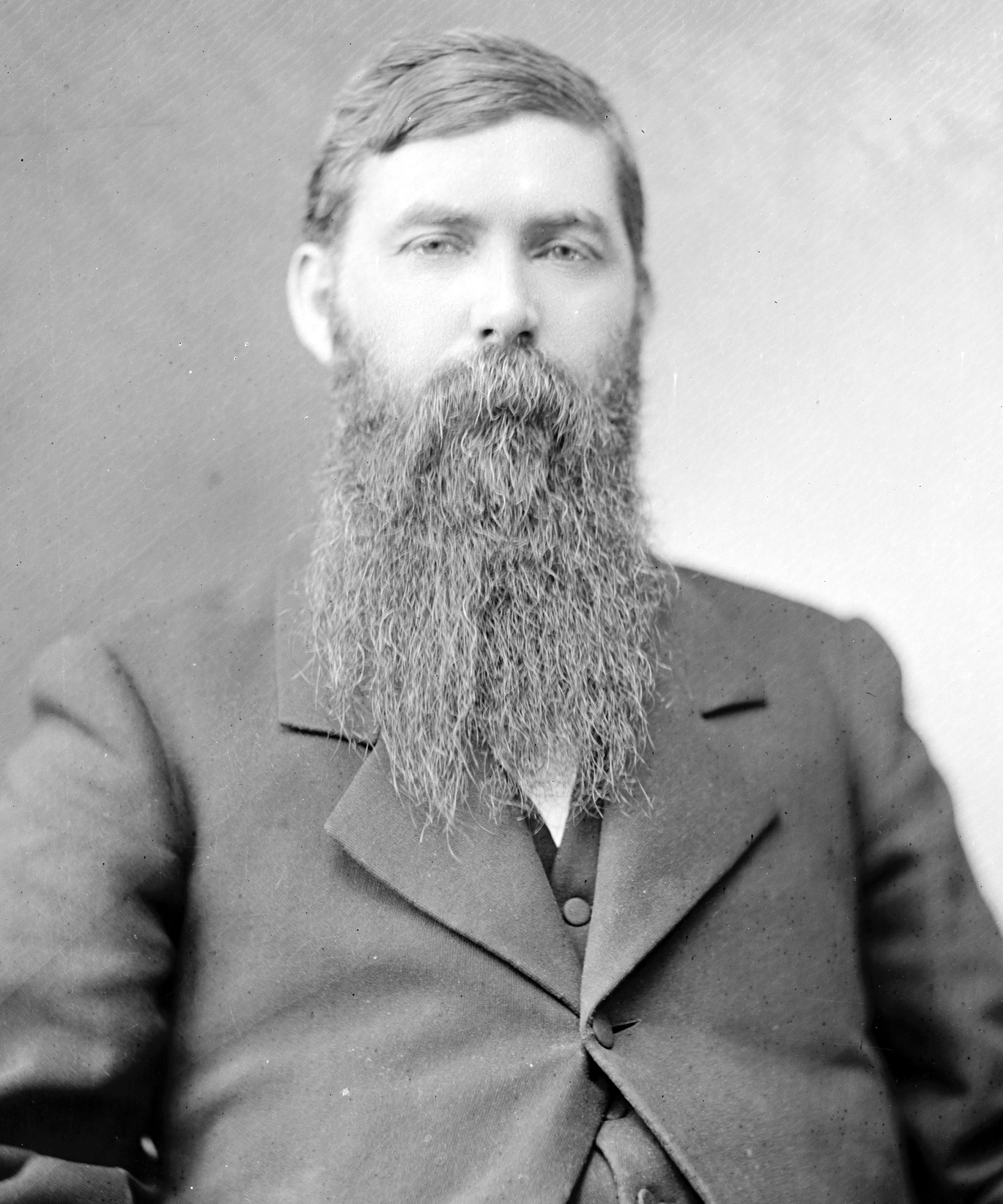
Historical · U.S. House · Iowa · District 1
Moses McCoid
Former U.S. Representative · Iowa District 1 · 1879–1885 · Republican
Moses McCoid represented Iowa's District 1 in the United States House of Representatives (1879–1885) for the Republican party. The page below collects sourced biographical facts, term history, committee roles, and provenance for McCoid.
Bioguide ID: M000348
Key facts
- Full name
- Moses McCoid
- State
- Iowa
- District
- District 1
- Party
- Republican
- House service
- 1879–1885
- First House term
- 1879
- Status
- Left office
- Current term ends
- —
- Born
- 1840
- Bioguide ID
- M000348
- Committee assignments
- —
- Dataset version
- 1.20260606
Biographical narrative
926 words · sourced from the Wikipedia REST extract
Moses McCoid was a prominent figure in American politics during the late 19th century, serving as a Republican U.S. Representative for Iowa's 1st congressional district. His political career was marked by three terms in the U.S. House of Representatives, where he contributed to the legislative process during a transformative period in American history. Prior to his congressional service, McCoid had a distinguished military career as an officer in the Union Army during the American Civil War and held various legal and political positions in Iowa.
Early life and career
Moses Ayers McCoid was born on November 5, 1840, near Bellefontaine, Ohio. His early education took place in local public schools, where he laid the groundwork for his future academic pursuits. McCoid later attended Washington College, which is now known as Washington & Jefferson College, located in Washington, Pennsylvania. This institution provided him with a solid foundation in the liberal arts and prepared him for his subsequent career in law and public service.
After completing his education, McCoid moved to Iowa, where he began studying law in Fairfield under the mentorship of James F. Wilson, who would later become a congressman and U.S. senator. McCoid was admitted to the bar in 1861, marking the beginning of his legal practice in Fairfield. His legal career was briefly interrupted by the outbreak of the Civil War, which prompted him to enlist in the Union Army.
On May 6, 1861, McCoid joined Company E of the 2nd Iowa Volunteer Infantry Regiment as a private. His military service was characterized by active participation in several significant battles, including Fort Donelson, Shiloh, Corinth, Bear Creek, Resaca, and the Oostanaula River. His dedication and leadership abilities led to his promotion to second lieutenant and later to the position of adjutant of his regiment. Following the conclusion of the Civil War, McCoid returned to Fairfield, where he resumed his legal practice and continued to build his professional reputation.
In addition to his legal work, McCoid became involved in local politics. He served as the district attorney for the sixth judicial district of Iowa in two separate terms, first in 1867 and again in 1871. His experience in the legal field and his growing interest in public service led him to seek a position in the Iowa Senate, where he served from 1872 until 1879. This period in the state legislature allowed him to gain valuable experience in governance and legislative processes, further preparing him for his future role in Congress.
House tenure
Moses McCoid's congressional career began when he was elected as a Republican to represent Iowa's 1st congressional district in the U.S. House of Representatives in 1878. His first term commenced on March 4, 1879, and he was subsequently re-elected for two additional terms, serving in the Forty-sixth, Forty-seventh, and Forty-eighth Congresses. During his time in the House, McCoid was involved in various legislative activities and contributed to discussions on a range of issues pertinent to his constituents and the nation.
Throughout his tenure, McCoid engaged with the political landscape of the time, which was characterized by significant changes and challenges. The post-Civil War era was marked by efforts to rebuild the nation, address the needs of veterans, and navigate the complexities of Reconstruction. As a representative from Iowa, McCoid was tasked with advocating for the interests of his district while also participating in broader national debates.
Despite his efforts and contributions, McCoid faced challenges in maintaining his position in Congress. In 1884, he sought the Republican renomination but was unsuccessful, losing to John S. Woolson. Woolson subsequently faced defeat in the general election against Democrat Benton Jay Hall. McCoid's congressional service concluded on March 3, 1885, after a total of three terms in office. His departure from Congress marked the end of a significant chapter in his political career, but it did not signify the end of his involvement in public life.
Legislative focus and committees
During his time in the U.S. House of Representatives, Moses McCoid was involved in various legislative initiatives and discussions that reflected the priorities and concerns of his constituents in Iowa. While specific details regarding the bills he sponsored or the committees he served on are not provided, it is known that representatives during this period often focused on issues such as economic development, infrastructure, and veterans' affairs, particularly in the context of post-war recovery and growth.
As a member of the Republican Party, McCoid aligned with the party's platform, which during the late 19th century emphasized economic expansion, support for business interests, and the promotion of policies that would benefit the Northern states, particularly those that had been loyal to the Union during the Civil War. His background as a lawyer and former military officer likely influenced his perspectives on legislation related to legal affairs, civil rights for veterans, and the integration of returning soldiers into civilian life.
After leaving Congress, McCoid returned to his legal practice in Fairfield, where he continued to contribute to his community and the legal profession. His post-congressional career allowed him to apply his legislative experience and legal expertise in a different capacity, further solidifying his role as a respected figure in Iowa.
Moses McCoid passed away on May 19, 1904, in Fairfield, Iowa. His legacy includes his contributions to the legal and political landscape of Iowa, as well as his service to the nation during a pivotal time in American history. He was interred in Evergreen Cemetery, where he is remembered for his dedication to public service and his role in shaping the policies of his time.
Notable legislation
Sponsored and co-sponsored legislation for Moses McCoid is pending operator curation. The biographical narrative above carries the same provenance trail until per-bill rows are written.
Sources
- [1]https://en.wikipedia.org/wiki/Moses_A._McCoidWikipedia · retrieved 2026-06-06
Notable quotes
Sourced quotes for Moses McCoid are pending operator curation. Narrative-scope provenance remains attached below.
Sources
- [1]https://en.wikipedia.org/wiki/Moses_A._McCoidWikipedia · retrieved 2026-06-06
Key positions
Curated policy positions for Moses McCoid are pending operator review. The biographical narrative above carries the same provenance trail until per-topic positions are written.
Sources
- [1]https://en.wikipedia.org/wiki/Moses_A._McCoidWikipedia · retrieved 2026-06-06
Terms served
- 1879–1881U.S. House · Term 1 · Republican
- 1881–1883U.S. House · Term 2 · Republican
- 1883–1885U.S. House · Term 3 · Republican
Sources & provenance
Every attributable claim above carries a per-section [N] marker that resolves to the corresponding URL below. Each entry records the upstream provider, the canonical URL, and the timestamp at which the source was retrieved by the ingest pipeline.
Key facts
- https://bioguide.congress.gov/search/bio/M000348bioguide · retrieved 2026-06-06
- https://www.govtrack.us/congress/members/407357govtrack · retrieved 2026-06-06
Biographical narrative
- https://en.wikipedia.org/wiki/Moses_A._McCoidwikipedia · retrieved 2026-06-06
Find your representative
Every U.S. state elects representatives by district. Browse Iowa’s delegation, the full former-representative roster, or explore the role and term length.
Related on The Candidate
- Preceded by Joseph StoneEarlier holder of the Iowa District 1 House seat · Republican.Open
- Succeeded by Benton HallLater holder of the Iowa District 1 House seat · Democratic.Open
- Abby FinkenauerFormer U.S. Representative · Iowa District 1 · DemocraticOpen
- Augustus HallFormer U.S. Representative · Iowa District 1 · DemocraticOpen
- Bernhart HennFormer U.S. Representative · Iowa District 1 · DemocraticOpen
- Republican PartyFederal candidates and office holders on the Republican line.Open