
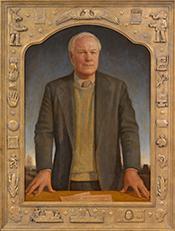
Historical · U.S. House · Iowa · District 2
Jim Leach
Former U.S. Representative · Iowa District 2 · 1977–2007 · Republican
Jim Leach represented Iowa's District 2 in the United States House of Representatives (1977–2007) for the Republican party. The page below collects sourced biographical facts, term history, committee roles, and provenance for Leach.
Bioguide ID: L000169
Key facts
- Full name
- Jim Leach
- State
- Iowa
- District
- District 2
- Party
- Republican
- House service
- 1977–2007
- First House term
- 1977
- Status
- Left office
- Current term ends
- —
- Born
- 1942
- Bioguide ID
- L000169
- Committee assignments
- —
- Dataset version
- 1.20260605
Biographical narrative
1,115 words · sourced from the Wikipedia REST extract
James A. Leach was a prominent American politician and academic who served as a U.S. Representative for Iowa's 2nd congressional district from 1977 until 2007. A member of the Republican Party, Leach was known for his moderate positions on various issues, particularly in fiscal policy, social matters, and foreign relations. His tenure in Congress spanned 15 terms, during which he held significant leadership roles, including chairing the House Committee on Banking and Financial Services and serving as a senior member of the House Committee on International Relations. After leaving Congress, Leach continued to contribute to public discourse through academic roles and leadership positions in various organizations.
Early life and career
James Albert Smith Leach was born on October 15, 1942, in Davenport, Iowa. He demonstrated early athletic prowess by winning the state wrestling championship in the 138-pound weight class while attending Davenport High School. Following his high school education, Leach pursued higher education at Princeton University, where he graduated in 1964 with an A.B. in politics. His senior thesis focused on contrasting the philosophies of John Locke and Karl Marx, reflecting his early interest in political theory. During his time at Princeton, he was also a member of The Ivy Club.
Leach furthered his education by obtaining a Master of Arts degree in Soviet studies from Johns Hopkins University in 1966. His academic pursuits led him to the London School of Economics, where he conducted additional research on Soviet affairs under the guidance of Leonard Schapiro, a noted expert in the field.
Before embarking on his political career, Leach worked as a staff member for U.S. Representative Donald Rumsfeld. In 1969, he served as an assistant to Rumsfeld, who had transitioned from Congress to become the Director of the Office of Economic Opportunity in the Nixon administration. Leach's early career included a role in the United States Foreign Service, where he represented the U.S. at significant international forums, including the Geneva Disarmament Conference and the United Nations General Assembly. His tenure in the Foreign Service ended in 1973 when he resigned in protest against the Nixon administration's actions during the Watergate scandal, specifically the Saturday Night Massacre.
After leaving the Foreign Service, Leach returned to Iowa, where he took over the management of a family business. His political career began in earnest when he was elected to the U.S. House of Representatives in 1976, defeating two-term incumbent Edward Mezvinsky.
House tenure
Leach's congressional career began in 1977, and he served in the House of Representatives for three decades until 2007. During this time, he became a notable figure among moderate Republicans, advocating for a range of issues that often placed him at odds with more conservative factions within his party. He chaired the Ripon Society and the Republican Mainstream Committee, both organizations focused on promoting moderate Republican ideals.
Throughout his 15 terms in office, Leach maintained a voting record that was generally conservative on fiscal issues, moderate on social matters, and progressive in foreign policy. He was particularly active in foreign affairs, serving as chair of the Arms Control and Foreign Policy Caucus, where he advocated for arms control measures, including a Comprehensive Test Ban Treaty. He was also instrumental in leading discussions on nuclear disarmament, being one of the first to bring such topics to the House floor.
Leach's approach to foreign policy was characterized by a commitment to multilateralism and international cooperation. He supported full funding for U.S. obligations to the United Nations and advocated for the U.S. to re-enter UNESCO. He opposed the unilateral military actions of the United States, particularly during the Iran-Contra affair, and was critical of the authorization for military force in Iraq in 2002, voting against it despite being a member of the Republican Party.
In addition to his foreign policy initiatives, Leach was known for his moderate stance on social issues. He supported abortion rights with certain limitations and advocated for stem cell research. His legislative efforts included a push for campaign finance reform, where he sought to establish a system of partial public financing for elections to reduce the influence of money in politics. Notably, he did not accept campaign contributions from outside Iowa, emphasizing his commitment to local constituents.
Leach’s tenure was marked by significant events, including a 1996 Ethics Committee investigation into then-Speaker of the House Newt Gingrich, which led him to break party lines and vote against Gingrich's re-election as Speaker. This action was notable in the context of party loyalty and demonstrated Leach's willingness to prioritize ethical considerations over party allegiance.
Despite his long and distinguished career, Leach faced challenges in his later years in Congress. He lost his re-election bid in 2006 to Democrat Dave Loebsack, marking the end of his 30-year tenure in the House.
Legislative focus and committees
During his time in Congress, Leach served on several important committees, significantly influencing legislation related to banking, finance, and international relations. As chair of the House Committee on Banking and Financial Services from 1995 to 2001, he played a crucial role in shaping banking regulations and financial policies. One of his notable legislative achievements was sponsoring the Gramm–Leach–Bliley Act, a significant piece of legislation that reformed the financial services industry.
In addition to his work on banking, Leach was a senior member of the House Committee on International Relations, where he chaired the Subcommittee on Asian and Pacific Affairs from 2001 to 2006. His leadership in this area allowed him to address critical issues related to U.S. relations with Asian nations and promote policies that fostered international cooperation.
Leach also founded and co-chaired the Congressional Humanities Caucus, reflecting his commitment to the promotion of the humanities in education and public policy. His advocacy for the humanities was part of a broader effort to enhance cultural understanding and support for educational initiatives.
Throughout his congressional career, Leach was known for his analytical approach to policy issues, producing reports that addressed various challenges, including a progressive approach to Central American politics and reforms for the United Nations. His work on derivatives regulation also highlighted his focus on financial oversight and accountability.
After leaving Congress, Leach continued to engage in public service and academia, taking on roles such as the John L. Weinberg Visiting Professor of Public and International Affairs at Princeton University and serving as interim director of the Institute of Politics at Harvard Kennedy School. In 2022, he made headlines by registering as a Democrat, marking a significant shift in his political alignment after decades as a Republican.
Leach's extensive career in public service, combined with his academic contributions, underscores his lasting impact on American politics and policy, particularly in the realms of finance, international relations, and the humanities.
Notable legislation
Sponsored and co-sponsored legislation for Jim Leach is pending operator curation. The biographical narrative above carries the same provenance trail until per-bill rows are written.
Sources
- [1]https://en.wikipedia.org/wiki/Jim_LeachWikipedia · retrieved 2026-06-05
Notable quotes
Sourced quotes for Jim Leach are pending operator curation. Narrative-scope provenance remains attached below.
Sources
- [1]https://en.wikipedia.org/wiki/Jim_LeachWikipedia · retrieved 2026-06-05
Key positions
Curated policy positions for Jim Leach are pending operator review. The biographical narrative above carries the same provenance trail until per-topic positions are written.
Sources
- [1]https://en.wikipedia.org/wiki/Jim_LeachWikipedia · retrieved 2026-06-05
Terms served
- 1977–1979U.S. House · Term 1 · Republican
- 1979–1981U.S. House · Term 2 · Republican
- 1981–1983U.S. House · Term 3 · Republican
- 1983–1985U.S. House · Term 4 · Republican
- 1985–1987U.S. House · Term 5 · Republican
- 1987–1989U.S. House · Term 6 · Republican
- 1989–1991U.S. House · Term 7 · Republican
- 1991–1993U.S. House · Term 8 · Republican
- 1993–1995U.S. House · Term 9 · Republican
- 1995–1997U.S. House · Term 10 · Republican
- 1997–1999U.S. House · Term 11 · Republican
- 1999–2001U.S. House · Term 12 · Republican
- 2001–2003U.S. House · Term 13 · Republican
- 2003–2005U.S. House · Term 14 · Republican
- 2005–2007U.S. House · Term 15 · Republican
Sources & provenance
Every attributable claim above carries a per-section [N] marker that resolves to the corresponding URL below. Each entry records the upstream provider, the canonical URL, and the timestamp at which the source was retrieved by the ingest pipeline.
Key facts
- https://bioguide.congress.gov/search/bio/L000169bioguide · retrieved 2026-06-05
- http://www.house.gov/leachhouse.gov · retrieved 2026-06-05
Biographical narrative
- https://en.wikipedia.org/wiki/Jim_Leachwikipedia · retrieved 2026-06-05
Find your representative
Every U.S. state elects representatives by district. Browse Iowa’s delegation, the full former-representative roster, or explore the role and term length.
Related on The Candidate
- Preceded by James BromwellEarlier holder of the Iowa District 2 House seat · Republican.Open
- Succeeded by David LoebsackLater holder of the Iowa District 2 House seat · Democratic.Open
- Abby FinkenauerFormer U.S. Representative · Iowa District 1 · DemocraticOpen
- Augustus HallFormer U.S. Representative · Iowa District 1 · DemocraticOpen
- Benton HallFormer U.S. Representative · Iowa District 1 · DemocraticOpen
- Bernhart HennFormer U.S. Representative · Iowa District 1 · DemocraticOpen