
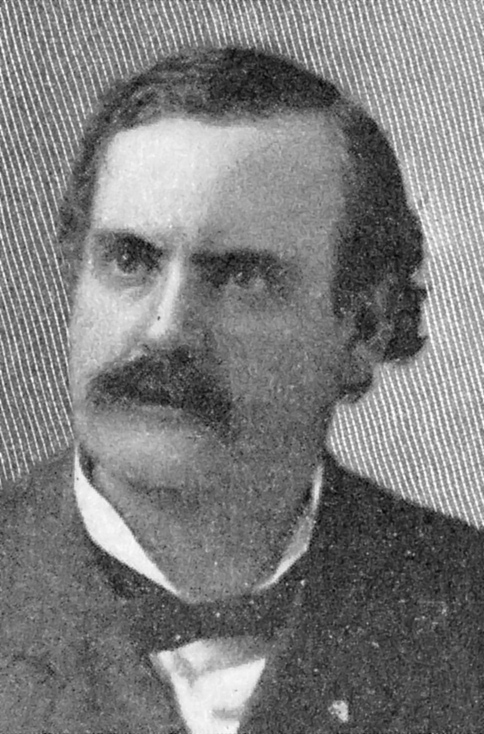
Historical · U.S. House · Iowa · District 3
Benjamin Birdsall
Former U.S. Representative · Iowa District 3 · 1903–1909 · Republican
Benjamin Birdsall represented Iowa's District 3 in the United States House of Representatives (1903–1909) for the Republican party. The page below collects sourced biographical facts, term history, committee roles, and provenance for Birdsall.
Bioguide ID: B000481
Key facts
- Full name
- Benjamin Birdsall
- State
- Iowa
- District
- District 3
- Party
- Republican
- House service
- 1903–1909
- First House term
- 1903
- Status
- Left office
- Current term ends
- —
- Born
- 1858
- Bioguide ID
- B000481
- Committee assignments
- —
- Dataset version
- 1.20260606
Biographical narrative
911 words · sourced from the Wikipedia REST extract
Benjamin Birdsall was a prominent figure in early 20th-century American politics, serving as a Republican U.S. Representative for Iowa's 3rd congressional district. His congressional career spanned three terms from 1903 to 1909, a period marked by significant national and local developments. Birdsall's background as a lawyer and district judge contributed to his legislative work, and his political career was characterized by his commitment to public service and legal expertise.
Early life and career
Benjamin Pixley Birdsall was born on October 26, 1858, in Weyauwega, Wisconsin. His early education took place in the common schools of Iowa, which laid the foundation for his later academic pursuits. Birdsall attended the University of Iowa in Iowa City, where he studied law. His legal education culminated in his admission to the bar in 1878, after which he began practicing law in Clarion, Iowa. This legal background would later inform his approach to legislative matters during his time in Congress.
Birdsall's career in public service began to take shape when he was appointed as the district judge of the eleventh judicial district of Iowa. He held this position from January 1893 until October 1900, gaining valuable experience in the judicial system and a deeper understanding of the legal issues affecting his constituents. His tenure as a judge not only enhanced his reputation in the community but also provided him with insights into the legislative process, which would prove beneficial in his later role as a U.S. Representative.
In the years leading up to his congressional career, Birdsall was involved in various community and political activities, which helped him build a network of support within the Republican Party. His legal expertise and judicial experience positioned him as a strong candidate for public office, and in 1902, he successfully ran for a seat in the U.S. House of Representatives.
House tenure
Birdsall's entry into Congress came during a significant transitional period in American politics. He was elected to the Fifty-eighth Congress after the incumbent, David B. Henderson, who had served as Speaker of the House, chose not to seek re-election. Birdsall's election was notable as he defeated former Iowa Governor Horace Boies, a well-known political figure, in what was likely a competitive race. His victory marked the beginning of a three-term congressional career that lasted from March 4, 1903, to March 3, 1909.
During his time in the House, Birdsall served in the Fifty-ninth and Sixtieth Congresses, where he participated in various legislative discussions and decisions that shaped national policy. His legal background likely influenced his contributions to debates on issues concerning law and governance. As a member of the Republican Party, Birdsall aligned with the party's platform, which during this era focused on issues such as economic growth, infrastructure development, and the regulation of industries.
Birdsall's congressional career was characterized by his commitment to his constituents in Iowa's 3rd district. He worked to address local concerns and advocate for policies that would benefit the residents of his district. His ability to navigate the complexities of federal legislation was aided by his experience as a judge, allowing him to approach issues with a legal perspective that emphasized fairness and justice.
In 1908, Birdsall sought re-election for a fourth term but faced competition within his party from fellow Republicans Burton E. Sweet and Charles E. Pickett. Ultimately, in February 1908, Birdsall decided to withdraw from the race, expressing a desire to return to the practice of law. This decision marked the end of his congressional tenure, but it did not diminish his contributions to the legislative process during his time in office.
Legislative focus and committees
Throughout his congressional career, Benjamin Birdsall's legislative focus was shaped by his legal background and his commitment to serving the interests of his constituents. While specific details about the bills he sponsored or supported are not provided, it can be inferred that his experience as a lawyer and judge influenced his approach to legislation. He likely prioritized issues related to the legal system, civil rights, and governance, reflecting the concerns of his constituents in Iowa.
As a member of the House of Representatives, Birdsall would have participated in various committees that addressed a range of issues pertinent to both national and local interests. Committees play a crucial role in the legislative process, allowing members to specialize in specific areas and contribute to the development of legislation. Birdsall's legal expertise would have been an asset in any committee focused on judicial matters, law enforcement, or civil rights.
In addition to his committee work, Birdsall's role as a U.S. Representative involved engaging with his constituents and addressing their concerns. This engagement would have included attending town hall meetings, responding to correspondence, and advocating for local projects and initiatives. His ability to connect with the people he represented was essential in building trust and ensuring that their voices were heard in the halls of Congress.
After concluding his congressional service, Birdsall returned to Clarion, Iowa, where he resumed his law practice. His decision to return to law reflects a continued commitment to public service, albeit in a different capacity. Birdsall's life came to an end on May 16, 1916, and he was laid to rest in Evergreen Cemetery, leaving behind a legacy of legal and political service that contributed to the development of his community and the state of Iowa. His career serves as an example of the interconnectedness of law and politics, illustrating how legal expertise can inform and enhance legislative work.
Notable legislation
Sponsored and co-sponsored legislation for Benjamin Birdsall is pending operator curation. The biographical narrative above carries the same provenance trail until per-bill rows are written.
Sources
- [1]https://en.wikipedia.org/wiki/Benjamin_P._BirdsallWikipedia · retrieved 2026-06-06
Notable quotes
Sourced quotes for Benjamin Birdsall are pending operator curation. Narrative-scope provenance remains attached below.
Sources
- [1]https://en.wikipedia.org/wiki/Benjamin_P._BirdsallWikipedia · retrieved 2026-06-06
Key positions
Curated policy positions for Benjamin Birdsall are pending operator review. The biographical narrative above carries the same provenance trail until per-topic positions are written.
Sources
- [1]https://en.wikipedia.org/wiki/Benjamin_P._BirdsallWikipedia · retrieved 2026-06-06
Terms served
- 1903–1905U.S. House · Term 1 · Republican
- 1905–1907U.S. House · Term 2 · Republican
- 1907–1909U.S. House · Term 3 · Republican
Sources & provenance
Every attributable claim above carries a per-section [N] marker that resolves to the corresponding URL below. Each entry records the upstream provider, the canonical URL, and the timestamp at which the source was retrieved by the ingest pipeline.
Key facts
- https://bioguide.congress.gov/search/bio/B000481bioguide · retrieved 2026-06-06
- https://www.govtrack.us/congress/members/401462govtrack · retrieved 2026-06-06
Biographical narrative
- https://en.wikipedia.org/wiki/Benjamin_P._Birdsallwikipedia · retrieved 2026-06-06
Find your representative
Every U.S. state elects representatives by district. Browse Iowa’s delegation, the full former-representative roster, or explore the role and term length.
Related on The Candidate
- Preceded by David HendersonEarlier holder of the Iowa District 3 House seat · Republican.Open
- Succeeded by Charles PickettLater holder of the Iowa District 3 House seat · Republican.Open
- Abby FinkenauerFormer U.S. Representative · Iowa District 1 · DemocraticOpen
- Augustus HallFormer U.S. Representative · Iowa District 1 · DemocraticOpen
- Benton HallFormer U.S. Representative · Iowa District 1 · DemocraticOpen
- Bernhart HennFormer U.S. Representative · Iowa District 1 · DemocraticOpen