
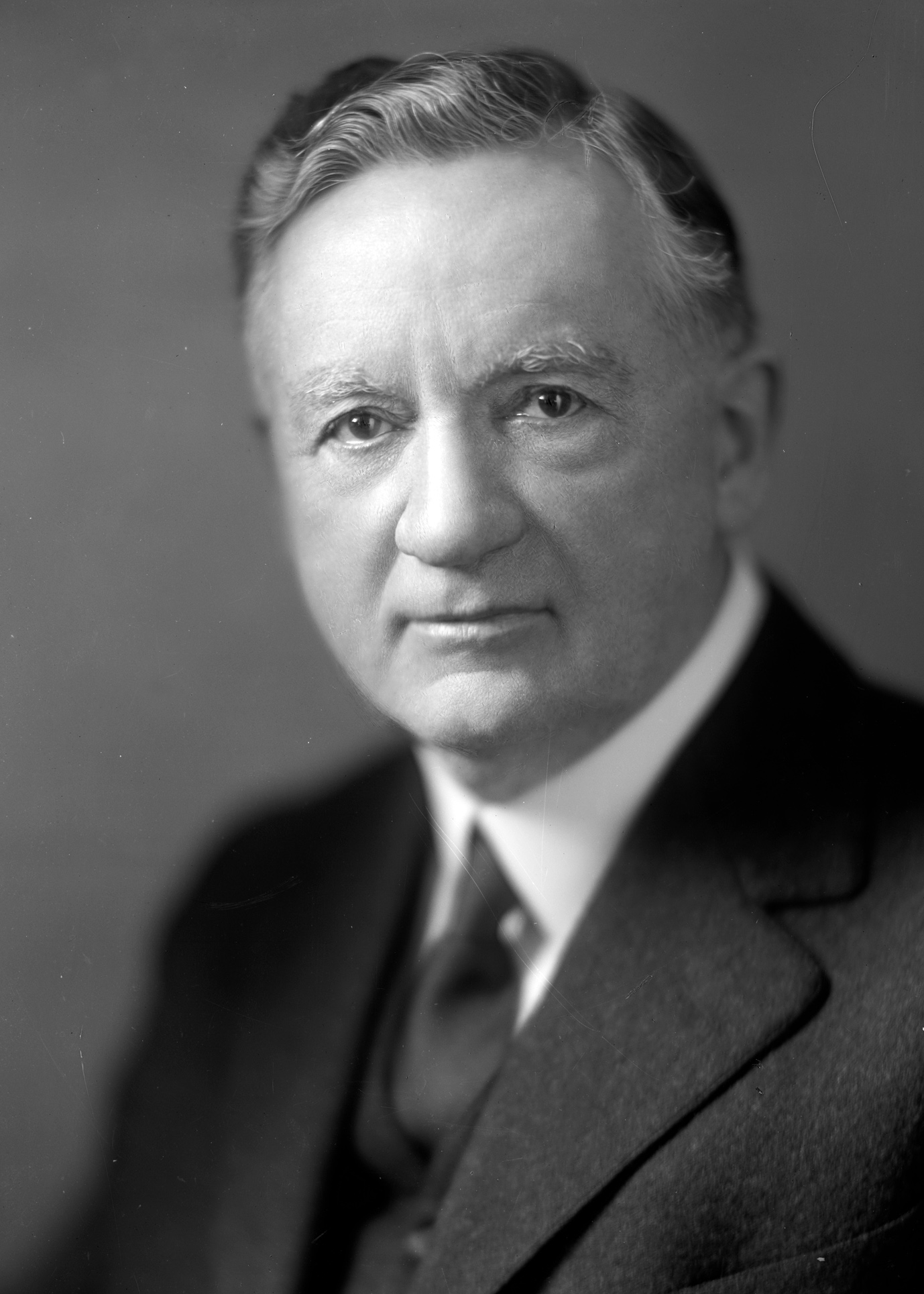
Historical · U.S. House · Iowa · District 3
Thomas Robinson
Former U.S. Representative · Iowa District 3 · 1923–1933 · Republican
Thomas Robinson represented Iowa's District 3 in the United States House of Representatives (1923–1933) for the Republican party. The page below collects sourced biographical facts, term history, committee roles, and provenance for Robinson.
Bioguide ID: R000352
Key facts
- Full name
- Thomas Robinson
- State
- Iowa
- District
- District 3
- Party
- Republican
- House service
- 1923–1933
- First House term
- 1923
- Status
- Left office
- Current term ends
- —
- Born
- 1868
- Bioguide ID
- R000352
- Committee assignments
- —
- Dataset version
- 1.20260606
Biographical narrative
907 words · sourced from the Wikipedia REST extract
Thomas Robinson was a Republican politician who served as a U.S. Representative for Iowa's 3rd congressional district. His tenure spanned five terms in the House of Representatives, beginning in 1923 and concluding in 1933. Robinson's political career unfolded during a time when the Republican Party dominated Iowa's congressional delegation, and he was part of this landscape until his defeat in the 1932 elections. Following his congressional service, he returned to Iowa, where he engaged in business until his passing in 1958.
Early life and career
Thomas Robinson was born on August 12, 1868, in New Diggings, Wisconsin. His family relocated to Hampton, Iowa, in 1870, where he spent much of his formative years. Robinson received his education in the public school system of Hampton, culminating in his attendance at Hampton High School. His early experiences in a rural setting likely influenced his later political and professional endeavors.
Before entering politics, Robinson established himself as a farmer, a profession that was common among many of his contemporaries in Iowa. His involvement in the local community extended beyond agriculture; he took on leadership roles that showcased his commitment to public service and civic engagement. Notably, he served as president of the Citizens National Bank of Hampton from 1907 until 1923, a position that likely provided him with valuable experience in financial matters and community leadership.
In addition to his banking career, Robinson was active in educational governance, serving on the Hampton Board of Education. His dedication to education was further exemplified by his role on the board of trustees of Cornell College, located in Mount Vernon, Iowa. These positions not only reflected his commitment to his community but also helped to build a network of influence that would later benefit his political career.
Robinson's political journey began in earnest when he was elected to the Iowa Senate for a four-year term in 1912. This experience in state politics provided him with a foundation in legislative processes and governance, as well as an understanding of the political landscape in Iowa. His participation as a delegate to numerous Republican State conventions further solidified his standing within the party and prepared him for a future role at the national level.
House tenure
In 1922, Robinson was elected to represent Iowa's 3rd congressional district in the U.S. House of Representatives. His election came during a period when the Republican Party held a significant majority in Iowa, with no Democrats winning any U.S. House seats in the state during the 1920s. Robinson's first term in the House began on March 4, 1923, and he was subsequently re-elected for four additional terms, serving until March 3, 1933.
During his time in Congress, Robinson was part of the Sixty-eighth Congress and the four succeeding Congresses. His tenure coincided with a period of economic prosperity in the United States, often referred to as the Roaring Twenties. However, this era came to a dramatic end with the onset of the Great Depression, which had significant implications for American politics and governance.
Robinson's congressional career was marked by the challenges and changes that occurred during this tumultuous period. As a member of the Republican Party, he aligned with the prevailing political sentiments of his constituents, who were largely supportive of Republican policies at the time. Throughout his five terms, he participated in various legislative activities and contributed to the Republican agenda.
However, the political landscape shifted dramatically in 1932, as the country faced the economic fallout of the Great Depression. The election that year saw a significant Democratic resurgence, culminating in a landslide victory for Franklin D. Roosevelt. This shift resulted in the loss of numerous Republican seats in Congress, including Robinson's. He ran for a sixth consecutive term but was defeated by Democratic challenger Albert C. Willford in a closely contested race.
Legislative focus and committees
During his time in the House of Representatives, Thomas Robinson's legislative focus was shaped by the issues and concerns of his constituents in Iowa's 3rd congressional district. While specific details of the bills he sponsored or supported are not documented, it can be inferred that his background in agriculture and banking likely influenced his policy priorities. As a farmer and a banker, he would have had a vested interest in legislation related to agricultural practices, rural development, and financial regulations.
Robinson's involvement in various committees would have also played a role in shaping his legislative contributions. Although the specific committees on which he served are not detailed, members of Congress typically participate in committees that align with their interests and expertise. Given his background, it is plausible that he engaged in discussions and decisions related to economic issues, agricultural policy, and education.
The broader context of his legislative work must be understood within the framework of the Republican Party's platform during the 1920s. The party focused on promoting business interests, economic growth, and limited government intervention in the economy. Robinson's alignment with these principles would have guided his actions in Congress as he sought to represent the interests of his constituents.
After his defeat in the 1932 election, Robinson returned to Iowa, where he transitioned into the real estate and investment business. This shift marked the end of his formal political career, but he remained a figure in his community until his death on January 27, 1958. Robinson was interred in Hampton Cemetery, leaving behind a legacy shaped by his years of public service and commitment to his constituents.
Notable legislation
Sponsored and co-sponsored legislation for Thomas Robinson is pending operator curation. The biographical narrative above carries the same provenance trail until per-bill rows are written.
Sources
- [1]https://en.wikipedia.org/wiki/Thomas_J._B._RobinsonWikipedia · retrieved 2026-06-06
Notable quotes
Sourced quotes for Thomas Robinson are pending operator curation. Narrative-scope provenance remains attached below.
Sources
- [1]https://en.wikipedia.org/wiki/Thomas_J._B._RobinsonWikipedia · retrieved 2026-06-06
Key positions
Curated policy positions for Thomas Robinson are pending operator review. The biographical narrative above carries the same provenance trail until per-topic positions are written.
Sources
- [1]https://en.wikipedia.org/wiki/Thomas_J._B._RobinsonWikipedia · retrieved 2026-06-06
Terms served
- 1923–1925U.S. House · Term 1 · Republican
- 1925–1927U.S. House · Term 2 · Republican
- 1927–1929U.S. House · Term 3 · Republican
- 1929–1931U.S. House · Term 4 · Republican
- 1931–1933U.S. House · Term 5 · Republican
Sources & provenance
Every attributable claim above carries a per-section [N] marker that resolves to the corresponding URL below. Each entry records the upstream provider, the canonical URL, and the timestamp at which the source was retrieved by the ingest pipeline.
Key facts
- https://bioguide.congress.gov/search/bio/R000352bioguide · retrieved 2026-06-06
- https://www.govtrack.us/congress/members/409323govtrack · retrieved 2026-06-06
Biographical narrative
- https://en.wikipedia.org/wiki/Thomas_J._B._Robinsonwikipedia · retrieved 2026-06-06
Find your representative
Every U.S. state elects representatives by district. Browse Iowa’s delegation, the full former-representative roster, or explore the role and term length.
Related on The Candidate
- Preceded by Burton SweetEarlier holder of the Iowa District 3 House seat · Republican.Open
- Succeeded by Albert WillfordLater holder of the Iowa District 3 House seat · Democratic.Open
- Abby FinkenauerFormer U.S. Representative · Iowa District 1 · DemocraticOpen
- Augustus HallFormer U.S. Representative · Iowa District 1 · DemocraticOpen
- Benton HallFormer U.S. Representative · Iowa District 1 · DemocraticOpen
- Bernhart HennFormer U.S. Representative · Iowa District 1 · DemocraticOpen