
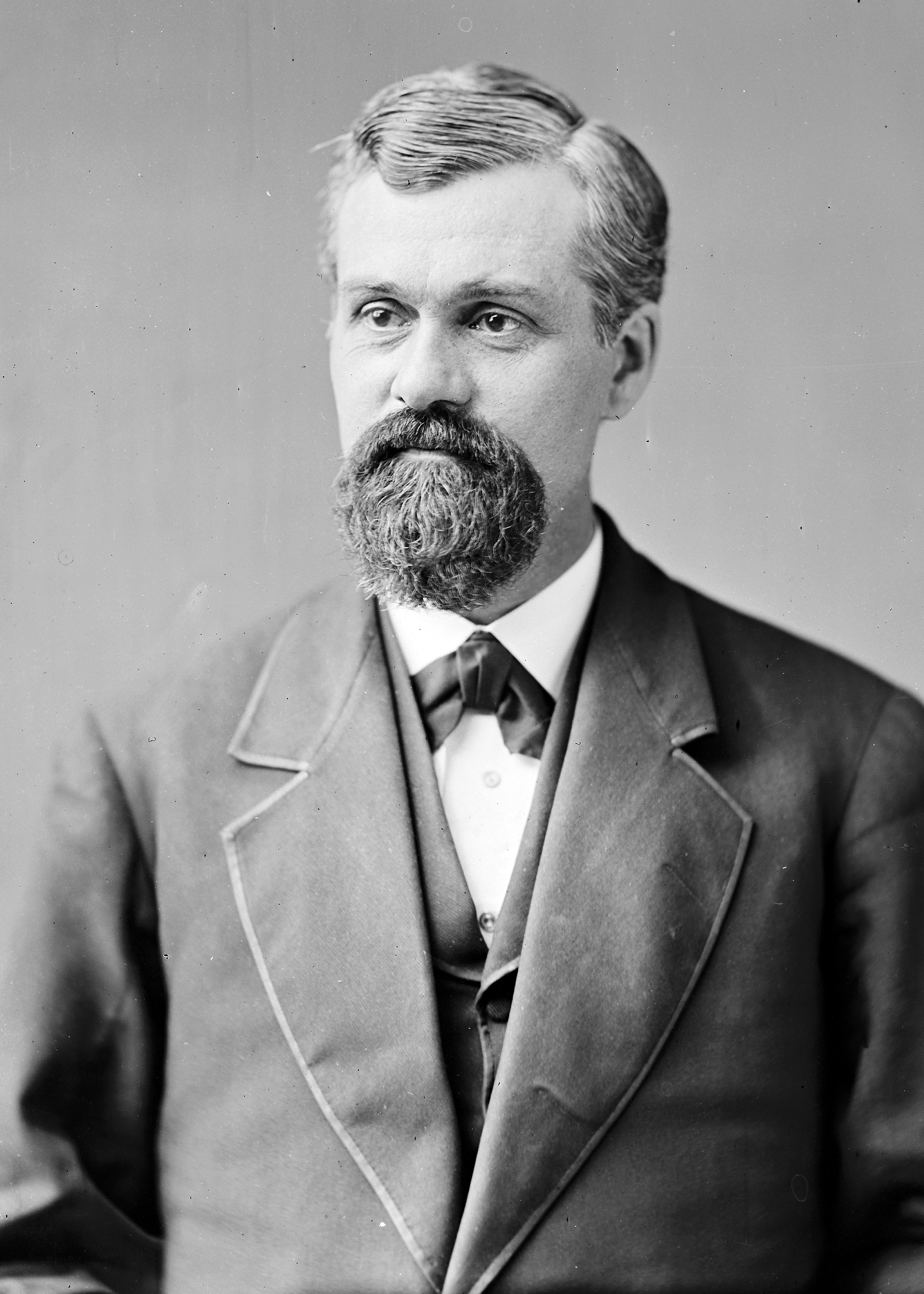
Historical · U.S. House · Iowa · District 4
Henry Pratt
Former U.S. Representative · Iowa District 4 · 1873–1877 · Republican
Henry Pratt represented Iowa's District 4 in the United States House of Representatives (1873–1877) for the Republican party. The page below collects sourced biographical facts, term history, committee roles, and provenance for Pratt.
Bioguide ID: P000501
Key facts
- Full name
- Henry Pratt
- State
- Iowa
- District
- District 4
- Party
- Republican
- House service
- 1873–1877
- First House term
- 1873
- Status
- Left office
- Current term ends
- —
- Born
- 1838
- Bioguide ID
- P000501
- Committee assignments
- —
- Dataset version
- 1.20260606
Biographical narrative
947 words · sourced from the Wikipedia REST extract
Henry Pratt was an American lawyer and Methodist Episcopal minister who served as a two-term Republican U.S. Representative for Iowa's 4th congressional district. His political career spanned the mid-19th century, during a time of significant change in the United States, particularly in the wake of the Civil War. Pratt's contributions to his community and the nation were marked by his commitment to public service, both in the legal field and in his later ministerial role. His life journey reflects the intertwining of education, military service, and political engagement that characterized many Americans of his era.
Early life and career
Henry Otis Pratt was born on February 11, 1838, in Dover-Foxcroft, Maine. His early education took place in local common schools, followed by attendance at Foxcroft Academy, where he received a foundational education that would serve him well in his future endeavors. Recognizing the importance of higher education, Pratt pursued legal studies at Harvard Law School, one of the most prestigious institutions in the United States. His graduation from Harvard equipped him with the knowledge and skills necessary for a career in law.
In 1862, Pratt relocated to Charles City, Iowa, where he initially took on the role of a schoolteacher. This position allowed him to engage with the community and contribute to the education of local youth. Shortly after his arrival in Iowa, he was admitted to the bar in Mason City, Iowa, also in 1862. However, his legal career was temporarily interrupted by the outbreak of the Civil War. In August of that year, Pratt enlisted in the Union Army, joining Company B of the 37th Iowa Infantry Regiment. His military service was cut short in March 1863 when he was discharged due to illness, specifically measles, while stationed at Fort Pillow in Henning, Tennessee.
Following his discharge, Pratt resumed his legal practice in Charles City in 1864. His experience in the military likely influenced his perspectives on leadership and public service. In addition to his legal career, he also served as the county superintendent of public schools in Floyd County, Iowa, during the years 1868 and 1869. This role further solidified his commitment to education and community development. Additionally, Pratt's political aspirations began to take shape during this period, culminating in his election to the Iowa House of Representatives, where he served from 1870 to 1872.
House tenure
Pratt's political career took a significant turn in 1872 when he was elected as a Republican to represent Iowa's 4th congressional district in the 43rd United States Congress. His election came during a time when the Republican Party was solidifying its influence in the post-Civil War political landscape. Pratt's tenure in Congress began on March 4, 1873, and he served until March 3, 1877. During this period, he was re-elected to a second term, serving in the 44th United States Congress.
Throughout his time in the House of Representatives, Pratt was involved in various legislative matters that reflected the priorities and concerns of his constituents and the nation at large. While specific details about his legislative actions and the bills he supported are not provided, it can be inferred that his experiences as a lawyer and educator informed his approach to governance. His commitment to public service was evident not only in his legislative work but also in his active participation in the political processes of his time.
After completing his congressional terms, Pratt chose not to seek renomination in 1876. His decision to step back from national politics allowed him to focus on other pursuits, including his involvement in the Republican Party at the state level. He served as president of the 1877 Republican State Convention in Iowa, a role that underscored his continued engagement in political affairs even after his time in Congress.
Legislative focus and committees
While specific details regarding Pratt's legislative focus and committee assignments during his time in Congress are not documented, his background as a lawyer and educator likely influenced his interests in various legislative issues. As a member of the Republican Party during a transformative period in American history, Pratt would have been involved in discussions surrounding issues such as education, civil rights, and economic development, which were particularly relevant to his constituents in Iowa.
Pratt's commitment to education was evident not only in his earlier roles as a teacher and county superintendent but also in his advocacy for policies that supported educational initiatives. His experience in the legal field may have also led him to engage with legislation related to the justice system, property rights, and civil liberties. The post-Civil War era was marked by significant legislative efforts aimed at rebuilding the nation and addressing the challenges of Reconstruction, and Pratt's contributions would have been part of this broader national dialogue.
After leaving Congress, Pratt transitioned to a new chapter in his life by pursuing a career in the ministry. He studied for the ministry and was ordained in October 1877, entering the Methodist Episcopal Church. His decision to become a minister reflected a desire to serve his community in a different capacity, focusing on spiritual leadership and community service. Pratt continued his ministerial duties until his retirement in October 1918, demonstrating a lifelong commitment to public service and community engagement.
Henry Pratt passed away on May 22, 1931, in Cedar Rapids, Iowa. His legacy is preserved in the memories of those he served and the contributions he made to his community and the nation. He was interred in Oak Hill Cemetery, where he rests alongside other notable figures from Iowa's history. His life story illustrates the diverse paths of public service and the impact of individuals who dedicate their lives to the betterment of society.
Notable legislation
Sponsored and co-sponsored legislation for Henry Pratt is pending operator curation. The biographical narrative above carries the same provenance trail until per-bill rows are written.
Sources
- [1]https://en.wikipedia.org/wiki/Henry_Otis_PrattWikipedia · retrieved 2026-06-06
Notable quotes
Sourced quotes for Henry Pratt are pending operator curation. Narrative-scope provenance remains attached below.
Sources
- [1]https://en.wikipedia.org/wiki/Henry_Otis_PrattWikipedia · retrieved 2026-06-06
Key positions
Curated policy positions for Henry Pratt are pending operator review. The biographical narrative above carries the same provenance trail until per-topic positions are written.
Sources
- [1]https://en.wikipedia.org/wiki/Henry_Otis_PrattWikipedia · retrieved 2026-06-06
Terms served
- 1873–1875U.S. House · Term 1 · Republican
- 1875–1877U.S. House · Term 2 · Republican
Sources & provenance
Every attributable claim above carries a per-section [N] marker that resolves to the corresponding URL below. Each entry records the upstream provider, the canonical URL, and the timestamp at which the source was retrieved by the ingest pipeline.
Key facts
- https://bioguide.congress.gov/search/bio/P000501bioguide · retrieved 2026-06-06
- https://www.govtrack.us/congress/members/408886govtrack · retrieved 2026-06-06
Biographical narrative
- https://en.wikipedia.org/wiki/Henry_Otis_Prattwikipedia · retrieved 2026-06-06
Find your representative
Every U.S. state elects representatives by district. Browse Iowa’s delegation, the full former-representative roster, or explore the role and term length.
Related on The Candidate
- Preceded by Madison WaldenEarlier holder of the Iowa District 4 House seat · Republican.Open
- Succeeded by Nathaniel DeeringLater holder of the Iowa District 4 House seat · Republican.Open
- Abby FinkenauerFormer U.S. Representative · Iowa District 1 · DemocraticOpen
- Augustus HallFormer U.S. Representative · Iowa District 1 · DemocraticOpen
- Benton HallFormer U.S. Representative · Iowa District 1 · DemocraticOpen
- Bernhart HennFormer U.S. Representative · Iowa District 1 · DemocraticOpen