
Historical · U.S. House · Iowa · District 4
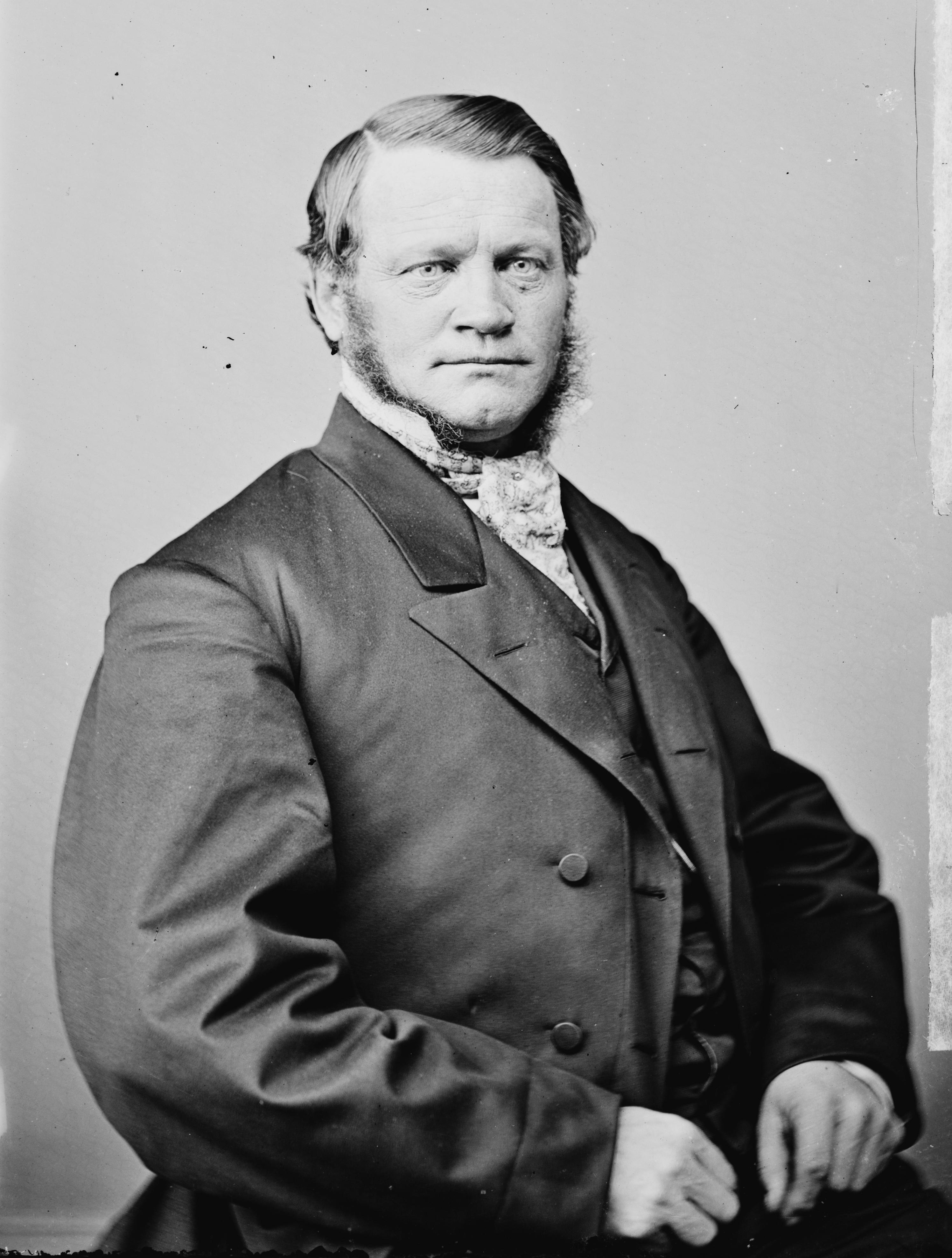
Josiah Grinnell
Former U.S. Representative · Iowa District 4 · 1863–1867 · Republican
Josiah Grinnell represented Iowa's District 4 in the United States House of Representatives (1863–1867) for the Republican party. The page below collects sourced biographical facts, term history, committee roles, and provenance for Grinnell.
Bioguide ID: G000478
Key facts
- Full name
- Josiah Grinnell
- State
- Iowa
- District
- District 4
- Party
- Republican
- House service
- 1863–1867
- First House term
- 1863
- Status
- Left office
- Current term ends
- —
- Born
- 1821
- Bioguide ID
- G000478
- Committee assignments
- —
- Dataset version
- 1.20260606
Biographical narrative
875 words · sourced from the Wikipedia REST extract
Josiah Bushnell Grinnell was a prominent American politician and abolitionist who served as a U.S. Representative for Iowa's 4th congressional district during the mid-19th century. Born on December 22, 1821, in New Haven, Vermont, Grinnell was an ordained Congregational minister and a key figure in the establishment of Grinnell, Iowa, where he also contributed significantly to the founding of Grinnell College. His political career was marked by his commitment to the abolitionist movement and his involvement in various civic activities, including railway development. Grinnell's tenure in Congress spanned from 1863 to 1867, during which he participated in significant legislative debates and faced challenges, including physical altercations with fellow lawmakers.
Early life and career
Josiah Grinnell was born into a family that valued education and civic engagement. He began his higher education at the Oneida Institute in New York in 1841, where he was exposed to progressive ideas, particularly those related to social justice and reform. He later graduated from Auburn Theological Seminary in New York City in 1847, which prepared him for a life of ministry and public service. Following his ordination, Grinnell held pastorates in Washington, D.C., and New York City, where he developed a reputation as a passionate advocate for social change.
In the mid-1850s, Grinnell relocated to Iowa, where he became involved in local politics and community development. He was elected to the Iowa Senate, serving from 1856 to 1860, during which time he also pursued legal studies. Grinnell was admitted to the bar in 1858 and established a legal practice in Grinnell, Iowa. His commitment to the abolitionist cause was evident through his active participation in the Underground Railroad, where he served as a 'conductor' and provided shelter to notable figures such as John Brown. Grinnell's efforts in this area were significant enough that his gravesite is listed on the National Underground Railroad Network to Freedom.
Grinnell's political aspirations grew, and he became a delegate to the 1860 Republican National Convention, which nominated Abraham Lincoln for the presidency. This experience further solidified his standing within the Republican Party and set the stage for his future congressional candidacy.
House tenure
In 1862, following the reapportionment of congressional seats due to the 1860 census, Grinnell sought election to the newly created 4th congressional district of Iowa. This district encompassed a diverse area, including twelve counties that stretched from the Missouri border to the southern edge of Waterloo. Grinnell successfully secured the Republican nomination and won the general election, beginning his first term in the Thirty-eighth Congress in 1863.
During his time in the House, Grinnell was an active participant in the legislative process, engaging in debates and discussions that reflected the tumultuous political climate of the era, particularly regarding issues related to the Civil War and abolition. His second term in the Thirty-ninth Congress began in 1865, following his re-election in 1864. Grinnell's tenure was not without conflict; he was involved in a notable incident on June 14, 1866, when he was assaulted by fellow congressman Lovell Rousseau during a debate. This altercation highlighted the intense emotions and divisions present in Congress at the time.
Despite his contributions, Grinnell's congressional career came to an end when he lost the Republican nomination for a third term in June 1866. The narrow margin of his defeat, losing by thirteen votes to Judge William Loughridge, marked a significant turning point in his political journey.
Legislative focus and committees
Throughout his congressional career, Grinnell's legislative focus was heavily influenced by his abolitionist beliefs and commitment to social justice. He was known for advocating for policies that aligned with the principles of equality and civil rights, reflecting the broader Republican agenda during the Civil War era. Grinnell's background as a minister and his experiences with the Underground Railroad informed his perspectives on legislation related to slavery and human rights.
In addition to his work on abolitionist issues, Grinnell was involved in discussions surrounding economic development, particularly in relation to railway expansion. His interest in infrastructure was evident in his later roles as a director of the Rock Island Railroad and as the receiver of the Iowa Central Railroad, which later became part of the St. Louis & St. Paul Railroad. These positions allowed him to influence transportation policy and economic growth in Iowa, further demonstrating his commitment to the development of his home state.
After leaving Congress, Grinnell returned to his legal practice and continued to engage in various civic activities. He served as president of the Iowa State Horticultural Society and the First National Bank in Grinnell, reflecting his ongoing involvement in community affairs. Grinnell's legacy is also tied to his contributions to education, particularly through his role in the establishment of Grinnell College, which played a significant part in the educational landscape of Iowa.
Grinnell's life and career came to a close on March 31, 1891, when he died at his home in Grinnell due to complications from a throat disease and asthma. He was interred in Hazelwood Cemetery, leaving behind a legacy characterized by his dedication to abolitionism, education, and public service. His contributions to both the political and social fabric of Iowa remain significant, as he played a crucial role in shaping the state during a pivotal period in American history.
Notable legislation
Sponsored and co-sponsored legislation for Josiah Grinnell is pending operator curation. The biographical narrative above carries the same provenance trail until per-bill rows are written.
Sources
- [1]https://en.wikipedia.org/wiki/Josiah_B._GrinnellWikipedia · retrieved 2026-06-06
Notable quotes
Sourced quotes for Josiah Grinnell are pending operator curation. Narrative-scope provenance remains attached below.
Sources
- [1]https://en.wikipedia.org/wiki/Josiah_B._GrinnellWikipedia · retrieved 2026-06-06
Key positions
Curated policy positions for Josiah Grinnell are pending operator review. The biographical narrative above carries the same provenance trail until per-topic positions are written.
Sources
- [1]https://en.wikipedia.org/wiki/Josiah_B._GrinnellWikipedia · retrieved 2026-06-06
Terms served
- 1863–1865U.S. House · Term 1 · Republican
- 1865–1867U.S. House · Term 2 · Republican
Sources & provenance
Every attributable claim above carries a per-section [N] marker that resolves to the corresponding URL below. Each entry records the upstream provider, the canonical URL, and the timestamp at which the source was retrieved by the ingest pipeline.
Key facts
- https://bioguide.congress.gov/search/bio/G000478bioguide · retrieved 2026-06-06
- https://www.govtrack.us/congress/members/404823govtrack · retrieved 2026-06-06
Biographical narrative
- https://en.wikipedia.org/wiki/Josiah_B._Grinnellwikipedia · retrieved 2026-06-06
Find your representative
Every U.S. state elects representatives by district. Browse Iowa’s delegation, the full former-representative roster, or explore the role and term length.
Related on The Candidate
- Succeeded by Madison WaldenLater holder of the Iowa District 4 House seat · Republican.Open
- Abby FinkenauerFormer U.S. Representative · Iowa District 1 · DemocraticOpen
- Augustus HallFormer U.S. Representative · Iowa District 1 · DemocraticOpen
- Benton HallFormer U.S. Representative · Iowa District 1 · DemocraticOpen
- Bernhart HennFormer U.S. Representative · Iowa District 1 · DemocraticOpen
- Republican PartyFederal candidates and office holders on the Republican line.Open