
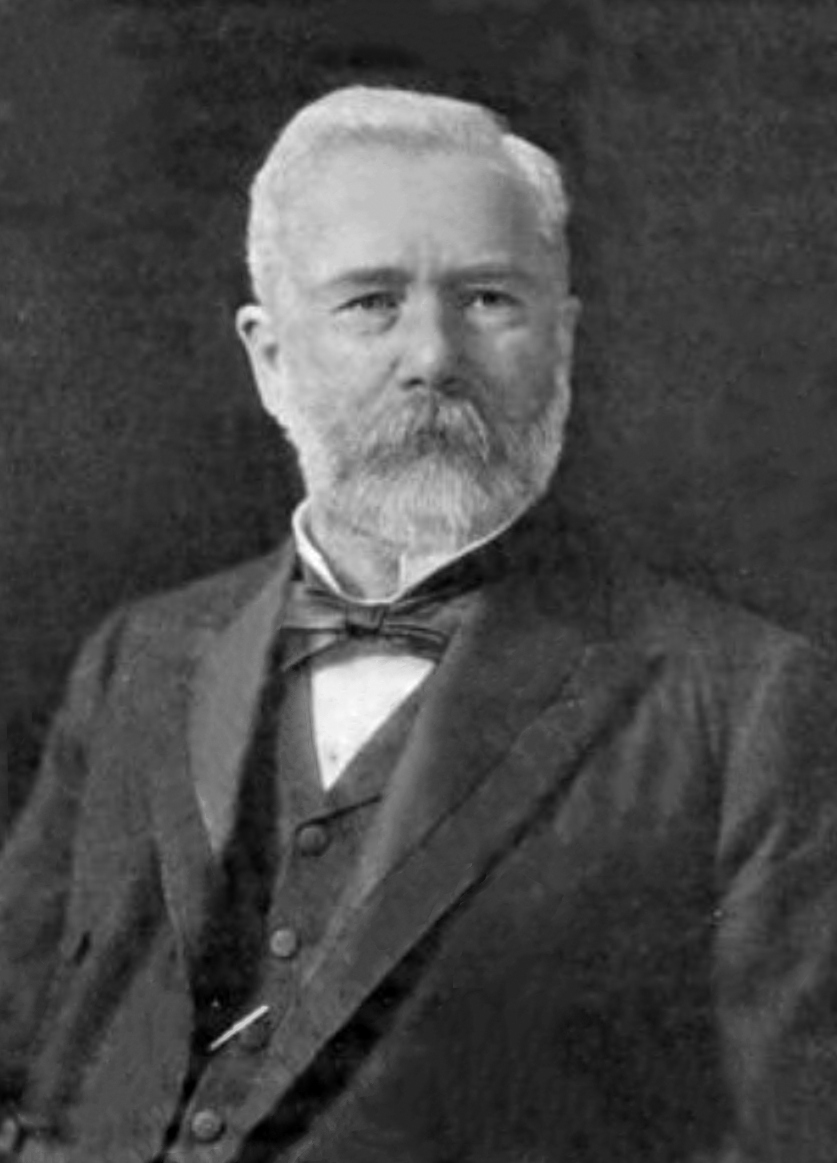
Historical · U.S. House · Iowa · District 4
William Fuller
Former U.S. Representative · Iowa District 4 · 1885–1889 · Republican
William Fuller represented Iowa's District 4 in the United States House of Representatives (1885–1889) for the Republican party. The page below collects sourced biographical facts, term history, committee roles, and provenance for Fuller.
Bioguide ID: F000414
Key facts
- Full name
- William Fuller
- State
- Iowa
- District
- District 4
- Party
- Republican
- House service
- 1885–1889
- First House term
- 1885
- Status
- Left office
- Current term ends
- —
- Born
- 1846
- Bioguide ID
- F000414
- Committee assignments
- —
- Dataset version
- 1.20260606
Biographical narrative
873 words · sourced from the Wikipedia REST extract
William Fuller was a Republican politician and attorney who served as a U.S. Representative for Iowa's 4th congressional district during the late 19th century. His congressional tenure spanned from 1885 to 1889, during which he participated in the legislative processes of the 49th and 50th United States Congresses. Fuller's political career was marked by his involvement in local education and state government prior to his election to Congress, as well as his subsequent legal work after leaving office.
Early life and career
William Fuller was born on March 30, 1846, in Howard, Pennsylvania. In 1853, when he was just seven years old, his family relocated to West Union, Iowa, where he would spend much of his formative years. Fuller received his early education in the common schools of the area before attending Upper Iowa University in Fayette, Iowa. His academic pursuits laid a foundation for his future career in law and politics.
In the mid-1860s, Fuller began his professional journey by taking a position in the Office of Indian Affairs within the United States Department of the Interior, serving in this capacity during 1866 and 1867. This experience provided him with insights into governmental operations and public service. Following this role, he pursued a legal education at the University of Iowa College of Law in Iowa City, where he earned his law degree in June 1870. Upon being admitted to the bar the same year, Fuller commenced his legal practice in West Union.
Fuller’s commitment to public service extended beyond his legal career. He served on the West Union Board of Education for six years, demonstrating his dedication to local education and community development. His political career began to take shape when he was elected to the Iowa House of Representatives, where he served during the years 1876 and 1877. Additionally, he was active in the Republican Party, participating in both state and congressional district committees, which further solidified his political connections and influence.
House tenure
Fuller’s entry into the U.S. House of Representatives came after he successfully ran as a Republican candidate to represent Iowa's 4th congressional district in the 1884 elections. He secured the Republican nomination and subsequently defeated the incumbent, Luman Hamlin Weller, a member of the Greenback Party who had earned the nickname "Calamity" Weller. Fuller's election marked a significant shift in representation for the district, as he took office on March 4, 1885.
During his time in Congress, Fuller served two consecutive terms. His first term was in the 49th Congress, followed by a second term in the 50th Congress. Throughout his tenure, he aligned himself with the Republican Party's positions, particularly on issues related to veterans' pensions and other war-related matters. His voting record reflected the party's stance on these topics, contributing to the broader legislative agenda of the time.
Fuller’s legislative contributions included the introduction of bills aimed at addressing specific financial issues, such as a proposal to refund the direct tax imposed on states in 1861. He also advocated for local interests, such as a bill to donate a condemned cannon to a local Grand Army of the Republic post in West Union. Additionally, he supported taxation measures, including a tax on oleomargarine, which was a contentious issue during that period.
Despite his participation in various legislative efforts, Fuller's congressional service is often characterized as respectable yet undistinguished. He was not known for any particularly groundbreaking legislation or leadership roles within Congress. His time in office concluded on March 3, 1889, when he was defeated for renomination by Joseph H. Sweney, a state senator who had been considered a potential candidate in the previous election cycle.
Legislative focus and committees
During his time in the House of Representatives, William Fuller focused primarily on issues that aligned with the Republican Party's platform, particularly those concerning veterans and financial matters. His voting record indicated a strong adherence to party lines, especially regarding the treatment of veterans and the management of war-related issues. This alignment with Republican values was a hallmark of his legislative approach.
Fuller’s legislative initiatives included efforts to address historical financial burdens, such as the direct tax imposed during the Civil War, which he sought to refund. His attention to local matters was evident in his proposal to donate a condemned cannon to a local veterans' organization, reflecting his commitment to honoring those who served in the military. Additionally, his support for a tax on oleomargarine illustrated his engagement with contemporary economic issues and consumer protection.
While Fuller did not hold prominent committee positions or lead major legislative initiatives, his involvement in the House contributed to the Republican agenda of the late 19th century. His tenure coincided with a period of significant political and social change in the United States, as the country grappled with the aftermath of the Civil War and the complexities of post-war governance.
After leaving Congress, Fuller continued his career in law, eventually serving as an assistant attorney general with the Spanish Treaty Claims Commission from 1901 to 1907. He returned to private legal practice until his death on April 23, 1918, in Washington, D.C. He was laid to rest in West Union Cemetery, marking the end of a life dedicated to public service and the legal profession.
Notable legislation
Sponsored and co-sponsored legislation for William Fuller is pending operator curation. The biographical narrative above carries the same provenance trail until per-bill rows are written.
Sources
- [1]https://en.wikipedia.org/wiki/William_E._FullerWikipedia · retrieved 2026-06-06
Notable quotes
Sourced quotes for William Fuller are pending operator curation. Narrative-scope provenance remains attached below.
Sources
- [1]https://en.wikipedia.org/wiki/William_E._FullerWikipedia · retrieved 2026-06-06
Key positions
Curated policy positions for William Fuller are pending operator review. The biographical narrative above carries the same provenance trail until per-topic positions are written.
Sources
- [1]https://en.wikipedia.org/wiki/William_E._FullerWikipedia · retrieved 2026-06-06
Terms served
- 1885–1887U.S. House · Term 1 · Republican
- 1887–1889U.S. House · Term 2 · Republican
Sources & provenance
Every attributable claim above carries a per-section [N] marker that resolves to the corresponding URL below. Each entry records the upstream provider, the canonical URL, and the timestamp at which the source was retrieved by the ingest pipeline.
Key facts
- https://bioguide.congress.gov/search/bio/F000414bioguide · retrieved 2026-06-06
- https://www.govtrack.us/congress/members/404356govtrack · retrieved 2026-06-06
Biographical narrative
- https://en.wikipedia.org/wiki/William_E._Fullerwikipedia · retrieved 2026-06-06
Find your representative
Every U.S. state elects representatives by district. Browse Iowa’s delegation, the full former-representative roster, or explore the role and term length.
Related on The Candidate
- Preceded by Luman WellerEarlier holder of the Iowa District 4 House seat · National Greenbacker.Open
- Succeeded by Joseph SweneyLater holder of the Iowa District 4 House seat · Republican.Open
- Abby FinkenauerFormer U.S. Representative · Iowa District 1 · DemocraticOpen
- Augustus HallFormer U.S. Representative · Iowa District 1 · DemocraticOpen
- Benton HallFormer U.S. Representative · Iowa District 1 · DemocraticOpen
- Bernhart HennFormer U.S. Representative · Iowa District 1 · DemocraticOpen