
Historical · U.S. House · Iowa · District 6
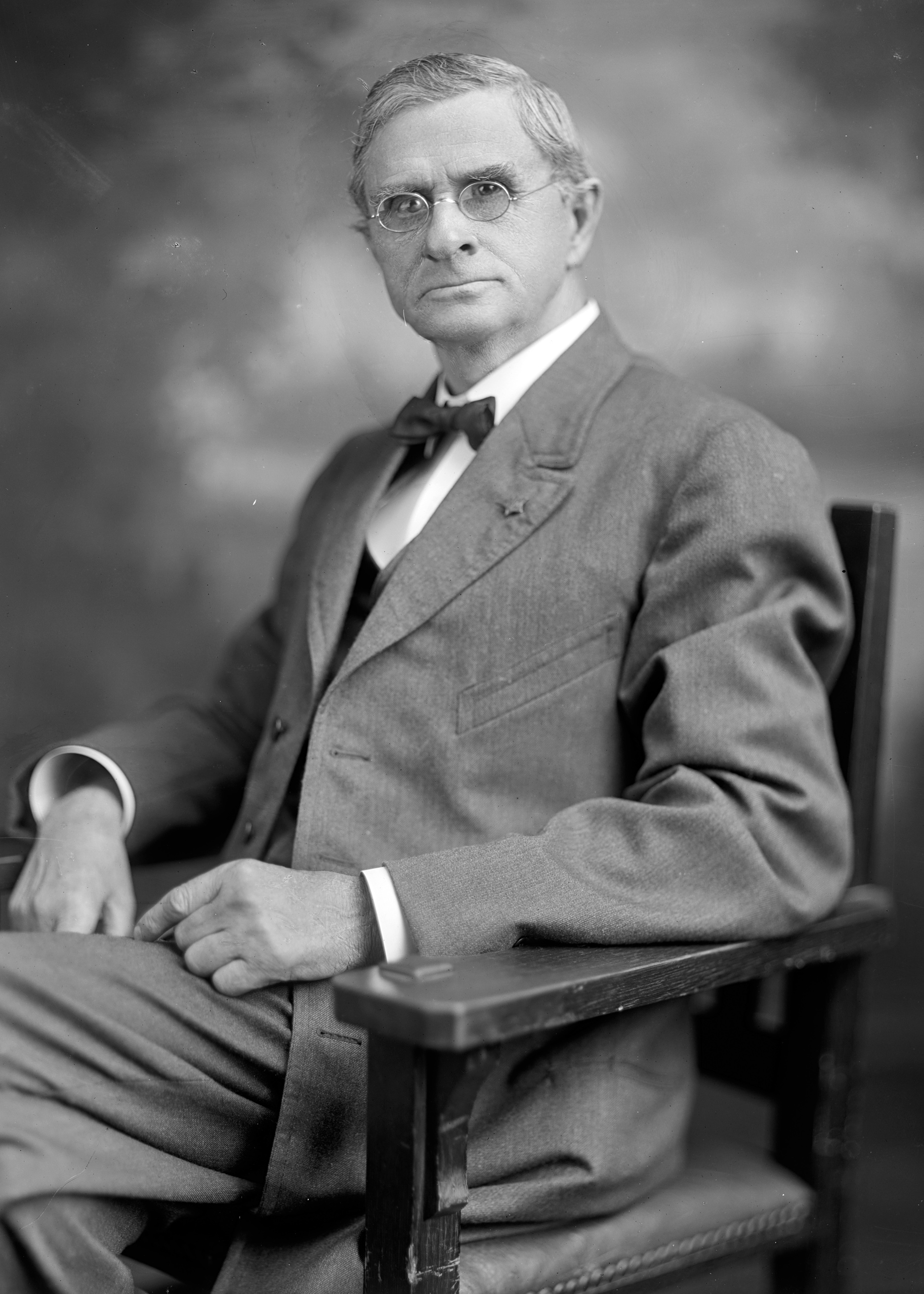
Sanford Kirkpatrick
Former U.S. Representative · Iowa District 6 · 1913–1915 · Democratic
Sanford Kirkpatrick represented Iowa's District 6 in the United States House of Representatives (1913–1915) for the Democratic party. The page below collects sourced biographical facts, term history, committee roles, and provenance for Kirkpatrick.
Bioguide ID: K000237
Key facts
- Full name
- Sanford Kirkpatrick
- State
- Iowa
- District
- District 6
- Party
- Democratic
- House service
- 1913–1915
- First House term
- 1913
- Status
- Left office
- Current term ends
- —
- Born
- 1842
- Bioguide ID
- K000237
- Committee assignments
- —
- Dataset version
- 1.20260606
Biographical narrative
836 words · sourced from the Wikipedia REST extract
Sanford Kirkpatrick was a Democratic politician who served as a U.S. Representative for Iowa's 6th congressional district from 1913 to 1915. Born in Ohio in 1842, he became notable for being the last Civil War veteran elected to represent Iowa in Congress. His election came during a period of political upheaval, and he was able to secure a seat in a historically Republican district. However, his tenure was brief, as he was unable to win renomination in the subsequent election cycle.
Early life and career
Sanford Kirkpatrick was born on February 11, 1842, near London, Ohio. In 1849, when he was seven years old, his family relocated to Iowa, settling on a farm in Highland Township, Wapello County. Kirkpatrick received his early education in the common schools of Iowa, where he studied until 1858. His formative years in Iowa would later play a significant role in shaping his identity and political career.
During the American Civil War, Kirkpatrick enlisted in the Union Army, joining the Second Regiment of the Iowa Volunteer Infantry. He began his service as a private and was eventually promoted to first lieutenant. His military service lasted for four years and four months, during which he participated in several significant battles, including the Battle of Fort Donelson, the Battle of Shiloh, and the Second Battle of Corinth. Following the war, he returned to Wapello County, where he resumed farming.
In 1876, Kirkpatrick moved to Ottumwa, Iowa, where he engaged in various mercantile pursuits until 1887. His involvement in local governance began when he served as deputy recorder of Wapello County from 1876 to 1880. He was also a member of the Ottumwa City Council from 1884 to 1887. In 1883, he was the Greenback Party's nominee for Lieutenant Governor of Iowa, although he finished third in the election behind candidates from the Republican and Democratic parties.
From 1887 until 1913, Kirkpatrick worked as an agent for the Internal Revenue Service, primarily in North Carolina and surrounding states. His tenure as a revenue agent was marked by significant challenges, including an incident in which he was shot, resulting in blindness. This injury led to a special bill passed by Congress in 1890 to increase his Civil War pension. Reports indicated that he carried more than twenty bullets and fragments from confrontations with moonshiners during his service. In the latter part of his career with the agency, he focused on auditing banks and corporations.
House tenure
Kirkpatrick's political career took a significant turn in 1912 when he was nominated by the Democratic Party to run for the U.S. House of Representatives in Iowa's 6th congressional district. This opportunity arose after the incumbent Republican representative, Nathan E. Kendall, chose not to seek re-election. The political landscape at the time was characterized by a split in the Republican vote due to the emergence of the Bull Moose Party, which created an opening for Kirkpatrick.
Despite facing criticism from Republican opponents who questioned his residency—asserting that he was primarily a resident of North Carolina—Kirkpatrick's supporters highlighted his consistent return to Iowa for voting and his service in the Iowa Infantry during the Civil War. In a competitive three-way race, Kirkpatrick won the election by a narrow margin, securing victory by 1,138 votes out of over 30,000 cast.
Kirkpatrick served in the U.S. House from March 4, 1913, until March 3, 1915. His time in Congress was relatively short-lived, as he sought renomination in the Democratic primary two years later but was defeated by W.H. Hamilton. Following this setback, he attempted to reclaim his seat in the 1916 election, winning the Democratic nomination but ultimately losing to the incumbent Republican, C. William Ramseyer.
Legislative focus and committees
During his tenure in the House of Representatives, Kirkpatrick's legislative focus and committee assignments are not extensively documented. However, given his background as a revenue agent and his experiences during the Civil War, it can be inferred that he may have been interested in issues related to taxation, veterans' affairs, and economic development, particularly in the context of his home state of Iowa.
Kirkpatrick's service in Congress coincided with a period of significant political and social change in the United States. The early 20th century was marked by progressive reforms and debates over issues such as labor rights, women's suffrage, and economic regulation. While specific legislative initiatives or committee assignments during his time in office are not detailed in the available records, Kirkpatrick's background as a veteran and a public servant likely informed his perspectives on these matters.
After leaving Congress, Kirkpatrick moved to Greensboro, North Carolina, in 1916, where he continued to engage in agricultural pursuits. He lived in Greensboro until his death on February 13, 1932, just two days after his 90th birthday. His contributions to public service, both as a soldier and as a politician, remain a part of Iowa's historical narrative. He was interred at Forest Lawn Cemetery in Greensboro, North Carolina, marking the end of a life that spanned significant events in American history.
Notable legislation
Sponsored and co-sponsored legislation for Sanford Kirkpatrick is pending operator curation. The biographical narrative above carries the same provenance trail until per-bill rows are written.
Sources
- [1]https://en.wikipedia.org/wiki/Sanford_KirkpatrickWikipedia · retrieved 2026-06-06
Notable quotes
Sourced quotes for Sanford Kirkpatrick are pending operator curation. Narrative-scope provenance remains attached below.
Sources
- [1]https://en.wikipedia.org/wiki/Sanford_KirkpatrickWikipedia · retrieved 2026-06-06
Key positions
Curated policy positions for Sanford Kirkpatrick are pending operator review. The biographical narrative above carries the same provenance trail until per-topic positions are written.
Sources
- [1]https://en.wikipedia.org/wiki/Sanford_KirkpatrickWikipedia · retrieved 2026-06-06
Terms served
- 1913–1915U.S. House · Term 1 · Democratic
Sources & provenance
Every attributable claim above carries a per-section [N] marker that resolves to the corresponding URL below. Each entry records the upstream provider, the canonical URL, and the timestamp at which the source was retrieved by the ingest pipeline.
Key facts
- https://bioguide.congress.gov/search/bio/K000237bioguide · retrieved 2026-06-06
- https://www.govtrack.us/congress/members/406396govtrack · retrieved 2026-06-06
Biographical narrative
- https://en.wikipedia.org/wiki/Sanford_Kirkpatrickwikipedia · retrieved 2026-06-06
Find your representative
Every U.S. state elects representatives by district. Browse Iowa’s delegation, the full former-representative roster, or explore the role and term length.
Related on The Candidate
- Preceded by Nathan KendallEarlier holder of the Iowa District 6 House seat · Republican.Open
- Succeeded by Cassius DowellLater holder of the Iowa District 6 House seat · Republican.Open
- Abby FinkenauerFormer U.S. Representative · Iowa District 1 · DemocraticOpen
- Augustus HallFormer U.S. Representative · Iowa District 1 · DemocraticOpen
- Benton HallFormer U.S. Representative · Iowa District 1 · DemocraticOpen
- Bernhart HennFormer U.S. Representative · Iowa District 1 · DemocraticOpen