
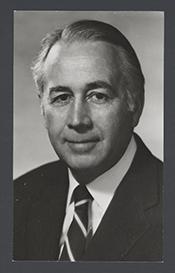
Historical · U.S. House · Iowa · District 6
Wiley Mayne
Former U.S. Representative · Iowa District 6 · 1967–1975 · Republican
Wiley Mayne represented Iowa's District 6 in the United States House of Representatives (1967–1975) for the Republican party. The page below collects sourced biographical facts, term history, committee roles, and provenance for Mayne.
Bioguide ID: M000286
Key facts
- Full name
- Wiley Mayne
- State
- Iowa
- District
- District 6
- Party
- Republican
- House service
- 1967–1975
- First House term
- 1967
- Status
- Left office
- Current term ends
- —
- Born
- 1917
- Bioguide ID
- M000286
- Committee assignments
- —
- Dataset version
- 1.20260605
Biographical narrative
912 words · sourced from the Wikipedia REST extract
Wiley Mayne was an American attorney and politician who served as a four-term Republican member of the United States House of Representatives, representing Iowa's 6th congressional district from 1967 until 1975. His tenure in Congress was marked by significant involvement in legislative matters, particularly those related to agriculture and the judiciary. Mayne's political career concluded following his defeat in the wake of the Watergate scandal, which significantly impacted many members of Congress during that period.
Early life and career
Wiley Mayne was born on January 19, 1917, in Sanborn, Iowa. He received his early education in the public school system of Iowa, which laid the foundation for his future academic pursuits. Mayne attended Harvard College, where he earned a Bachelor of Science degree. He continued his education at Harvard Law School, further enhancing his legal knowledge and skills. In 1939, he obtained his Juris Doctor degree from the University of Iowa College of Law, marking the beginning of his legal career.
Following his admission to the bar in 1941, Mayne joined the Federal Bureau of Investigation, where he began his professional journey in law enforcement. His service was interrupted by a three-year commitment to the United States Naval Reserve, where he held the rank of lieutenant junior grade from 1941 to 1943. After completing his military service, he returned to private practice, joining a law firm in Sioux City, Iowa. His legal career flourished, and he became a prominent figure in the local legal community. In 1963, he served a one-year term as president of the Iowa Bar Association, demonstrating his leadership within the profession. Following this role, he chaired the Grievance Commission of the Iowa Supreme Court until 1966, further solidifying his reputation as a respected attorney.
On January 5, 1942, Mayne married Betty Dodson, and together they had three children: sons Wiley Mayne II and John Mayne, both of whom pursued careers in law, and daughter Martha Mayne Smith. This family background contributed to Mayne's community engagement and his understanding of the legal profession's impact on society.
House tenure
Wiley Mayne entered the political arena in 1966 when he ran for a seat in the now-defunct 6th Congressional District of Iowa. He successfully defeated the Democratic incumbent, Stanley L. Greigg, marking the beginning of his four terms in the U.S. House of Representatives, which commenced in 1967. During his time in Congress, Mayne was an active member of both the House Agriculture Committee and the House Judiciary Committee.
His work on the House Agriculture Committee coincided with a critical period for the agricultural sector, particularly concerning the cattle market, which experienced a significant decline during his tenure. In 1973, Mayne was appointed as a delegate to the Food and Agriculture Organization in Rome, where he represented U.S. interests in international agricultural discussions. This role highlighted his commitment to addressing agricultural issues on a broader scale.
Mayne's involvement in the House Judiciary Committee was particularly notable, as he played a significant role in shaping amendments to the Federal Rules of Evidence, especially regarding the admissibility of opinion testimony. His legal background informed his contributions to legislative discussions, and he was recognized for his expertise in these matters.
However, Mayne's political career faced challenges during his fourth term. In 1974, he was one of ten Republican members of the House Judiciary Committee who voted against articles of impeachment against President Richard Nixon, stemming from the Watergate scandal. At the time, Mayne believed that the evidence presented was insufficient to warrant impeachment. However, as further evidence emerged implicating Nixon in a cover-up, Mayne's stance evolved, and he expressed his intention to support impeachment when the articles were brought before the full House. Despite this change in position, the political damage had already been done, and he lost his re-election bid in 1974 to Democrat Berkley Bedell.
Legislative focus and committees
During his congressional tenure, Wiley Mayne's legislative focus was primarily centered on agriculture and judicial matters. As a member of the House Agriculture Committee, he was involved in addressing the challenges facing the agricultural sector, particularly during a time of economic difficulty for farmers and ranchers. His participation in discussions and decisions related to agricultural policy reflected his commitment to supporting the interests of his constituents in Iowa, a state with a strong agricultural economy.
Mayne's role on the House Judiciary Committee allowed him to engage with significant legal and constitutional issues. His work on amendments to the Federal Rules of Evidence demonstrated his legal acumen and his dedication to improving the judicial process. The changes he advocated aimed to enhance the fairness and efficiency of legal proceedings, reflecting his professional background as an attorney.
Despite the controversies surrounding his votes during the impeachment proceedings against President Nixon, Mayne's legislative contributions were part of a broader dialogue within Congress about accountability and governance. His involvement in these critical discussions highlighted the complexities of political decision-making during a tumultuous period in American history.
After leaving Congress in 1975, Mayne returned to Sioux City, Iowa, where he resumed his law practice. He continued to work in the legal field until 2005, maintaining his professional engagement long after his political career had ended. Mayne passed away on May 27, 2007, following a cardiopulmonary incident, leaving behind a legacy as a dedicated public servant and legal professional. His life and career reflect the intertwining of law and politics, as well as the challenges faced by elected officials during a pivotal time in American history.
Notable legislation
Sponsored and co-sponsored legislation for Wiley Mayne is pending operator curation. The biographical narrative above carries the same provenance trail until per-bill rows are written.
Sources
- [1]https://en.wikipedia.org/wiki/Wiley_MayneWikipedia · retrieved 2026-06-05
Notable quotes
Sourced quotes for Wiley Mayne are pending operator curation. Narrative-scope provenance remains attached below.
Sources
- [1]https://en.wikipedia.org/wiki/Wiley_MayneWikipedia · retrieved 2026-06-05
Key positions
Curated policy positions for Wiley Mayne are pending operator review. The biographical narrative above carries the same provenance trail until per-topic positions are written.
Sources
- [1]https://en.wikipedia.org/wiki/Wiley_MayneWikipedia · retrieved 2026-06-05
Terms served
- 1967–1969U.S. House · Term 1 · Republican
- 1969–1971U.S. House · Term 2 · Republican
- 1971–1973U.S. House · Term 3 · Republican
- 1973–1975U.S. House · Term 4 · Republican
Sources & provenance
Every attributable claim above carries a per-section [N] marker that resolves to the corresponding URL below. Each entry records the upstream provider, the canonical URL, and the timestamp at which the source was retrieved by the ingest pipeline.
Key facts
- https://bioguide.congress.gov/search/bio/M000286bioguide · retrieved 2026-06-05
- https://www.govtrack.us/congress/members/407302govtrack · retrieved 2026-06-05
Biographical narrative
- https://en.wikipedia.org/wiki/Wiley_Maynewikipedia · retrieved 2026-06-05
Find your representative
Every U.S. state elects representatives by district. Browse Iowa’s delegation, the full former-representative roster, or explore the role and term length.
Related on The Candidate
- Preceded by Stanley GreiggEarlier holder of the Iowa District 6 House seat · Democratic.Open
- Succeeded by Berkley BedellLater holder of the Iowa District 6 House seat · Democratic.Open
- Abby FinkenauerFormer U.S. Representative · Iowa District 1 · DemocraticOpen
- Augustus HallFormer U.S. Representative · Iowa District 1 · DemocraticOpen
- Benton HallFormer U.S. Representative · Iowa District 1 · DemocraticOpen
- Bernhart HennFormer U.S. Representative · Iowa District 1 · DemocraticOpen