
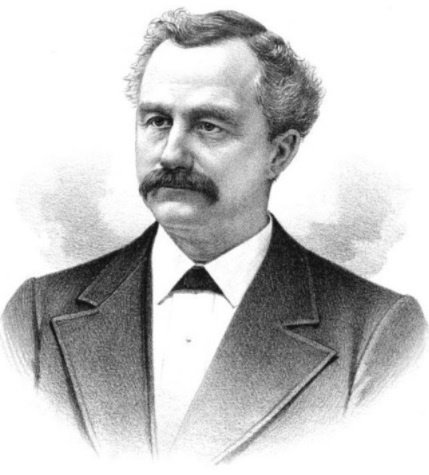
Historical · U.S. House · Iowa · District 7
Hiram Smith
Former U.S. Representative · Iowa District 7 · 1883–1885 · Republican
Hiram Smith represented Iowa's District 7 in the United States House of Representatives (1883–1885) for the Republican party. The page below collects sourced biographical facts, term history, committee roles, and provenance for Smith.
Bioguide ID: S000550
Key facts
- Full name
- Hiram Smith
- State
- Iowa
- District
- District 7
- Party
- Republican
- House service
- 1883–1885
- First House term
- 1883
- Status
- Left office
- Current term ends
- —
- Born
- 1843
- Bioguide ID
- S000550
- Committee assignments
- —
- Dataset version
- 1.20260606
Biographical narrative
807 words · sourced from the Wikipedia REST extract
Hiram Smith was a Republican politician and lawyer who served as a U.S. Representative for Iowa's 7th congressional district in the mid-1880s. His tenure in the House of Representatives was brief, lasting only a few months in the 48th Congress, during which he succeeded John A. Kasson after Kasson's appointment as U.S. Envoy to Germany. Smith's political career was marked by his involvement in local governance and his legal practice, which he continued after his congressional service.
Early life and career
Hiram Smith was born on March 22, 1843, in Piqua, Ohio. In 1850, when he was seven years old, his family relocated to Rock Island, Illinois. Four years later, in 1854, they moved again, this time to Des Moines, Iowa, where Smith would spend much of his formative years. He received his education in public schools, which laid the groundwork for his future endeavors.
In 1861, during a period of conflict with Native American tribes, Smith enlisted in the Iowa Militia, demonstrating an early commitment to public service. His military service was part of a broader trend during this era, as many young men participated in local militias. Following his military service, Smith began working in the federal government. In 1862, he was appointed as a clerk in the Post Office Department, a position he held until 1864. Subsequently, he transferred to the Treasury Department, where he continued to serve until 1865.
After completing his government service, Smith pursued a legal education. He graduated from Albany Law School in 1866 and was admitted to the bar later that same year. He began his legal practice in Des Moines, where he established himself in the local legal community. His legal career included significant public service; from 1875 to 1879, he served as the district attorney for the fifth judicial district of Iowa. This role involved prosecuting criminal cases and representing the state in legal matters, further enhancing his reputation in the legal field.
In addition to his legal work, Smith entered politics. He was elected to the Iowa Senate, where he served from 1882 to 1884. His time in the state legislature provided him with valuable experience in governance and policy-making, which would later inform his work in Congress.
House tenure
In 1884, Hiram Smith sought the Republican nomination to succeed John A. Kasson, who was retiring from Congress to take up the post of U.S. Envoy to Germany. Smith's main competitor for the nomination was Edwin H. Conger, the Iowa State Treasurer and a former classmate from law school. The political landscape shifted when Kasson left Congress earlier than expected, necessitating a special election in addition to the regular election for the upcoming Congress.
The elections in November 1884 were unique, as they included both a special election to fill the remainder of Kasson's term in the 48th Congress and a regular election for the 49th Congress. Smith focused his campaign on the shorter term, while Conger campaigned for the longer term. Both candidates were successful in their respective nominations and went on to defeat their opponents in the elections.
Smith's term in the House of Representatives began in December 1884 and lasted until March 3, 1885. His time in office was characterized by the challenges of a lame-duck session, where he participated in legislative activities but faced the limitations of a brief tenure. After completing his congressional service, Smith returned to his legal practice in Des Moines.
Legislative focus and committees
During his short time in Congress, Hiram Smith's legislative focus is not extensively documented. However, as a member of the Republican Party during a period of significant national change, he would have engaged with the pressing issues of the day, including economic policies, civil rights, and the evolving role of the federal government. The 1880s were marked by debates over tariffs, railroad expansion, and the aftermath of the Civil War, which shaped the political landscape and the priorities of legislators.
Smith's involvement in committees during his congressional tenure is not explicitly detailed in available records. Given the brief nature of his service, it is likely that he participated in discussions and decisions relevant to the interests of his constituents in Iowa, particularly those related to economic development and legal matters, reflecting his background as a lawyer.
After leaving Congress, Smith continued to practice law until his death on November 4, 1894, in Des Moines. His contributions to both the legal and political arenas in Iowa were significant, albeit brief in the context of his congressional service. He was interred at Woodland Cemetery in Des Moines, marking the end of a life dedicated to public service and the law. Smith's legacy is that of a local leader who transitioned from legal practice to a brief stint in national politics, representing the interests of his constituents during a transformative period in American history.
Notable legislation
Sponsored and co-sponsored legislation for Hiram Smith is pending operator curation. The biographical narrative above carries the same provenance trail until per-bill rows are written.
Sources
- [1]https://en.wikipedia.org/wiki/Hiram_Y._SmithWikipedia · retrieved 2026-06-06
Notable quotes
Sourced quotes for Hiram Smith are pending operator curation. Narrative-scope provenance remains attached below.
Sources
- [1]https://en.wikipedia.org/wiki/Hiram_Y._SmithWikipedia · retrieved 2026-06-06
Key positions
Curated policy positions for Hiram Smith are pending operator review. The biographical narrative above carries the same provenance trail until per-topic positions are written.
Sources
- [1]https://en.wikipedia.org/wiki/Hiram_Y._SmithWikipedia · retrieved 2026-06-06
Terms served
- 1883–1885U.S. House · Term 1 · Republican
Sources & provenance
Every attributable claim above carries a per-section [N] marker that resolves to the corresponding URL below. Each entry records the upstream provider, the canonical URL, and the timestamp at which the source was retrieved by the ingest pipeline.
Key facts
- https://bioguide.congress.gov/search/bio/S000550bioguide · retrieved 2026-06-06
- https://www.govtrack.us/congress/members/410032govtrack · retrieved 2026-06-06
Biographical narrative
- https://en.wikipedia.org/wiki/Hiram_Y._Smithwikipedia · retrieved 2026-06-06
Find your representative
Every U.S. state elects representatives by district. Browse Iowa’s delegation, the full former-representative roster, or explore the role and term length.
Related on The Candidate
- Preceded by Edward GilletteEarlier holder of the Iowa District 7 House seat · National Greenbacker.Open
- Succeeded by Edwin CongerLater holder of the Iowa District 7 House seat · Republican.Open
- Abby FinkenauerFormer U.S. Representative · Iowa District 1 · DemocraticOpen
- Augustus HallFormer U.S. Representative · Iowa District 1 · DemocraticOpen
- Benton HallFormer U.S. Representative · Iowa District 1 · DemocraticOpen
- Bernhart HennFormer U.S. Representative · Iowa District 1 · DemocraticOpen