
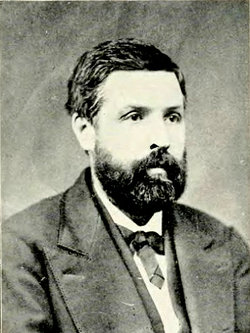
Historical · U.S. House · Iowa · District 9
Cyrus Carpenter
Former U.S. Representative · Iowa District 9 · 1879–1883 · Republican
Cyrus Carpenter represented Iowa's District 9 in the United States House of Representatives (1879–1883) for the Republican party. The page below collects sourced biographical facts, term history, committee roles, and provenance for Carpenter.
Bioguide ID: C000166
Key facts
- Full name
- Cyrus Carpenter
- State
- Iowa
- District
- District 9
- Party
- Republican
- House service
- 1879–1883
- First House term
- 1879
- Status
- Left office
- Current term ends
- —
- Born
- 1829
- Bioguide ID
- C000166
- Committee assignments
- —
- Dataset version
- 1.20260606
Biographical narrative
848 words · sourced from the Wikipedia REST extract
Cyrus Carpenter was a notable figure in American politics during the late 19th century, serving as a U.S. Representative for Iowa's 9th congressional district. A member of the Republican Party, Carpenter's political career was marked by significant roles, including his service as the eighth governor of Iowa and his involvement in the Civil War as an officer. His tenure in the U.S. House of Representatives spanned from 1879 to 1883, during which he contributed to the legislative process in a rapidly changing America. Born in Pennsylvania, Carpenter's early life and career laid the groundwork for his later achievements in public service and governance.
Early life and career
Cyrus Clay Carpenter was born on November 24, 1829, near Harford, Pennsylvania. He was the son of Asahel Carpenter and Amanda M. Thayer, and he descended from William Carpenter, an early immigrant who established the Rehoboth Carpenter family in America during the mid-1630s. Carpenter's early education took place in common schools, and he graduated from Harford Academy in 1853. Following his education, he moved to Iowa in 1854, where he initially engaged in teaching in Fort Dodge. His early professional endeavors also included land surveying, and he served as the County Surveyor of Webster County in 1856.
In March 1857, Carpenter participated in a relief expedition to Spirit Lake, aimed at assisting settlers who had been displaced by the Sioux Indians during the aftermath of the Spirit Lake Massacre. This experience highlighted his commitment to public service and community support. His political career began when he was elected to the Iowa House of Representatives, serving from 1858 to 1860. This early involvement in state politics set the stage for his later roles in governance and representation.
House tenure
Carpenter's congressional career began when he was elected to represent Iowa's 9th congressional district in 1878. This district encompassed a largely rural and sparsely populated area in the northwestern part of the state. He officially took office on March 4, 1879, and served in the 46th United States Congress. His tenure in the House was characterized by his alignment with Republican Party values during a period of significant national transformation, including the aftermath of the Civil War and the rise of industrialization.
Carpenter was re-elected in 1880, serving in the 47th United States Congress. Throughout his time in Congress, he participated in various legislative discussions and decisions that shaped the direction of the nation. However, he chose not to seek re-election in 1882, concluding his congressional service on March 3, 1883. His time in the House of Representatives was marked by his commitment to the interests of his constituents and the broader goals of the Republican Party during a pivotal era in American history.
Legislative focus and committees
During his tenure in the U.S. House of Representatives, Carpenter's legislative focus reflected the priorities and concerns of his constituents in Iowa's 9th congressional district. While specific details of the bills he sponsored or supported are not documented, it can be inferred that his background in education, land surveying, and public service influenced his legislative interests. As a representative from a rural district, he likely engaged with issues related to agriculture, infrastructure, and land management, which were critical to the economic development of the region.
In addition to his legislative work, Carpenter's political career included various significant roles that complemented his responsibilities as a U.S. Representative. Prior to his congressional service, he had already established himself as a leader in Iowa, having served as the state's governor from 1871 to 1876. His experience in state governance provided him with insights into the needs and challenges facing Iowans, which he carried into his work in Congress.
After leaving Congress, Carpenter returned to state politics, winning election to the Iowa House of Representatives for a two-year term from 1884 to 1886. This return to state-level governance demonstrated his ongoing commitment to public service and his desire to continue contributing to the welfare of his community. Additionally, he served as postmaster of Fort Dodge from 1889 to 1893, further solidifying his connection to the local community and its needs.
Carpenter's life and career were also marked by his military service during the Civil War. He volunteered as a private and was later elected captain of volunteers, eventually rising to the rank of lieutenant colonel. His military service included significant contributions to the Union Army, particularly in logistical roles during key campaigns. This experience not only shaped his leadership abilities but also reinforced his dedication to public service, which he carried into his political career.
Cyrus Carpenter passed away on May 29, 1898, in Fort Dodge, Iowa. His contributions to the state and nation were recognized through his various roles in public service, including his time as a governor and U.S. Representative. He was interred in Oakland Cemetery in Fort Dodge, leaving behind a legacy of commitment to his community and the principles of governance. His life reflects the complexities of American politics during a transformative period in the nation's history, characterized by rapid change and the challenges of rebuilding and developing a cohesive national identity.
Notable legislation
Sponsored and co-sponsored legislation for Cyrus Carpenter is pending operator curation. The biographical narrative above carries the same provenance trail until per-bill rows are written.
Sources
- [1]https://en.wikipedia.org/wiki/Cyrus_C._CarpenterWikipedia · retrieved 2026-06-06
Notable quotes
Sourced quotes for Cyrus Carpenter are pending operator curation. Narrative-scope provenance remains attached below.
Sources
- [1]https://en.wikipedia.org/wiki/Cyrus_C._CarpenterWikipedia · retrieved 2026-06-06
Key positions
Curated policy positions for Cyrus Carpenter are pending operator review. The biographical narrative above carries the same provenance trail until per-topic positions are written.
Sources
- [1]https://en.wikipedia.org/wiki/Cyrus_C._CarpenterWikipedia · retrieved 2026-06-06
Terms served
- 1879–1881U.S. House · Term 1 · Republican
- 1881–1883U.S. House · Term 2 · Republican
Sources & provenance
Every attributable claim above carries a per-section [N] marker that resolves to the corresponding URL below. Each entry records the upstream provider, the canonical URL, and the timestamp at which the source was retrieved by the ingest pipeline.
Key facts
- https://bioguide.congress.gov/search/bio/C000166bioguide · retrieved 2026-06-06
- https://www.govtrack.us/congress/members/402314govtrack · retrieved 2026-06-06
Biographical narrative
- https://en.wikipedia.org/wiki/Cyrus_C._Carpenterwikipedia · retrieved 2026-06-06
Find your representative
Every U.S. state elects representatives by district. Browse Iowa’s delegation, the full former-representative roster, or explore the role and term length.
Related on The Candidate
- Preceded by Samuel OliverEarlier holder of the Iowa District 9 House seat · Republican.Open
- Succeeded by William PuseyLater holder of the Iowa District 9 House seat · Democratic.Open
- Abby FinkenauerFormer U.S. Representative · Iowa District 1 · DemocraticOpen
- Augustus HallFormer U.S. Representative · Iowa District 1 · DemocraticOpen
- Benton HallFormer U.S. Representative · Iowa District 1 · DemocraticOpen
- Bernhart HennFormer U.S. Representative · Iowa District 1 · DemocraticOpen