
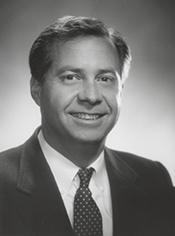
Historical · U.S. House · Idaho · District 1
Larry LaRocco
Former U.S. Representative · Idaho District 1 · 1991–1995 · Democratic
Larry LaRocco represented Idaho's District 1 in the United States House of Representatives (1991–1995) for the Democratic party. The page below collects sourced biographical facts, term history, committee roles, and provenance for LaRocco.
Bioguide ID: L000098
Key facts
- Full name
- Larry LaRocco
- State
- Idaho
- District
- District 1
- Party
- Democratic
- House service
- 1991–1995
- First House term
- 1991
- Status
- Left office
- Current term ends
- —
- Born
- 1946
- Bioguide ID
- L000098
- Committee assignments
- —
- Dataset version
- 1.20260605
Biographical narrative
845 words · sourced from the Wikipedia REST extract
Larry LaRocco is a former American politician who served as a U.S. Representative for Idaho's 1st congressional district from 1991 to 1995. A member of the Democratic Party, LaRocco's political career includes two terms in the House of Representatives, where he was known for his engagement with constituents and his unique approach to campaigning. Following his congressional tenure, he made several attempts to return to public office, running for the position of Lieutenant Governor in 2006 and for the U.S. Senate in 2008, although he was unsuccessful in both endeavors.
Early life and career
Larry LaRocco was born on August 25, 1946, in Van Nuys, a neighborhood located in the San Fernando Valley of Los Angeles, California. He pursued higher education, earning a Bachelor of Arts degree from the University of Portland in 1967, followed by a Master of Science degree from Boston University in 1969. Additionally, LaRocco studied at the Johns Hopkins School of Advanced International Studies, further enhancing his academic credentials.
In 1969, LaRocco joined the U.S. Army, where he was commissioned as an officer on August 15 of that year. He served in military intelligence, specifically at the Intelligence Data Handling Systems (IDHS) at the 7th Army Headquarters in Heidelberg, Germany. His military career was marked by a significant event on May 24, 1972, when a car bomb, planted by the Baader-Meinhof Gang, exploded outside Campbell Barracks, resulting in the deaths of three of his fellow soldiers. LaRocco was honorably discharged from the Army on June 10, 1972, having achieved the rank of captain.
Following his military service, LaRocco began his political career by working as the northern Idaho field coordinator for U.S. Senator Frank Church from 1975 until Church's defeat in 1980. During this time, LaRocco also coordinated efforts for Church's presidential campaign in the Oregon primary in 1976. In the 1982 elections, he ran as the Democratic nominee for Idaho's 1st congressional district, where he garnered 46.5 percent of the vote against incumbent Republican Larry Craig. Notably, LaRocco gained attention for his innovative campaign strategy, which involved taking various jobs for a week in each of the district's 19 counties, allowing him to connect with constituents on a personal level.
After the 1982 election, LaRocco transitioned to the private sector, serving as the vice president of a brokerage firm starting in 1983. He continued his political aspirations by running for the Idaho Legislature in 1986, although he was unsuccessful in his bid for the Idaho State Senate against Republican incumbent Jim Risch.
House tenure
In 1990, LaRocco successfully won election to the U.S. House of Representatives, representing Idaho's 1st congressional district after incumbent Larry Craig moved on to the U.S. Senate. LaRocco's first term began in January 1991. He was re-elected in 1992, achieving a significant victory by winning every county in the district and securing approximately 58 percent of the vote against his main opponent. This outcome was notable given the district's historical lean toward the Republican Party.
During his time in Congress, LaRocco was recognized for his willingness to take positions that were sometimes unpopular within his district. He was the only member of Congress from Idaho to vote in favor of the Omnibus Budget Reconciliation Act of 1993, a decision that later proved to be politically detrimental as it was leveraged against him by Republican opponents in subsequent elections.
LaRocco's tenure in the House was cut short when he was defeated in the 1994 election by Republican candidate Helen Chenoweth. This defeat was part of a broader trend during that election cycle, where many Democrats lost their seats as Republicans gained control of the House for the first time in 40 years. Following this loss, LaRocco became the last Democrat to represent Idaho in Congress until Walt Minnick was elected to the same seat in 2008.
Legislative focus and committees
During his time in the House of Representatives, LaRocco focused on various issues pertinent to his constituents in Idaho. His legislative priorities included economic development, education, and healthcare, reflecting the concerns of the residents in his district. LaRocco's background in military intelligence and public service informed his approach to national security and defense issues, although specific committee assignments during his tenure are not detailed in the available information.
After leaving Congress, LaRocco continued to engage in public service and political activities. In 2006, he filed to run for the position of Lieutenant Governor of Idaho, winning the Democratic nomination in the primary election. However, he was defeated in the general election by Jim Risch. In 2007, LaRocco announced his candidacy for the U.S. Senate, marking his third electoral contest against Risch. His campaign featured a grassroots approach, including a program titled "Working for the Senate," where he took on various jobs across Idaho to connect with voters. Despite his efforts, LaRocco was unsuccessful in the 2008 Senate race.
Throughout his career, LaRocco demonstrated a commitment to public service and a willingness to engage with his constituents. His unique campaign strategies and focus on local issues have left a lasting impression on Idaho's political landscape.
Notable legislation
Sponsored and co-sponsored legislation for Larry LaRocco is pending operator curation. The biographical narrative above carries the same provenance trail until per-bill rows are written.
Sources
- [1]https://en.wikipedia.org/wiki/Larry_LaRoccoWikipedia · retrieved 2026-06-05
Notable quotes
Sourced quotes for Larry LaRocco are pending operator curation. Narrative-scope provenance remains attached below.
Sources
- [1]https://en.wikipedia.org/wiki/Larry_LaRoccoWikipedia · retrieved 2026-06-05
Key positions
Curated policy positions for Larry LaRocco are pending operator review. The biographical narrative above carries the same provenance trail until per-topic positions are written.
Sources
- [1]https://en.wikipedia.org/wiki/Larry_LaRoccoWikipedia · retrieved 2026-06-05
Terms served
- 1991–1993U.S. House · Term 1 · Democratic
- 1993–1995U.S. House · Term 2 · Democratic
Sources & provenance
Every attributable claim above carries a per-section [N] marker that resolves to the corresponding URL below. Each entry records the upstream provider, the canonical URL, and the timestamp at which the source was retrieved by the ingest pipeline.
Key facts
- https://bioguide.congress.gov/search/bio/L000098bioguide · retrieved 2026-06-05
- https://www.govtrack.us/congress/members/406605govtrack · retrieved 2026-06-05
Biographical narrative
- https://en.wikipedia.org/wiki/Larry_LaRoccowikipedia · retrieved 2026-06-05
Find your representative
Every U.S. state elects representatives by district. Browse Idaho’s delegation, the full former-representative roster, or explore the role and term length.
Related on The Candidate
- Preceded by Compton White Jr.Earlier holder of the Idaho District 1 House seat · Democratic.Open
- Succeeded by Helen Chenoweth-HageLater holder of the Idaho District 1 House seat · Republican.Open
- Abe GoffFormer U.S. Representative · Idaho District 1 · RepublicanOpen
- Bill SaliFormer U.S. Representative · Idaho District 1 · RepublicanOpen
- Burton FrenchFormer U.S. Representative · Idaho District 1 · RepublicanOpen
- Butch OtterFormer U.S. Representative · Idaho District 1 · RepublicanOpen