
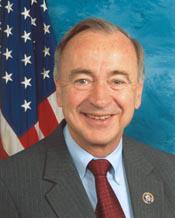
Historical · U.S. House · Idaho · District 1
Walter Minnick
Former U.S. Representative · Idaho District 1 · 2009–2011 · Democratic
Walter Minnick represented Idaho's District 1 in the United States House of Representatives (2009–2011) for the Democratic party. The page below collects sourced biographical facts, term history, committee roles, and provenance for Minnick.
Bioguide ID: M001175
Key facts
- Full name
- Walter Minnick
- State
- Idaho
- District
- District 1
- Party
- Democratic
- House service
- 2009–2011
- First House term
- 2009
- Status
- Left office
- Current term ends
- —
- Born
- 1942
- Bioguide ID
- M001175
- Committee assignments
- —
- Dataset version
- 1.20260605
Biographical narrative
964 words · sourced from the Wikipedia REST extract
Walter Minnick is a former U.S. Representative who served Idaho's 1st congressional district from 2009 until 2011. A member of the Democratic Party, he is notable for being the last Democrat to represent Idaho in Congress. Minnick's political career followed a diverse background in business and public service, including significant roles in both the private sector and government.
Early life and career
Walter Clifford Minnick was born on September 20, 1942, in Walla Walla, Washington. He grew up on a wheat farm, which provided him with early exposure to agricultural life and the challenges faced by rural communities. His educational journey began at Whitman College, where he earned a bachelor's degree in 1964. During his time at Whitman, he was active on the debate team, honing skills that would later serve him in his political career.
Following his undergraduate studies, Minnick attended Harvard Business School, where he obtained a Master of Business Administration (MBA) in 1966. He then pursued a law degree at Harvard Law School, graduating with a Juris Doctor (JD) in 1969. His academic achievements laid a strong foundation for his future endeavors in both business and politics.
Minnick's professional career began in the military; he served in the U.S. Army during the Vietnam War and held positions at the Pentagon. His government service continued when he worked as a staff assistant to President Richard Nixon on the White House Domestic Council from 1971 to 1972. He later became a deputy assistant director for the Office of Management and Budget from 1972 to 1973. During this time, he was involved in the establishment of the Drug Enforcement Administration. However, he resigned from his government position in October 1973 in response to the Watergate scandal, specifically the "Saturday Night Massacre," which involved the dismissal of key officials by President Nixon.
In the years following his government service, Minnick transitioned to the private sector, where he became a prominent businessman. He founded SummerWinds Garden Centers, a chain of retail nurseries, and served as CEO of TJ International, a company that was later acquired by Weyerhaeuser in 1999. His leadership roles extended to various boards of directors for both corporate and nonprofit organizations, showcasing his influence in the business community.
House tenure
Minnick's political aspirations took a significant turn when he ran for the U.S. House of Representatives in 2008. He entered the Democratic primary unopposed after a potential challenge from the previous nominee, Larry Grant, was averted when Grant withdrew and endorsed him. The general election was highly competitive, as the district had a reputation for being heavily Republican. However, Minnick successfully defeated the incumbent Republican, Bill Sali, by a narrow margin, securing approximately 51% of the vote compared to Sali's 49%. His victory was notable as it marked the first time a Democrat had represented Idaho at the federal level since Larry LaRocco left office in 1994.
During his time in Congress, which began in January 2009, Minnick aligned himself with the Blue Dog Coalition, a group of moderate and conservative Democrats. His voting record indicated a tendency to diverge from party lines, as he voted with his party approximately 71% of the time. In January 2009, he was one of a small group of Democrats who opposed the American Recovery and Reinvestment Act, reflecting his cautious approach to government spending.
Minnick's tenure included several key votes that highlighted his moderate stance. He opposed the American Clean Energy and Security Act in June 2009 and voted against the Affordable Health Care for America Act in December of the same year. He was also the only Democrat to receive a perfect score from the Club for Growth on their RePork Card ratings, which evaluated members of Congress based on their votes to reduce government spending.
In March 2010, Minnick voted against the Patient Protection and Affordable Care Act, expressing concerns about the lack of cost control in the legislation. He also voted against the Stupak-Pitts Amendment, which sought to restrict federal funding for abortion services. However, he supported several other measures, including the Lilly Ledbetter Fair Pay Act and the Local Law Enforcement Hate Crimes Prevention Act, demonstrating a willingness to engage with a range of issues.
Minnick's re-election campaign in 2010 was challenging. He was endorsed by the Tea Party Express, a conservative group, which was unusual for a Democrat. He faced a competitive race against Republican state Representative Raúl Labrador, as well as candidates from the Libertarian and Independent parties. Despite initial polling suggesting he had a chance to win, Minnick was ultimately defeated by Labrador, marking the end of his congressional career. His loss was significant as it left Idaho without a Democratic representative in Congress since he had been the last to hold that position.
Legislative focus and committees
During his time in the House of Representatives, Minnick served on several committees that aligned with his interests and expertise. He was a member of the Committee on Agriculture, where he participated in subcommittees focused on conservation, credit, energy, and research, as well as livestock, dairy, and poultry. His involvement in these areas reflected his background in agriculture and business.
Additionally, Minnick served on the Committee on Financial Services, where he was part of subcommittees that dealt with capital markets, insurance, government-sponsored enterprises, and financial institutions and consumer credit. His work on these committees allowed him to engage with critical issues affecting both the agricultural sector and the financial landscape, contributing to his legislative priorities during his time in office.
After leaving Congress in January 2011, Minnick continued his involvement in various professional and civic activities, including co-founding a lobbying firm. His career trajectory demonstrates a blend of public service, business acumen, and political engagement, reflecting the complexities of navigating the political landscape in a predominantly Republican state.
Notable legislation
Sponsored and co-sponsored legislation for Walter Minnick is pending operator curation. The biographical narrative above carries the same provenance trail until per-bill rows are written.
Sources
- [1]https://en.wikipedia.org/wiki/Walt_MinnickWikipedia · retrieved 2026-06-05
Notable quotes
Sourced quotes for Walter Minnick are pending operator curation. Narrative-scope provenance remains attached below.
Sources
- [1]https://en.wikipedia.org/wiki/Walt_MinnickWikipedia · retrieved 2026-06-05
Key positions
Curated policy positions for Walter Minnick are pending operator review. The biographical narrative above carries the same provenance trail until per-topic positions are written.
Sources
- [1]https://en.wikipedia.org/wiki/Walt_MinnickWikipedia · retrieved 2026-06-05
Terms served
- 2009–2011U.S. House · Term 1 · Democratic
Sources & provenance
Every attributable claim above carries a per-section [N] marker that resolves to the corresponding URL below. Each entry records the upstream provider, the canonical URL, and the timestamp at which the source was retrieved by the ingest pipeline.
Key facts
- https://bioguide.congress.gov/search/bio/M001175bioguide · retrieved 2026-06-05
- http://minnick.house.govhouse.gov · retrieved 2026-06-05
Biographical narrative
- https://en.wikipedia.org/wiki/Walt_Minnickwikipedia · retrieved 2026-06-05
Find your representative
Every U.S. state elects representatives by district. Browse Idaho’s delegation, the full former-representative roster, or explore the role and term length.
Related on The Candidate
- Preceded by Bill SaliEarlier holder of the Idaho District 1 House seat · Republican.Open
- Succeeded by Raúl LabradorLater holder of the Idaho District 1 House seat · Republican.Open
- Abe GoffFormer U.S. Representative · Idaho District 1 · RepublicanOpen
- Burton FrenchFormer U.S. Representative · Idaho District 1 · RepublicanOpen
- Butch OtterFormer U.S. Representative · Idaho District 1 · RepublicanOpen
- Democratic PartyFederal candidates and office holders on the Democratic line.Open