
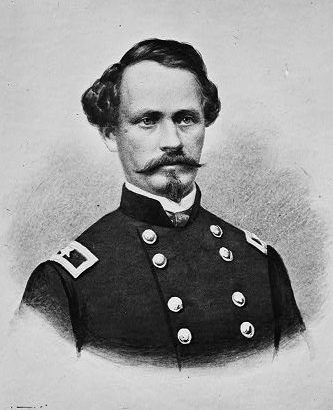
Historical · U.S. House · Indiana · District 1
Alvin Hovey
Former U.S. Representative · Indiana District 1 · 1887–1889 · Republican
Alvin Hovey represented Indiana's District 1 in the United States House of Representatives (1887–1889) for the Republican party. The page below collects sourced biographical facts, term history, committee roles, and provenance for Hovey.
Bioguide ID: H000833
Key facts
- Full name
- Alvin Hovey
- State
- Indiana
- District
- District 1
- Party
- Republican
- House service
- 1887–1889
- First House term
- 1887
- Status
- Left office
- Current term ends
- —
- Born
- 1821
- Bioguide ID
- H000833
- Committee assignments
- —
- Dataset version
- 1.20260606
Biographical narrative
928 words · sourced from the Wikipedia REST extract
Alvin Hovey was a prominent figure in American history, serving as a U.S. Representative for Indiana's 1st congressional district, a Union general during the Civil War, and the 21st governor of Indiana. His career spanned various roles in public service, law, and military leadership, reflecting a life dedicated to the governance and development of his state and country. Hovey's tenure in the U.S. House of Representatives was marked by his alignment with the Republican Party, and he was active in the political landscape of his time until his last term ended in 1889.
Early life and career
Alvin Peterson Hovey was born on September 6, 1821, in Mount Vernon, Indiana, to Abiel and Francis Hovey. His early life was marked by hardship, as he lost his father at a young age and became orphaned when his mother passed away in 1836. Following her death, Hovey was sent to an orphanage, where he experienced poverty but also received a basic education. At the age of eighteen, he was released from the orphanage and sought to pursue a career in law. To support himself, he worked as a bricklayer during the day while studying law at night under the guidance of John Pitcher, a local attorney. After three years of diligent study, Hovey was admitted to the bar in 1843 and established his own law practice.
Hovey gained significant public attention in 1849 when he was appointed to manage the estate of William Maclure, a wealthy philanthropist and co-founder of the utopian settlement of New Harmony, Indiana. Maclure's will stipulated that his estate's proceeds should be used to construct libraries. However, his siblings had misappropriated much of the estate. Hovey undertook a legal battle, filing over sixty lawsuits to reclaim the assets and ensure they were used for their intended purpose. His efforts led to the establishment of approximately 160 libraries across Indiana and Illinois, garnering him considerable acclaim and popularity.
In addition to his legal work, Hovey was politically active. He was elected as a delegate in 1850 to help draft a new constitution for Indiana, where he supported various educational and governmental reforms. However, he also took controversial stances, opposing the extension of suffrage to women and African Americans. His proposal to prohibit free blacks from residing in Indiana was accepted, reflecting the racial attitudes of the time. Although the constitution was ultimately approved, the anti-black provisions were later deemed unconstitutional by the U.S. Supreme Court.
Hovey's legal and political career continued to evolve when he was appointed to the Indiana Supreme Court in 1854, becoming the youngest justice in the court's history. His tenure was brief, lasting only six months, during which he made a significant ruling that required uniform funding for state schools. Following his departure from the court, he was appointed by President Franklin Pierce as the U.S. Attorney for Indiana. However, internal conflicts within the Democratic Party regarding slavery led to his expulsion from the party and subsequent removal from office. In response, Hovey ran for Congress as an Independent but was defeated. He later joined the Republican Party, aligning himself with a growing political movement in the state.
House tenure
Alvin Hovey's congressional career began when he was elected as a Republican to represent Indiana's 1st congressional district in the U.S. House of Representatives. His term commenced in 1887, during a period of significant political and social change in the United States. Hovey's time in office was characterized by his engagement in the legislative process and his contributions to discussions on various issues affecting his constituents and the nation.
As a member of the House, Hovey participated in debates and decisions that reflected the interests and concerns of his district. His legislative focus was shaped by the political landscape of the late 19th century, a time when issues such as economic reform, civil rights, and governance were at the forefront of national discourse. Hovey's tenure in the House lasted until March 3, 1889, when he completed his term. Following his departure from Congress, Hovey continued to be involved in public service, eventually becoming the governor of Indiana, a position he held from 1889 until his death in 1891.
Legislative focus and committees
During his time in the U.S. House of Representatives, Alvin Hovey's legislative focus was influenced by his background in law and his experiences as a public servant. Although specific details regarding the committees he served on or the bills he sponsored are not documented, it is known that he engaged with the pressing issues of his time. His work in Congress coincided with significant national developments, including economic challenges and discussions surrounding civil rights and governance.
Hovey's political career was marked by his commitment to reform and governance, which he continued to advocate for during his subsequent tenure as governor of Indiana. His efforts in the House laid the groundwork for his later initiatives as governor, where he sought to address various legal and electoral reforms. Hovey's legacy includes his contributions to the legal framework of Indiana and his role in shaping the political landscape of the state during a transformative period in American history.
In summary, Alvin Hovey's life and career reflect a dedication to public service, law, and governance. His journey from an orphaned child to a prominent political figure illustrates the potential for resilience and impact in American society. His involvement in the U.S. House of Representatives, along with his subsequent role as governor, underscores his commitment to addressing the needs of his constituents and contributing to the ongoing development of Indiana and the nation.
Notable legislation
Sponsored and co-sponsored legislation for Alvin Hovey is pending operator curation. The biographical narrative above carries the same provenance trail until per-bill rows are written.
Sources
- [1]https://en.wikipedia.org/wiki/Alvin_Peterson_HoveyWikipedia · retrieved 2026-06-06
Notable quotes
Sourced quotes for Alvin Hovey are pending operator curation. Narrative-scope provenance remains attached below.
Sources
- [1]https://en.wikipedia.org/wiki/Alvin_Peterson_HoveyWikipedia · retrieved 2026-06-06
Key positions
Curated policy positions for Alvin Hovey are pending operator review. The biographical narrative above carries the same provenance trail until per-topic positions are written.
Sources
- [1]https://en.wikipedia.org/wiki/Alvin_Peterson_HoveyWikipedia · retrieved 2026-06-06
Terms served
- 1887–1889U.S. House · Term 1 · Republican
Sources & provenance
Every attributable claim above carries a per-section [N] marker that resolves to the corresponding URL below. Each entry records the upstream provider, the canonical URL, and the timestamp at which the source was retrieved by the ingest pipeline.
Key facts
- https://bioguide.congress.gov/search/bio/H000833bioguide · retrieved 2026-06-06
- https://www.govtrack.us/congress/members/405680govtrack · retrieved 2026-06-06
Biographical narrative
- https://en.wikipedia.org/wiki/Alvin_Peterson_Hoveywikipedia · retrieved 2026-06-06
Find your representative
Every U.S. state elects representatives by district. Browse Indiana’s delegation, the full former-representative roster, or explore the role and term length.
Related on The Candidate
- Preceded by John KleinerEarlier holder of the Indiana District 1 House seat · Democratic.Open
- Succeeded by William ParrettLater holder of the Indiana District 1 House seat · Democratic.Open
- Adam Benjamin Jr.Former U.S. Representative · Indiana District 1 · DemocraticOpen
- Arthur TaylorFormer U.S. Representative · Indiana District 1 · DemocraticOpen
- Benoni FullerFormer U.S. Representative · Indiana District 1 · DemocraticOpen
- Charles LiebFormer U.S. Representative · Indiana District 1 · DemocraticOpen