
Historical · U.S. House · Kansas · District 1
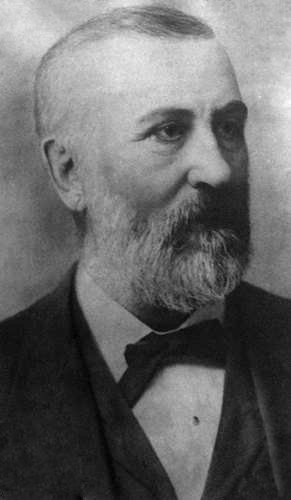
Edmund Morrill
Former U.S. Representative · Kansas District 1 · 1883–1891 · Republican
Edmund Morrill represented Kansas's District 1 in the United States House of Representatives (1883–1891) for the Republican party. The page below collects sourced biographical facts, term history, committee roles, and provenance for Morrill.
Bioguide ID: M000968
Key facts
- Full name
- Edmund Morrill
- State
- Kansas
- District
- District 1
- Party
- Republican
- House service
- 1883–1891
- First House term
- 1883
- Status
- Left office
- Current term ends
- —
- Born
- 1834
- Bioguide ID
- M000968
- Committee assignments
- —
- Dataset version
- 1.20260606
Biographical narrative
819 words · sourced from the Wikipedia REST extract
Edmund Morrill was a prominent figure in Kansas politics during the late 19th century, serving as a U.S. Representative for the state’s 1st congressional district and later as the 13th governor of Kansas. A member of the Republican Party, Morrill's political career spanned several decades, during which he was involved in various public service roles, including military service during the Civil War and significant contributions to local governance and banking. His tenure in the U.S. House of Representatives lasted from 1883 until 1891, after which he briefly returned to politics as governor in the mid-1890s.
Early life and career
Edmund Needham Morrill was born on February 12, 1834, in Westbrook, Maine, to Rufus and Mary (Webb) Morrill. He received his early education at the local common schools and attended Westbrook Academy. Following his education, Morrill learned the trade of tanning from his father, which provided him with practical skills that would serve him throughout his life. At the age of 23, seeking new opportunities, he relocated to Kansas, a territory that was experiencing significant growth and change during that period.
Upon his arrival in Kansas, Morrill became actively involved in the community. His public service began in earnest when he enlisted in the military during the Civil War. In 1861, he joined Company C of the 7th Kansas Cavalry as a private. His leadership qualities quickly became apparent, and within a year, he had risen to the rank of captain. By the end of the war in 1865, he had attained the rank of major, reflecting his dedication and service during a tumultuous time in American history.
After the war, Morrill transitioned into the banking sector, where he would spend the remainder of his professional career. His experience in finance and banking would later inform his political decisions and legislative priorities. In addition to his banking career, Morrill also engaged in local politics. In 1866, he was elected as the clerk of the district court, marking the beginning of his formal involvement in public service. His political aspirations continued to grow, leading to his election to the Kansas Senate in 1872.
Morrill's personal life included two marriages. His first marriage was to Elizabeth A. Brettum on November 27, 1862. Tragically, Elizabeth passed away in November 1868 while they were living in Hiawatha, Kansas. Morrill later remarried on December 25, 1869, to Caroline Jenkins Nash, with whom he had three children, all born in Hiawatha.
House tenure
Edmund Morrill's political career reached a significant milestone when he was elected to the United States House of Representatives in 1882. He served four consecutive two-year terms, beginning in 1883 and concluding in 1891. During his time in the House, Morrill was involved in various legislative activities and contributed to discussions on issues pertinent to his constituents and the nation as a whole. His tenure coincided with a period of considerable change and development in the United States, including economic growth and the expansion of infrastructure.
Morrill's decision to retire from Congress after his fourth term was influenced by a desire to step back from the political arena. However, he was later persuaded by friends and supporters to run for governor of Kansas in 1894. He accepted the nomination and was elected, serving one term before being defeated in the 1896 election. His gubernatorial term was marked by various challenges and controversies, including scrutiny over his business dealings prior to and during his time in office.
Legislative focus and committees
During his time in the U.S. House of Representatives, Morrill's legislative focus was likely shaped by his background in banking and his experiences as a soldier and local politician. While specific details about the bills he sponsored or the committees he served on are not provided, it can be inferred that his interests may have included issues related to finance, infrastructure, and veterans' affairs, reflecting his professional and personal history.
Morrill's involvement in the banking sector would have given him insight into economic matters, which may have influenced his legislative priorities. Additionally, his military service would have likely made him an advocate for veterans and their needs, as many of his contemporaries were during this period.
Despite his contributions to public service, Morrill's later years were marred by controversy. In 1894, allegations surfaced regarding questionable land deals he orchestrated in connection with the Denver City railroad company. Reports indicated that he misrepresented property assessments to evade taxes, leading to significant public scrutiny and criticism. This controversy would overshadow some of his earlier political achievements and contributed to a complex legacy.
Edmund Morrill passed away on March 14, 1909, in San Antonio, Texas. He was laid to rest in Mount Hope Cemetery in Hiawatha, Kansas, where he had spent much of his adult life. His career reflects the dynamic nature of American politics in the late 19th century, characterized by rapid growth, conflict, and the evolving role of government in society.
Notable legislation
Sponsored and co-sponsored legislation for Edmund Morrill is pending operator curation. The biographical narrative above carries the same provenance trail until per-bill rows are written.
Sources
- [1]https://en.wikipedia.org/wiki/Edmund_Needham_MorrillWikipedia · retrieved 2026-06-06
Notable quotes
Sourced quotes for Edmund Morrill are pending operator curation. Narrative-scope provenance remains attached below.
Sources
- [1]https://en.wikipedia.org/wiki/Edmund_Needham_MorrillWikipedia · retrieved 2026-06-06
Key positions
Curated policy positions for Edmund Morrill are pending operator review. The biographical narrative above carries the same provenance trail until per-topic positions are written.
Sources
- [1]https://en.wikipedia.org/wiki/Edmund_Needham_MorrillWikipedia · retrieved 2026-06-06
Terms served
- 1883–1885U.S. House · Term 1 · Republican
- 1885–1887U.S. House · Term 2 · Republican
- 1887–1889U.S. House · Term 3 · Republican
- 1889–1891U.S. House · Term 4 · Republican
Sources & provenance
Every attributable claim above carries a per-section [N] marker that resolves to the corresponding URL below. Each entry records the upstream provider, the canonical URL, and the timestamp at which the source was retrieved by the ingest pipeline.
Key facts
- https://bioguide.congress.gov/search/bio/M000968bioguide · retrieved 2026-06-06
- https://www.govtrack.us/congress/members/407936govtrack · retrieved 2026-06-06
Biographical narrative
- https://en.wikipedia.org/wiki/Edmund_Needham_Morrillwikipedia · retrieved 2026-06-06
Find your representative
Every U.S. state elects representatives by district. Browse Kansas’s delegation, the full former-representative roster, or explore the role and term length.
Related on The Candidate
- Preceded by William PhillipsEarlier holder of the Kansas District 1 House seat · Republican.Open
- Succeeded by Case BroderickLater holder of the Kansas District 1 House seat · Republican.Open
- Abel WilderFormer U.S. Representative · Kansas District 1 · RepublicanOpen
- Albert ColeFormer U.S. Representative · Kansas District 1 · RepublicanOpen
- Daniel Anthony Jr.Former U.S. Representative · Kansas District 1 · RepublicanOpen
- Republican PartyFederal candidates and office holders on the Republican line.Open