
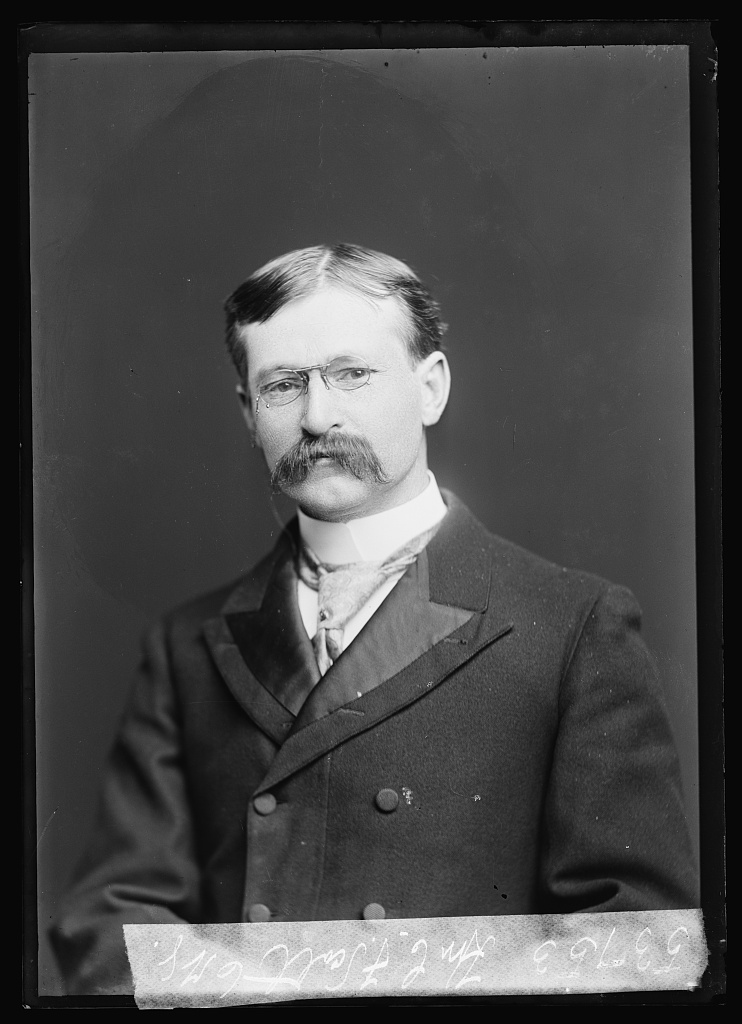
Historical · U.S. House · Kansas · District 2
Charles Scott
Former U.S. Representative · Kansas District 2 · 1901–1911 · Republican
Charles Scott represented Kansas's District 2 in the United States House of Representatives (1901–1911) for the Republican party. The page below collects sourced biographical facts, term history, committee roles, and provenance for Scott.
Bioguide ID: S000166
Key facts
- Full name
- Charles Scott
- State
- Kansas
- District
- District 2
- Party
- Republican
- House service
- 1901–1911
- First House term
- 1901
- Status
- Left office
- Current term ends
- —
- Born
- 1860
- Bioguide ID
- S000166
- Committee assignments
- —
- Dataset version
- 1.20260606
Biographical narrative
862 words · sourced from the Wikipedia REST extract
Charles Scott was a prominent political figure in the early 20th century, serving as a U.S. Representative from Kansas. A member of the Republican Party, Scott's congressional career spanned over a decade, during which he was involved in various legislative activities and held significant positions within the House of Representatives. His contributions to agriculture policy and his engagement in state and national politics were notable aspects of his career.
Early life and career
Charles Frederick Scott was born on September 7, 1860, near Iola, Kansas. His early education took place in common schools, where he laid the foundation for his future academic pursuits. He attended the University of Kansas at Lawrence, graduating in 1881. Following his graduation, Scott ventured beyond Kansas, spending time in Colorado, New Mexico, and Arizona, where he primarily engaged in clerical work. This experience likely contributed to his administrative skills and understanding of various regional issues.
In 1882, Scott returned to Iola, where he took on the role of editor for the Iola Register, a local newspaper. His involvement in journalism not only honed his communication skills but also allowed him to engage with the community on political and social issues. His editorial work positioned him as a significant figure in local politics and public discourse.
Scott's political career began to take shape in the 1890s when he was appointed as a regent of the University of Kansas, serving from 1891 to 1900. This role demonstrated his commitment to education and governance. Additionally, he was elected to the Kansas State Senate, where he served from 1892 to 1896. During this time, he developed a network of political connections and gained valuable experience in legislative processes. His leadership roles included serving as president of the State Editorial Association, the Kansas League of Republican Clubs, and the Kansas Day Club, which was an organization aimed at engaging young Republicans in the state.
House tenure
Scott's congressional career began when he was elected as a Republican to the 57th Congress, which convened in 1901. He successfully secured re-election to four subsequent Congresses, serving a total of five terms in the House of Representatives until his tenure ended on March 3, 1911. Throughout his time in Congress, Scott was actively involved in various legislative initiatives and was recognized for his leadership abilities.
During the 60th and 61st Congresses, Scott served as the chairman of the Committee on Agriculture. In this capacity, he played a crucial role in shaping agricultural policy, which was particularly significant given the agrarian nature of Kansas and the broader Midwestern region. His leadership on this committee allowed him to influence legislation that impacted farmers and agricultural practices, addressing the needs and concerns of his constituents.
Despite his accomplishments, Scott faced challenges in his political career. He was an unsuccessful candidate for re-election in 1910 to the 62nd Congress, marking the end of his direct involvement in the House. Following his departure from Congress, he continued to engage in public service and political activities.
In 1911, Scott was appointed as one of five delegates to the International Institute of Agriculture in Rome, an organization focused on improving agricultural practices and policies on a global scale. This appointment underscored his expertise in agricultural issues and his commitment to international cooperation in addressing food security and agricultural development.
Legislative focus and committees
Throughout his tenure in the House of Representatives, Scott's legislative focus was primarily on agricultural issues, reflecting the interests and needs of his constituents in Kansas. As chairman of the Committee on Agriculture, he was instrumental in advocating for policies that supported farmers and promoted agricultural innovation. His leadership in this area was vital during a period when agriculture was a cornerstone of the American economy, particularly in the Midwest.
In addition to his work on agricultural policy, Scott was involved in various other legislative matters, contributing to discussions and decisions that shaped national policy. His experience as an editor and his background in state politics provided him with a unique perspective on the intersection of local and national issues.
After leaving Congress, Scott remained active in political circles. He participated as a delegate in the Republican National Conventions in 1916 and 1932, further demonstrating his ongoing commitment to the Republican Party and its principles. Additionally, he engaged in lecturing on the Chautauqua platform during the years 1913, 1915, and 1916, sharing his insights and experiences with broader audiences.
Scott's political aspirations continued beyond his congressional career. In 1918, he sought nomination for the United States Senate but was unsuccessful, losing to Arthur Capper. Following this setback, he returned to his roots in journalism, resuming his work in the newspaper industry until his death.
Charles Scott passed away on September 18, 1938, in Iola, Kansas. His contributions to both local and national politics, particularly in the realm of agriculture, left a lasting impact on the communities he served. He was interred in Iola Cemetery, where he is remembered for his service and dedication to the state of Kansas and the United States. His legacy includes his role as a member of the American Philosophical Society, reflecting his engagement with intellectual and scholarly pursuits throughout his life.
Notable legislation
Sponsored and co-sponsored legislation for Charles Scott is pending operator curation. The biographical narrative above carries the same provenance trail until per-bill rows are written.
Sources
- [1]https://en.wikipedia.org/wiki/Charles_Frederick_ScottWikipedia · retrieved 2026-06-06
Notable quotes
Sourced quotes for Charles Scott are pending operator curation. Narrative-scope provenance remains attached below.
Sources
- [1]https://en.wikipedia.org/wiki/Charles_Frederick_ScottWikipedia · retrieved 2026-06-06
Key positions
Curated policy positions for Charles Scott are pending operator review. The biographical narrative above carries the same provenance trail until per-topic positions are written.
Sources
- [1]https://en.wikipedia.org/wiki/Charles_Frederick_ScottWikipedia · retrieved 2026-06-06
Terms served
- 1901–1903U.S. House · Term 1 · Republican
- 1903–1905U.S. House · Term 2 · Republican
- 1905–1907U.S. House · Term 3 · Republican
- 1907–1909U.S. House · Term 4 · Republican
- 1909–1911U.S. House · Term 5 · Republican
Sources & provenance
Every attributable claim above carries a per-section [N] marker that resolves to the corresponding URL below. Each entry records the upstream provider, the canonical URL, and the timestamp at which the source was retrieved by the ingest pipeline.
Key facts
- https://bioguide.congress.gov/search/bio/S000166bioguide · retrieved 2026-06-06
- https://www.govtrack.us/congress/members/409673govtrack · retrieved 2026-06-06
Biographical narrative
- https://en.wikipedia.org/wiki/Charles_Frederick_Scottwikipedia · retrieved 2026-06-06
Find your representative
Every U.S. state elects representatives by district. Browse Kansas’s delegation, the full former-representative roster, or explore the role and term length.
Related on The Candidate
- Preceded by Mason PetersEarlier holder of the Kansas District 2 House seat · Populist.Open
- Succeeded by Alexander MitchellLater holder of the Kansas District 2 House seat · Republican.Open
- Abel WilderFormer U.S. Representative · Kansas District 1 · RepublicanOpen
- Albert ColeFormer U.S. Representative · Kansas District 1 · RepublicanOpen
- Case BroderickFormer U.S. Representative · Kansas District 1 · RepublicanOpen
- Daniel Anthony Jr.Former U.S. Representative · Kansas District 1 · RepublicanOpen