
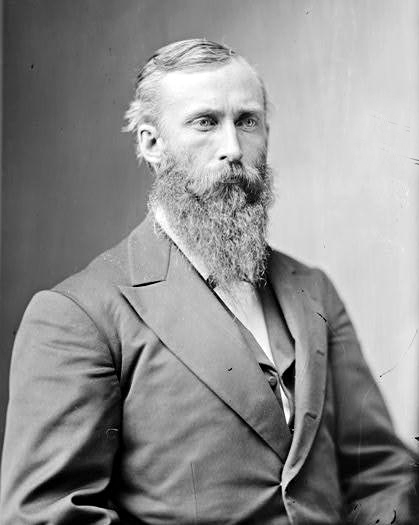
Historical · U.S. House · Kansas · District 2
Dudley Haskell
Former U.S. Representative · Kansas District 2 · 1877–1885 · Republican
Dudley Haskell represented Kansas's District 2 in the United States House of Representatives (1877–1885) for the Republican party. The page below collects sourced biographical facts, term history, committee roles, and provenance for Haskell.
Bioguide ID: H000316
Key facts
- Full name
- Dudley Haskell
- State
- Kansas
- District
- District 2
- Party
- Republican
- House service
- 1877–1885
- First House term
- 1877
- Status
- Left office
- Current term ends
- —
- Born
- 1842
- Bioguide ID
- H000316
- Committee assignments
- —
- Dataset version
- 1.20260606
Biographical narrative
854 words · sourced from the Wikipedia REST extract
Dudley Haskell was a prominent American merchant, Civil War veteran, and politician affiliated with the Republican Party. He served as a U.S. Representative for Kansas's 2nd congressional district from 1877 until his death in 1883. Haskell's political career was marked by his commitment to education, particularly for Native American children, and he played a significant role in the establishment of educational institutions aimed at serving Indigenous communities.
Early life and career
Dudley Chase Haskell was born on March 23, 1842, in Springfield, Vermont, to Franklin and Almira (Chase) Haskell. He was raised in a family that included several siblings, among them John G. Haskell. In 1855, Haskell's family relocated to Lawrence, Kansas, a move that would shape much of his future. He briefly returned to Vermont to continue his education in Springfield during 1857 and 1858.
Haskell began his professional life as a shoe merchant, but in 1859, he ventured westward to participate in the Pike's Peak Gold Rush. His time in Pikes Peak, Colorado, was cut short by the outbreak of the Civil War in 1861, prompting him to return to Missouri and enlist in the Union Army. During the war, he served as an assistant to the quartermaster, where he was stationed in various locations, including Missouri, Arkansas, Kansas, and the Indian Territory, from 1861 to 1862.
Following his military service, Haskell sought further education by attending Williston’s Seminary in Easthampton, Massachusetts, in 1863. He graduated from Yale College in 1865, at the age of 23. After completing his studies, he returned to Lawrence, Kansas, where he resumed his career in the shoe business from 1865 to 1867.
Haskell's entry into politics began with the Republican Party, and he was elected to the Kansas House of Representatives in 1872. He continued to serve in the state legislature in 1875 and 1876, culminating in his election as Speaker of the House in 1876. His early political career laid the groundwork for his subsequent election to the U.S. Congress.
House tenure
In 1876, Dudley Haskell was elected as a Republican representative for Kansas's 2nd congressional district, officially beginning his term in the U.S. House of Representatives in 1877. He served in this capacity until his death on December 16, 1883, in Washington, D.C. During his time in Congress, Haskell was known for his dedication to various issues, particularly those affecting Native American communities.
Haskell's congressional service included a significant role as the chairman of the Committee on Indian Affairs from 1881 until his passing in 1883. In this position, he advocated for the education of Native American children and supported legislative measures aimed at establishing off-reservation Indian boarding schools. His efforts were instrumental in securing congressional authorization for the construction of three such schools, which were to be located in Nebraska, Kansas, and the Indian Territory.
One of the schools, located in his hometown of Lawrence, Kansas, opened with a modest enrollment of 22 elementary students but quickly expanded. In recognition of Haskell's contributions, the institution was named Haskell Institute in 1887, four years after his death. This school would later evolve into Haskell Indian Nations University, which has become an important educational institution for Indigenous students.
Legislative focus and committees
Throughout his tenure in the U.S. House of Representatives, Dudley Haskell focused on several key issues, with a particular emphasis on Native American affairs and education. His role as chairman of the Committee on Indian Affairs allowed him to influence policies that directly impacted Indigenous communities. Haskell believed in the importance of education as a means to improve the lives of Native American children, advocating for their access to quality schooling and resources.
Haskell's legislative efforts included the authorization for the establishment of off-reservation boarding schools, which were intended to provide education and vocational training to Native American youth. His commitment to this cause was reflected in his successful push for the location of one of these schools in Lawrence, Kansas, which would serve as a significant educational facility for years to come.
In addition to his work on Indian Affairs, Haskell's broader legislative agenda was shaped by the political and social dynamics of his time. He navigated the complexities of post-Civil War America, addressing issues that arose from the conflict and its aftermath. His experience as a Civil War veteran informed his perspectives on national unity and the responsibilities of government toward its citizens, including marginalized communities.
Haskell's contributions to Congress and his advocacy for education left a lasting legacy, particularly through the establishment of Haskell Indian Nations University, which continues to serve Indigenous students today. His commitment to public service and education remains a notable aspect of his biography, reflecting the values and priorities he championed during his time in office.
After his death in 1883, Haskell's body was returned to Lawrence, Kansas, where he was interred in Oak Hill Cemetery. His legacy is further commemorated by Haskell County in southwestern Kansas, which bears his name, ensuring that his contributions to the state and the nation are remembered. Haskell's family continued his political legacy, with his grandson, Otis Halbert Holmes, also serving as a U.S. representative from Washington.
Notable legislation
Sponsored and co-sponsored legislation for Dudley Haskell is pending operator curation. The biographical narrative above carries the same provenance trail until per-bill rows are written.
Sources
- [1]https://en.wikipedia.org/wiki/Dudley_C._HaskellWikipedia · retrieved 2026-06-06
Notable quotes
Sourced quotes for Dudley Haskell are pending operator curation. Narrative-scope provenance remains attached below.
Sources
- [1]https://en.wikipedia.org/wiki/Dudley_C._HaskellWikipedia · retrieved 2026-06-06
Key positions
Curated policy positions for Dudley Haskell are pending operator review. The biographical narrative above carries the same provenance trail until per-topic positions are written.
Sources
- [1]https://en.wikipedia.org/wiki/Dudley_C._HaskellWikipedia · retrieved 2026-06-06
Terms served
- 1877–1879U.S. House · Term 1 · Republican
- 1879–1881U.S. House · Term 2 · Republican
- 1881–1883U.S. House · Term 3 · Republican
- 1883–1885U.S. House · Term 4 · Republican
Sources & provenance
Every attributable claim above carries a per-section [N] marker that resolves to the corresponding URL below. Each entry records the upstream provider, the canonical URL, and the timestamp at which the source was retrieved by the ingest pipeline.
Key facts
- https://bioguide.congress.gov/search/bio/H000316bioguide · retrieved 2026-06-06
- https://www.govtrack.us/congress/members/405189govtrack · retrieved 2026-06-06
Biographical narrative
- https://en.wikipedia.org/wiki/Dudley_C._Haskellwikipedia · retrieved 2026-06-06
Find your representative
Every U.S. state elects representatives by district. Browse Kansas’s delegation, the full former-representative roster, or explore the role and term length.
Related on The Candidate
- Preceded by John GoodinEarlier holder of the Kansas District 2 House seat · Democratic.Open
- Succeeded by Horace MooreLater holder of the Kansas District 2 House seat · Democratic.Open
- Abel WilderFormer U.S. Representative · Kansas District 1 · RepublicanOpen
- Albert ColeFormer U.S. Representative · Kansas District 1 · RepublicanOpen
- Case BroderickFormer U.S. Representative · Kansas District 1 · RepublicanOpen
- Daniel Anthony Jr.Former U.S. Representative · Kansas District 1 · RepublicanOpen