
Historical · U.S. House · Kansas · District 3
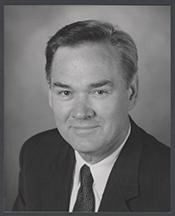
Dennis Moore
Former U.S. Representative · Kansas District 3 · 1999–2011 · Democratic
Dennis Moore represented Kansas's District 3 in the United States House of Representatives (1999–2011) for the Democratic party. The page below collects sourced biographical facts, term history, committee roles, and provenance for Moore.
Bioguide ID: M001140
Key facts
- Full name
- Dennis Moore
- State
- Kansas
- District
- District 3
- Party
- Democratic
- House service
- 1999–2011
- First House term
- 1999
- Status
- Left office
- Current term ends
- —
- Born
- 1945
- Bioguide ID
- M001140
- Committee assignments
- —
- Dataset version
- 1.20260605
Biographical narrative
894 words · sourced from the Wikipedia REST extract
Dennis Moore was an American politician and lawyer who served as a U.S. Representative for Kansas's 3rd congressional district from 1999 until 2011. A member of the Democratic Party, Moore was known for his centrist views and was associated with the Blue Dog Coalition, a group of moderate Democrats. He was the first Democrat to represent his district in nearly four decades and was succeeded by only one other Democrat since then, Sharice Davids, who took office in 2019.
Early life and career
Dennis Moore was born on November 8, 1945, in Anthony, Kansas, located in Harper County in the south-central part of the state. He pursued higher education at the University of Kansas, where he earned a bachelor's degree. He also briefly attended Southern Methodist University before obtaining his Juris Doctor degree from Washburn University School of Law in Topeka, Kansas.
Prior to entering politics, Moore served in the United States Army, which provided him with valuable experience and perspective. Following his military service, he transitioned into the legal field, working as an Assistant Kansas Attorney General. After a period in private legal practice, he was elected as the District Attorney for northeast Johnson County, a position he held from 1977 to 1989. During his time as a defense attorney, he notably represented Debora Green in a high-profile murder case in the mid-1990s, which concluded with her pleading no contest to the charges.
Moore's political career began in earnest when he was elected to the United States House of Representatives in 1998. He won his seat by defeating the Republican incumbent, Vince Snowbarger, in a district that had historically leaned toward moderate Republican candidates. Snowbarger's conservative stance alienated some voters, allowing Moore to secure his position as the first Democrat to represent the district in 37 years.
House tenure
Moore's tenure in the U.S. House of Representatives began in January 1999 and lasted until January 2011, during which he served six consecutive terms. His district, Kansas's 3rd congressional district, is the smallest and most affluent in the state, encompassing a significant portion of the Kansas side of the Kansas City metropolitan area, including cities such as Overland Park, Olathe, Shawnee, and Lenexa. Initially, the district included the university town of Lawrence, but it was later redistricted to the 2nd District.
Throughout his time in Congress, Moore faced several electoral challenges. In the 2000 election, he narrowly retained his seat against Republican candidate Phill Kline, capturing approximately 50% of the vote. The close result was attributed in part to George W. Bush's strong performance in the district during that election cycle. In 2002, Moore again faced a competitive race against moderate Republican Adam Taff, an airline pilot, but managed to win another close contest.
In 2004, Moore's electoral fortunes improved as he defeated law professor Kris Kobach with a more comfortable margin, securing 55% of the vote. His 2006 re-election bid saw a significant increase in support, as he won against Republican Chuck Ahner with 64% of the vote, demonstrating a solidifying base of support.
In 2008, Moore faced Republican State Senator Nick Jordan and won decisively with 56% of the vote. However, on November 23, 2009, Moore announced that he would not seek re-election in 2010, citing his upcoming 65th birthday. His wife, Stephene Moore, became the Democratic nominee to succeed him but lost the election to Republican Kevin Yoder. Following Moore's departure, the district did not elect another Democrat until Sharice Davids won the seat in 2019.
Legislative focus and committees
During his time in the House, Dennis Moore was active on several committees that shaped his legislative priorities. He served on the Committee on the Budget and the Committee on Financial Services, where he was involved in various subcommittees, including the Subcommittee on Financial Institutions and Consumer Credit and the Subcommittee on Oversight and Investigations, the latter of which he chaired. Additionally, he was a member of the Committee on Small Business and served on the Subcommittee on Finance and Tax.
Moore's legislative focus included budgetary issues, national security, military support, property rights, and gun control. He was known for his support of fair taxation policies, aligning with organizations advocating for middle and low-income families. His voting record reflected a commitment to closing corporate tax loopholes, although he received a low rating from the National Taxpayers Union, indicating a divergence from their fiscal policies.
In matters of national security, Moore's voting record indicated a cautious approach. He voted against certain funding for the Iraq War and supported limiting surveillance to comply with established guidelines. His military-related initiatives included sponsoring legislation to increase the death gratuity for families of soldiers who died in combat, which was later incorporated into broader legislation.
Moore's stance on property rights was less favorable from the perspective of advocacy groups, as he received a low rating for his voting record on issues related to private property. In terms of gun control, he had a history of supporting measures aimed at preventing gun violence, aligning with the Brady Campaign to Prevent Gun Violence for a significant portion of his career.
Overall, Dennis Moore's legislative career was characterized by a centrist approach, balancing the interests of his constituents with broader national concerns. His six terms in the House reflected a commitment to public service and the complexities of representing a diverse and affluent district in Kansas.
Notable legislation
Sponsored and co-sponsored legislation for Dennis Moore is pending operator curation. The biographical narrative above carries the same provenance trail until per-bill rows are written.
Sources
- [1]https://en.wikipedia.org/wiki/Dennis_Moore_(politician)Wikipedia · retrieved 2026-06-05
Notable quotes
Sourced quotes for Dennis Moore are pending operator curation. Narrative-scope provenance remains attached below.
Sources
- [1]https://en.wikipedia.org/wiki/Dennis_Moore_(politician)Wikipedia · retrieved 2026-06-05
Key positions
Curated policy positions for Dennis Moore are pending operator review. The biographical narrative above carries the same provenance trail until per-topic positions are written.
Sources
- [1]https://en.wikipedia.org/wiki/Dennis_Moore_(politician)Wikipedia · retrieved 2026-06-05
Terms served
- 1999–2001U.S. House · Term 1 · Democratic
- 2001–2003U.S. House · Term 2 · Democratic
- 2003–2005U.S. House · Term 3 · Democratic
- 2005–2007U.S. House · Term 4 · Democratic
- 2007–2009U.S. House · Term 5 · Democratic
- 2009–2011U.S. House · Term 6 · Democratic
Sources & provenance
Every attributable claim above carries a per-section [N] marker that resolves to the corresponding URL below. Each entry records the upstream provider, the canonical URL, and the timestamp at which the source was retrieved by the ingest pipeline.
Key facts
- https://bioguide.congress.gov/search/bio/M001140bioguide · retrieved 2026-06-05
- http://moore.house.govhouse.gov · retrieved 2026-06-05
Biographical narrative
- https://en.wikipedia.org/wiki/Dennis_Moore_(politician)wikipedia · retrieved 2026-06-05
Find your representative
Every U.S. state elects representatives by district. Browse Kansas’s delegation, the full former-representative roster, or explore the role and term length.
Related on The Candidate
- Preceded by Vincent SnowbargerEarlier holder of the Kansas District 3 House seat · Republican.Open
- Succeeded by Kevin YoderLater holder of the Kansas District 3 House seat · Republican.Open
- Abel WilderFormer U.S. Representative · Kansas District 1 · RepublicanOpen
- Albert ColeFormer U.S. Representative · Kansas District 1 · RepublicanOpen
- Case BroderickFormer U.S. Representative · Kansas District 1 · RepublicanOpen
- Daniel Anthony Jr.Former U.S. Representative · Kansas District 1 · RepublicanOpen