
Historical · U.S. House · Kansas · District 3
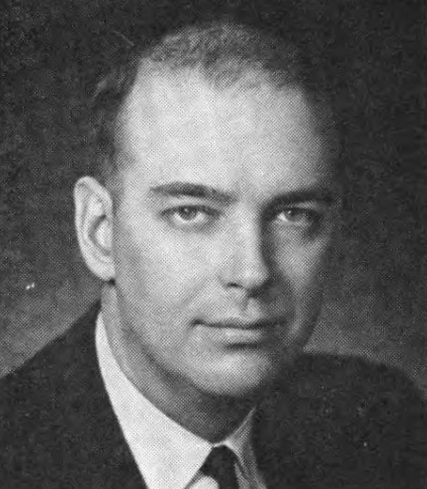
Robert Ellsworth
Former U.S. Representative · Kansas District 3 · 1961–1967 · Republican
Robert Ellsworth represented Kansas's District 3 in the United States House of Representatives (1961–1967) for the Republican party. The page below collects sourced biographical facts, term history, committee roles, and provenance for Ellsworth.
Bioguide ID: E000148
Key facts
- Full name
- Robert Ellsworth
- State
- Kansas
- District
- District 3
- Party
- Republican
- House service
- 1961–1967
- First House term
- 1961
- Status
- Left office
- Current term ends
- —
- Born
- 1926
- Bioguide ID
- E000148
- Committee assignments
- —
- Dataset version
- 1.20260605
Biographical narrative
860 words · sourced from the Wikipedia REST extract
Robert Ellsworth was an American politician and diplomat who served as a Republican member of the U.S. House of Representatives from Kansas's 3rd congressional district from 1961 to 1967. Following his congressional tenure, he held significant roles in the U.S. government, including serving as the United States Permanent Representative to NATO and as Deputy Secretary of Defense. His career spanned various fields, including law, military service, and public administration, reflecting a commitment to public service and governance.
Early life and career
Robert Ellsworth was born on June 11, 1926, in Lawrence, Kansas. He received his early education in the public schools of Lawrence, where he developed a foundation for his future academic and professional pursuits. His commitment to service was evident early on, as he enlisted in the United States Navy, serving during both World War II and the Korean War. This military experience contributed to his understanding of national security and defense issues, which would later inform his political career.
After his military service, Ellsworth attended the University of Kansas, where he earned a bachelor's degree in engineering in 1945. His involvement in campus life included membership in the Alpha Nu chapter of the Beta Theta Pi fraternity, which provided him with networking opportunities and a platform for leadership. Following his undergraduate studies, he pursued a legal education at the University of Michigan Law School, graduating in 1949. Upon completing his law degree, he practiced law in Lawrence, Kansas, and later in Springfield, Massachusetts, where he honed his legal skills and gained valuable experience in the field.
Ellsworth's early career also included a role as an assistant to the chairman of the Federal Maritime Commission, which provided him with insights into regulatory processes and the intersection of law and public policy. His diverse experiences laid the groundwork for his entry into politics, where he would leverage his legal background and military service to address the challenges facing his constituents and the nation.
House tenure
Robert Ellsworth's political career in the U.S. House of Representatives began in 1961 when he was elected to represent Kansas's 3rd congressional district. During his time in office, which lasted until 1967, he served three consecutive terms. His tenure was marked by significant legislative developments in the United States, particularly in the areas of civil rights and voting rights. Ellsworth's voting record included support for landmark legislation such as the Civil Rights Act of 1964 and the Voting Rights Act of 1965, which aimed to eliminate racial discrimination and protect the voting rights of all citizens.
Ellsworth's political alignment with the Republican Party during a time of significant social change reflected the complex dynamics within the party and the nation. His decision to vote in favor of the Civil Rights Acts demonstrated a commitment to addressing issues of equality and justice, which were at the forefront of national discourse during the 1960s. Additionally, he voted present for the 24th Amendment to the U.S. Constitution, which abolished the poll tax in federal elections, further indicating his engagement with civil rights issues.
Throughout his congressional career, Ellsworth was involved in various legislative initiatives and discussions that shaped the political landscape of the time. His experience in law and governance provided him with a unique perspective on the implications of legislation and the importance of bipartisan cooperation in achieving meaningful reforms.
Legislative focus and committees
During his time in the House of Representatives, Robert Ellsworth was involved in a range of legislative issues, reflecting the priorities of his constituents and the broader national agenda. His focus on civil rights and voting rights was particularly notable, as these issues were central to the social movements of the era. By supporting key legislation aimed at promoting equality, Ellsworth positioned himself as a representative who was responsive to the changing needs of American society.
In addition to his work on civil rights, Ellsworth's background in engineering and law likely influenced his approach to various policy areas, including defense and infrastructure. His military service provided him with insights into national security matters, which would later play a role in his subsequent appointments in government. After leaving Congress, he continued to serve in significant capacities, including as the United States Permanent Representative to NATO from 1969 to 1971 and as Deputy Secretary of Defense under President Gerald Ford.
Ellsworth's involvement in these roles underscored his commitment to international diplomacy and defense policy, areas that were increasingly important during the Cold War era. His experiences in Congress and subsequent government positions allowed him to contribute to discussions on military readiness, international alliances, and the United States' role on the global stage.
In summary, Robert Ellsworth's career as a U.S. Representative and diplomat was characterized by a dedication to public service, a focus on civil rights and national security, and a commitment to addressing the pressing issues of his time. His legislative work and subsequent roles in government reflect a lifetime of engagement with the complexities of governance and the importance of leadership in shaping policy. Ellsworth passed away on May 9, 2011, in Encinitas, California, leaving behind a legacy of service and commitment to the principles of democracy and public welfare.
Notable legislation
Sponsored and co-sponsored legislation for Robert Ellsworth is pending operator curation. The biographical narrative above carries the same provenance trail until per-bill rows are written.
Sources
- [1]https://en.wikipedia.org/wiki/Robert_EllsworthWikipedia · retrieved 2026-06-05
Notable quotes
Sourced quotes for Robert Ellsworth are pending operator curation. Narrative-scope provenance remains attached below.
Sources
- [1]https://en.wikipedia.org/wiki/Robert_EllsworthWikipedia · retrieved 2026-06-05
Key positions
Curated policy positions for Robert Ellsworth are pending operator review. The biographical narrative above carries the same provenance trail until per-topic positions are written.
Sources
- [1]https://en.wikipedia.org/wiki/Robert_EllsworthWikipedia · retrieved 2026-06-05
Terms served
- 1961–1963U.S. House · Term 1 · Republican
- 1963–1965U.S. House · Term 2 · Republican
- 1965–1967U.S. House · Term 3 · Republican
Sources & provenance
Every attributable claim above carries a per-section [N] marker that resolves to the corresponding URL below. Each entry records the upstream provider, the canonical URL, and the timestamp at which the source was retrieved by the ingest pipeline.
Key facts
- https://bioguide.congress.gov/search/bio/E000148bioguide · retrieved 2026-06-05
- https://www.govtrack.us/congress/members/403839govtrack · retrieved 2026-06-05
Biographical narrative
- https://en.wikipedia.org/wiki/Robert_Ellsworthwikipedia · retrieved 2026-06-05
Find your representative
Every U.S. state elects representatives by district. Browse Kansas’s delegation, the full former-representative roster, or explore the role and term length.
Related on The Candidate
- Preceded by Denver HargisEarlier holder of the Kansas District 3 House seat · Democratic.Open
- Succeeded by Larry Winn Jr.Later holder of the Kansas District 3 House seat · Republican.Open
- Abel WilderFormer U.S. Representative · Kansas District 1 · RepublicanOpen
- Albert ColeFormer U.S. Representative · Kansas District 1 · RepublicanOpen
- Case BroderickFormer U.S. Representative · Kansas District 1 · RepublicanOpen
- Daniel Anthony Jr.Former U.S. Representative · Kansas District 1 · RepublicanOpen