
Historical · U.S. House · Kansas · District 3
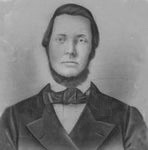
William Brown
Former U.S. Representative · Kansas District 3 · 1875–1877 · Republican
William Brown represented Kansas's District 3 in the United States House of Representatives (1875–1877) for the Republican party. The page below collects sourced biographical facts, term history, committee roles, and provenance for Brown.
Bioguide ID: B000951
Key facts
- Full name
- William Brown
- State
- Kansas
- District
- District 3
- Party
- Republican
- House service
- 1875–1877
- First House term
- 1875
- Status
- Left office
- Current term ends
- —
- Born
- 1840
- Bioguide ID
- B000951
- Committee assignments
- —
- Dataset version
- 1.20260606
Biographical narrative
918 words · sourced from the Wikipedia REST extract
William Brown was a notable figure in American politics during the late 19th century, serving as a U.S. Representative from Kansas. A member of the Republican Party, he held office during the Forty-fourth Congress from 1875 to 1877. His career was marked by a transition from law to politics, reflecting the broader trends of his time. After his congressional tenure, he continued to engage in legal practice and held various judicial positions, contributing to the legal landscape of Kansas and Oklahoma until his death in 1916.
Early life and career
William Brown was born on July 16, 1840, in Buffalo, New York, to Mary Ripley and John Stillman Brown. His father was a teacher and a Unitarian minister, which likely influenced William's educational pursuits and values. Following in his father's footsteps, he attended Phillips Exeter Academy in New Hampshire, a prestigious preparatory school known for its rigorous academic standards. After completing his studies there, Brown enrolled at Union College in Schenectady, New York, where he graduated in 1862 as a member of the Phi Beta Kappa honor society, an indication of his academic excellence.
Upon graduating, Brown moved to Kansas, a state that was still in its formative years following its admission to the Union in 1861. He settled in Emporia, a city that would play a significant role in his professional life. In Kansas, he pursued the study of law, a field that would define his early career. He was admitted to the bar in 1864, allowing him to begin practicing law in Emporia. His legal career was marked by a commitment to public service, and in 1867, he was appointed as a judge of the ninth judicial district of Kansas. This position allowed him to gain significant experience in the legal system and to influence the development of law in the region.
Brown's tenure as a judge lasted until 1877, during which he would have encountered a variety of legal issues reflective of the challenges faced by a growing state. His judicial experience likely provided him with insights into the needs and concerns of his constituents, which would later inform his political career.
House tenure
William Brown's political career took a significant turn when he was elected as a Republican to the United States House of Representatives. He served during the Forty-fourth Congress, which convened from March 4, 1875, to March 3, 1877. His election to Congress came at a time of considerable change and development in the United States, particularly in the aftermath of the Civil War and during the Reconstruction era. The political landscape was characterized by intense debates over civil rights, economic policies, and the integration of the Southern states back into the Union.
During his time in the House, Brown participated in the legislative process and contributed to discussions that shaped national policy. However, his congressional career was relatively brief, as he was not successful in his bid for renomination in 1876. This defeat marked the end of his time in the House of Representatives, but it did not signify the end of his involvement in public service.
After leaving Congress, Brown returned to his legal practice, this time in Hutchinson, Kansas. His experience in the House likely enhanced his legal career, as he would have developed a network of contacts and a deeper understanding of the legislative process. In addition to practicing law, he served as the register of the United States land office in Larned, Kansas, from 1883 to 1885. This role involved overseeing land transactions and ensuring compliance with federal land laws, further solidifying his connection to the legal and governmental framework of the region.
Legislative focus and committees
While specific details regarding William Brown's legislative focus during his time in Congress are not extensively documented, it can be inferred that his background as a lawyer and judge would have influenced his priorities and interests in legislative matters. Given the historical context of his service, it is likely that he engaged with issues pertinent to the development of the West, land policies, and the legal rights of citizens, particularly in a state like Kansas that was experiencing rapid growth and change.
The Forty-fourth Congress was marked by significant legislative activity, including debates over issues such as civil rights, economic development, and the integration of Southern states into the Union. As a representative from Kansas, Brown would have been involved in discussions relevant to the interests of his constituents, including agricultural policies, land use, and infrastructure development. The challenges faced by settlers and the evolving legal landscape in the West would have been central to his legislative agenda.
After his congressional service, Brown continued to engage in public life. He moved to El Reno, Oklahoma, in 1892, where he took on the role of probate judge of Canadian County from 1894 to 1898. This position allowed him to apply his legal expertise in a new context, contributing to the establishment of legal norms and practices in the burgeoning state of Oklahoma. His work as a judge in Oklahoma reflected his ongoing commitment to public service and the legal profession.
William Brown passed away on March 3, 1916, in Kansas City, Missouri. He was interred in Lawrence Cemetery in Lawrence, Kansas, marking the end of a life dedicated to law and public service. His career spanned significant periods of American history, and his contributions to both Kansas and Oklahoma reflect the evolving nature of the American legal and political landscape during the late 19th and early 20th centuries.
Notable legislation
Sponsored and co-sponsored legislation for William Brown is pending operator curation. The biographical narrative above carries the same provenance trail until per-bill rows are written.
Sources
- [1]https://en.wikipedia.org/wiki/William_Ripley_BrownWikipedia · retrieved 2026-06-06
Notable quotes
Sourced quotes for William Brown are pending operator curation. Narrative-scope provenance remains attached below.
Sources
- [1]https://en.wikipedia.org/wiki/William_Ripley_BrownWikipedia · retrieved 2026-06-06
Key positions
Curated policy positions for William Brown are pending operator review. The biographical narrative above carries the same provenance trail until per-topic positions are written.
Sources
- [1]https://en.wikipedia.org/wiki/William_Ripley_BrownWikipedia · retrieved 2026-06-06
Terms served
- 1875–1877U.S. House · Term 1 · Republican
Sources & provenance
Every attributable claim above carries a per-section [N] marker that resolves to the corresponding URL below. Each entry records the upstream provider, the canonical URL, and the timestamp at which the source was retrieved by the ingest pipeline.
Key facts
- https://bioguide.congress.gov/search/bio/B000951bioguide · retrieved 2026-06-06
- https://www.govtrack.us/congress/members/401904govtrack · retrieved 2026-06-06
Biographical narrative
- https://en.wikipedia.org/wiki/William_Ripley_Brownwikipedia · retrieved 2026-06-06
Find your representative
Every U.S. state elects representatives by district. Browse Kansas’s delegation, the full former-representative roster, or explore the role and term length.
Related on The Candidate
- Succeeded by Benjamin CloverLater holder of the Kansas District 3 House seat · Populist.Open
- Abel WilderFormer U.S. Representative · Kansas District 1 · RepublicanOpen
- Albert ColeFormer U.S. Representative · Kansas District 1 · RepublicanOpen
- Case BroderickFormer U.S. Representative · Kansas District 1 · RepublicanOpen
- Daniel Anthony Jr.Former U.S. Representative · Kansas District 1 · RepublicanOpen
- Republican PartyFederal candidates and office holders on the Republican line.Open