
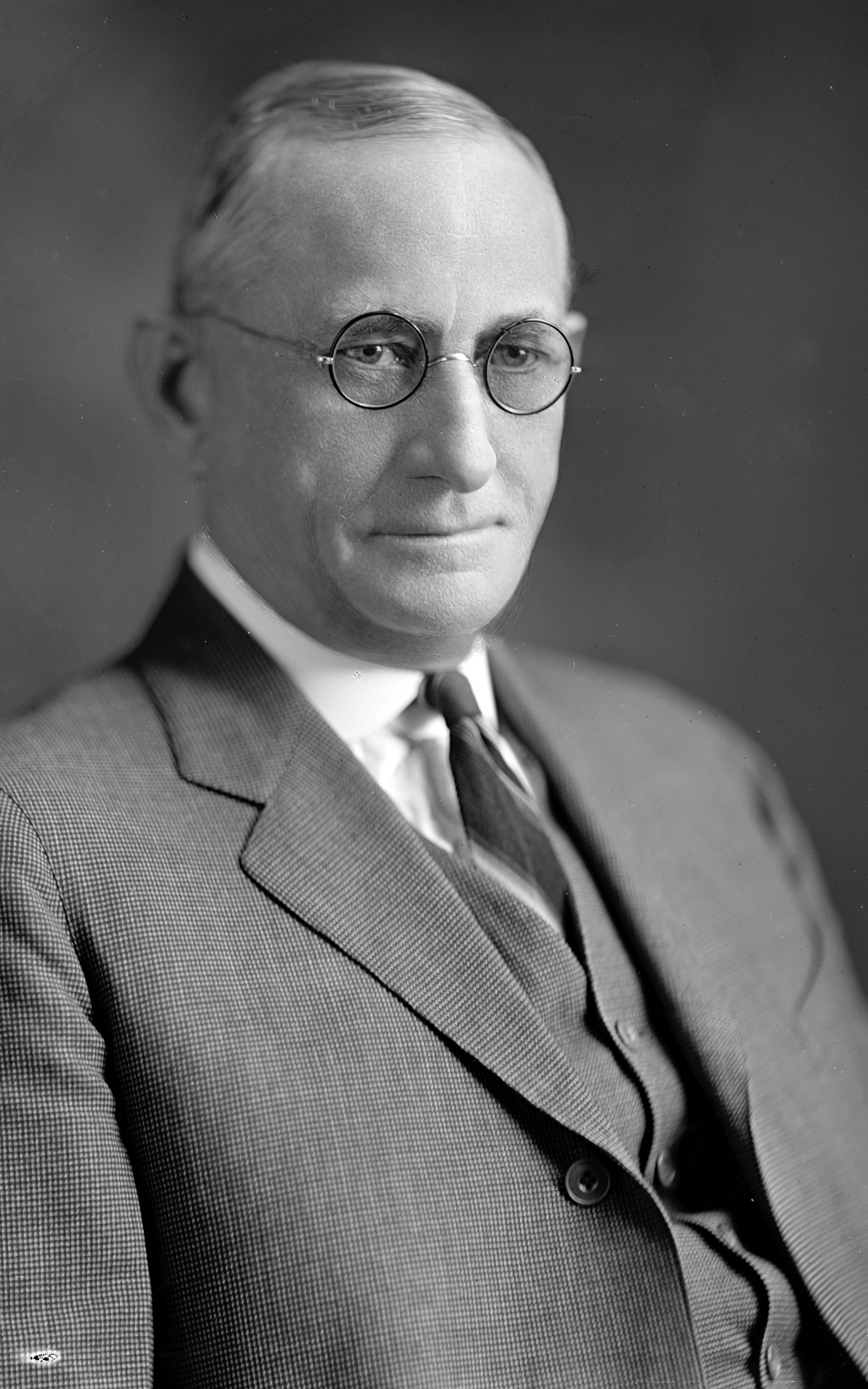
Historical · U.S. House · Kansas · District 3
William Sproul
Former U.S. Representative · Kansas District 3 · 1923–1931 · Republican
William Sproul represented Kansas's District 3 in the United States House of Representatives (1923–1931) for the Republican party. The page below collects sourced biographical facts, term history, committee roles, and provenance for Sproul.
Bioguide ID: S000759
Key facts
- Full name
- William Sproul
- State
- Kansas
- District
- District 3
- Party
- Republican
- House service
- 1923–1931
- First House term
- 1923
- Status
- Left office
- Current term ends
- —
- Born
- 1867
- Bioguide ID
- S000759
- Committee assignments
- —
- Dataset version
- 1.20260606
Biographical narrative
981 words · sourced from the Wikipedia REST extract
William Sproul was an American businessman, lawyer, and politician who served as a U.S. Representative for Kansas's 3rd congressional district from 1923 to 1931. A member of the Republican Party, Sproul's political career spanned four terms in the House of Representatives, during which he held various leadership roles, including chairman of the Committee on Mines and Mining. His life before politics was marked by a diverse range of experiences in education, law, and business, reflecting his multifaceted background.
Early life and career
William Sproul was born on October 14, 1867, on a farm near Livingston, Tennessee. He was raised in a rural environment, where he attended public schools and later enrolled in Alpine Academy located in Overton County, Tennessee. In 1883, when Sproul was approximately 16 years old, he moved to Kansas with his parents, who settled in Cherokee County. This relocation marked the beginning of his long association with the state of Kansas.
In his early years in Kansas, Sproul worked on a farm and also in the mining industry, which provided him with practical experience in agriculture and resource extraction. He pursued his education further by attending high school in Columbus, Kansas, and later enrolled at the Kansas Normal College in Fort Scott. His commitment to education led him to teach school in Columbus from 1888 to 1892, a role that allowed him to contribute to his community while gaining valuable experience in leadership and public service.
Sproul's legal career began when he graduated from the Kansas State University Law School in 1894. Following his admission to the bar the same year, he commenced his legal practice in Sedan, Kansas. His legal expertise and community involvement soon led him to take on significant public roles. From 1897 to 1901, he served as the prosecuting attorney for Chautauqua County, where he was responsible for overseeing legal proceedings and representing the interests of the county in criminal matters.
In addition to his legal career, Sproul was actively engaged in local governance. He served as the mayor of Sedan from 1921 to 1923, where he played a key role in the administration of the city. His interests extended beyond law and politics; he was involved in agricultural pursuits and stock raising, and he also explored opportunities in the oil and gas business. This diverse background in various sectors equipped him with a broad perspective that would later inform his legislative work.
House tenure
William Sproul's congressional career began when he was elected as a Republican to the Sixty-eighth Congress, which commenced on March 4, 1923. He successfully secured re-election to three subsequent Congresses, serving a total of four terms in the U.S. House of Representatives until his last term ended on March 3, 1931. During his time in Congress, Sproul was known for his active participation in legislative matters and his leadership within the Republican Party.
One of the prominent roles Sproul held during his congressional tenure was as chairman of the Committee on Mines and Mining during the Seventy-first Congress. In this capacity, he was responsible for overseeing legislation related to mining, an industry that was significant to the economy of Kansas and the broader United States. His leadership on this committee reflected his background in mining and resource management, as well as his commitment to addressing the needs and concerns of constituents involved in these industries.
Throughout his time in office, Sproul focused on various issues pertinent to his district and the nation. His legislative efforts were influenced by his experiences in agriculture, law, and business, which allowed him to advocate for policies that aligned with the interests of his constituents. Although specific details of his legislative initiatives are not provided, it is clear that his background played a significant role in shaping his priorities and actions as a member of Congress.
In 1930, after completing his fourth term, Sproul chose not to seek renomination for his House seat. Instead, he pursued a nomination for the United States Senate, although he was ultimately unsuccessful in this endeavor. His decision to step away from the House marked the end of his formal legislative career, but he remained active in his business pursuits following his departure from Congress.
Legislative focus and committees
During his tenure in the U.S. House of Representatives, William Sproul's legislative focus was shaped by his diverse background in law, business, and local governance. As a member of the Republican Party, he aligned with the party's platform and priorities, which often included support for business interests, economic development, and resource management.
As chairman of the Committee on Mines and Mining, Sproul played a crucial role in shaping legislation that impacted the mining industry, an essential sector for many constituents in his district. His leadership in this committee allowed him to advocate for policies that addressed the challenges faced by miners and the broader implications of mining on the economy and environment. The committee's work often involved examining issues related to mining safety, regulation, and the economic viability of mining operations, all of which were critical to the livelihoods of many in Kansas.
In addition to his focus on mining, Sproul's legislative agenda likely included a range of issues relevant to his constituents, reflecting the needs and interests of the 3rd congressional district of Kansas. While specific legislative achievements are not detailed, it can be inferred that his background in agriculture and business informed his approach to policy-making, particularly in matters related to economic growth and community development.
After leaving Congress, Sproul returned to his business pursuits, indicating a continued commitment to the economic interests he had championed during his time in office. He passed away on December 27, 1932, in a hospital in Kansas City, Missouri, and was interred in Greenwood Cemetery in Sedan, Kansas. His life and career exemplify the interconnectedness of law, business, and public service in the early 20th century American political landscape.
Notable legislation
Sponsored and co-sponsored legislation for William Sproul is pending operator curation. The biographical narrative above carries the same provenance trail until per-bill rows are written.
Sources
- [1]https://en.wikipedia.org/wiki/William_H._SproulWikipedia · retrieved 2026-06-06
Notable quotes
Sourced quotes for William Sproul are pending operator curation. Narrative-scope provenance remains attached below.
Sources
- [1]https://en.wikipedia.org/wiki/William_H._SproulWikipedia · retrieved 2026-06-06
Key positions
Curated policy positions for William Sproul are pending operator review. The biographical narrative above carries the same provenance trail until per-topic positions are written.
Sources
- [1]https://en.wikipedia.org/wiki/William_H._SproulWikipedia · retrieved 2026-06-06
Terms served
- 1923–1925U.S. House · Term 1 · Republican
- 1925–1927U.S. House · Term 2 · Republican
- 1927–1929U.S. House · Term 3 · Republican
- 1929–1931U.S. House · Term 4 · Republican
Sources & provenance
Every attributable claim above carries a per-section [N] marker that resolves to the corresponding URL below. Each entry records the upstream provider, the canonical URL, and the timestamp at which the source was retrieved by the ingest pipeline.
Key facts
- https://bioguide.congress.gov/search/bio/S000759bioguide · retrieved 2026-06-06
- https://www.govtrack.us/congress/members/410226govtrack · retrieved 2026-06-06
Biographical narrative
- https://en.wikipedia.org/wiki/William_H._Sproulwikipedia · retrieved 2026-06-06
Find your representative
Every U.S. state elects representatives by district. Browse Kansas’s delegation, the full former-representative roster, or explore the role and term length.
Related on The Candidate
- Preceded by Philip CampbellEarlier holder of the Kansas District 3 House seat · Republican.Open
- Succeeded by Harold McGuginLater holder of the Kansas District 3 House seat · Republican.Open
- Abel WilderFormer U.S. Representative · Kansas District 1 · RepublicanOpen
- Albert ColeFormer U.S. Representative · Kansas District 1 · RepublicanOpen
- Case BroderickFormer U.S. Representative · Kansas District 1 · RepublicanOpen
- Daniel Anthony Jr.Former U.S. Representative · Kansas District 1 · RepublicanOpen