
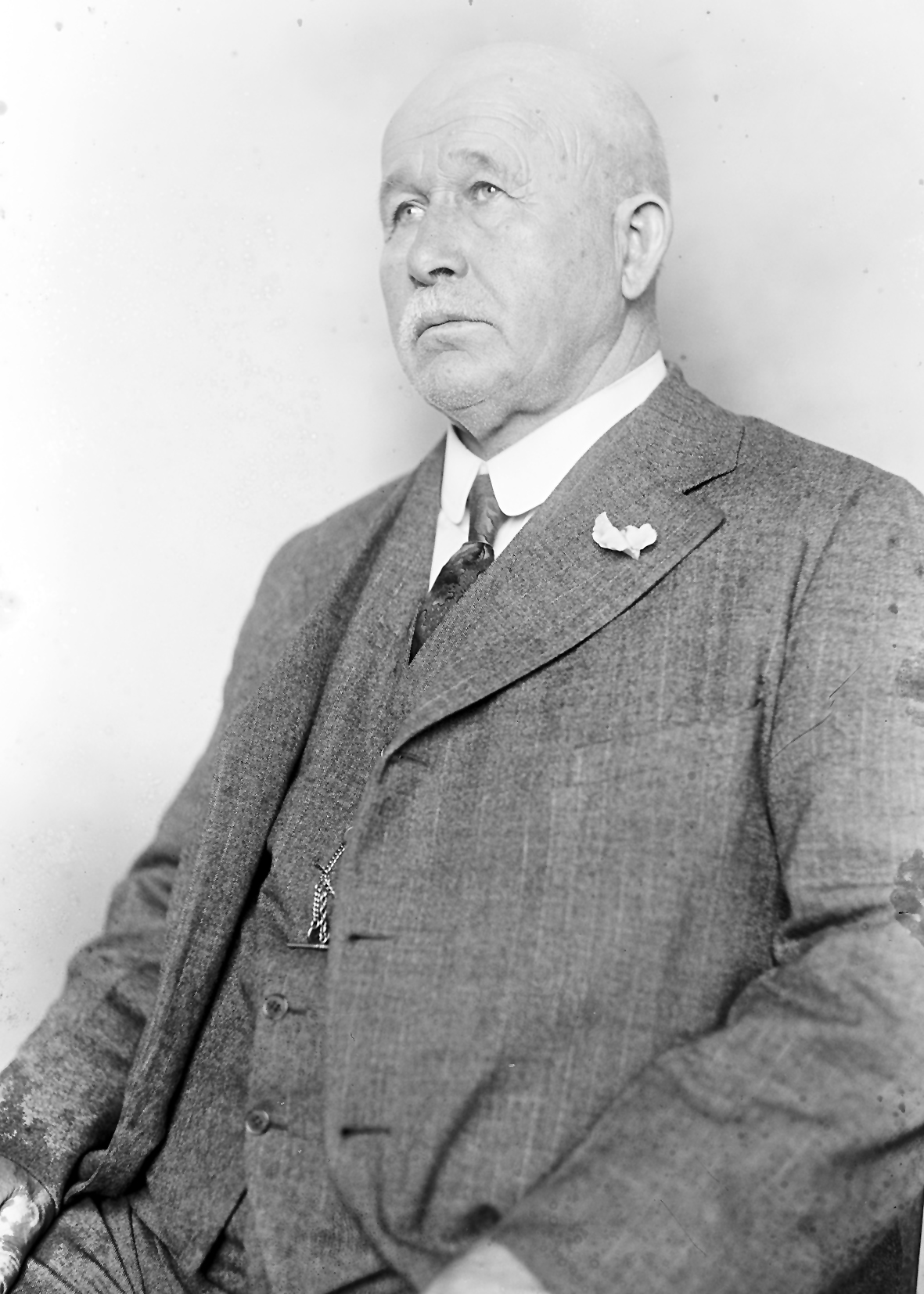
Historical · U.S. House · Kansas · District 6
Hays White
Former U.S. Representative · Kansas District 6 · 1919–1929 · Republican
Hays White represented Kansas's District 6 in the United States House of Representatives (1919–1929) for the Republican party. The page below collects sourced biographical facts, term history, committee roles, and provenance for White.
Bioguide ID: W000374
Key facts
- Full name
- Hays White
- State
- Kansas
- District
- District 6
- Party
- Republican
- House service
- 1919–1929
- First House term
- 1919
- Status
- Left office
- Current term ends
- —
- Born
- 1855
- Bioguide ID
- W000374
- Committee assignments
- —
- Dataset version
- 1.20260606
Biographical narrative
943 words · sourced from the Wikipedia REST extract
Hays White was a prominent American politician who served as a U.S. Representative for Kansas's 6th congressional district from 1919 to 1929. A member of the Republican Party, White's political career spanned a decade during which he participated in significant legislative activities and held various local and state offices. His background in agriculture and education, combined with his legislative experience, shaped his contributions to the political landscape of Kansas in the early 20th century.
Early life and career
Hays Baxter White was born on September 21, 1855, near Fairfield, Iowa. His early education took place in the rural schools of his home county, where he developed a foundational understanding of the educational system and the importance of community involvement. After completing his education, White engaged in agricultural pursuits, which would become a central theme in his later political career. In 1875, he relocated to Jewell County, Kansas, where he continued to work in agriculture near the town of Mankato. This move to Kansas marked the beginning of his long-term commitment to the region and its development.
In addition to his agricultural work, White also contributed to the local community through education. In 1876, he took on the role of a schoolteacher in Mankato, demonstrating his dedication to the education of the youth in his community. This experience likely influenced his later political views and priorities, particularly regarding education and community development.
White's political career began to take shape in the late 19th century. He served in the Kansas House of Representatives from 1888 to 1890, where he gained valuable experience in state governance and legislative processes. Following his tenure in the House, he continued his public service as a member of the Kansas State Senate from 1900 to 1904. During this time, he worked on various issues affecting his constituents and the state as a whole.
In addition to his legislative roles, White held the position of mayor of Mankato during the years 1914 and 1915. His tenure as mayor allowed him to address local issues directly and implement policies that would benefit the residents of Mankato. Furthermore, he served on the State Tax Commission from 1915 to 1918, where he contributed to the development of tax policies that impacted the state’s economy.
House tenure
Hays White's congressional career began when he was elected as a Republican to the Sixty-sixth Congress, which commenced on March 4, 1919. He was subsequently re-elected to four additional terms, serving in the House until March 3, 1929. Throughout his time in Congress, White was involved in various legislative initiatives and discussions that shaped national policy during a transformative period in American history.
During his tenure, White served as chairman of the Committee on Election of President, Vice President, and Representatives from the Sixty-eighth through the Seventieth Congresses. This position placed him at the forefront of discussions regarding the electoral process and the administration of elections, which were critical issues in the post-World War I era. His leadership in this committee allowed him to influence legislation related to the electoral system and ensure that the democratic process was upheld.
White's congressional service coincided with significant events in American history, including the aftermath of World War I, the onset of the Roaring Twenties, and the early stages of the Great Depression. These events had profound implications for the legislative agenda, and White's role as a representative was to advocate for the interests of his constituents in Kansas while navigating the complexities of national issues.
Despite his active participation in Congress, White faced electoral challenges during his political career. He contested an election against W.H. Clark, although the outcome was not in his favor. This experience highlighted the competitive nature of politics at the time and the challenges faced by incumbents and challengers alike.
After serving five terms in the House of Representatives, White chose not to seek renomination in 1928. His decision to step back from electoral politics marked the end of a significant chapter in his public service career, reflecting both personal choice and the evolving political landscape of the time.
Legislative focus and committees
Throughout his congressional career, Hays White was known for his focus on issues related to electoral processes and governance. As chairman of the Committee on Election of President, Vice President, and Representatives, he played a crucial role in shaping legislation that governed the electoral framework of the United States. This committee was responsible for overseeing the laws and regulations that guided the election process, ensuring that elections were conducted fairly and transparently.
White's background in agriculture likely influenced his legislative priorities, as he represented a district where farming and rural issues were central to the economy. While specific details regarding his legislative initiatives on agricultural policies are not provided, it can be inferred that his experiences as a farmer and educator informed his approach to legislation that affected the agricultural community.
In addition to his work on electoral issues, White's participation in various committees and discussions within the House allowed him to address a range of topics relevant to his constituents. His legislative focus would have included issues such as taxation, education, and infrastructure, reflecting the needs and concerns of the people he represented.
After concluding his congressional service, Hays White returned to Mankato, Kansas, where he continued to be involved in community affairs until his death on September 29, 1930. He was interred in Mount Hope Cemetery, leaving behind a legacy of public service and commitment to his community. His career serves as a reflection of the political landscape of early 20th-century America, characterized by a focus on local governance, agricultural interests, and the evolving nature of electoral politics.
Notable legislation
Sponsored and co-sponsored legislation for Hays White is pending operator curation. The biographical narrative above carries the same provenance trail until per-bill rows are written.
Sources
- [1]https://en.wikipedia.org/wiki/Hays_B._WhiteWikipedia · retrieved 2026-06-06
Notable quotes
Sourced quotes for Hays White are pending operator curation. Narrative-scope provenance remains attached below.
Sources
- [1]https://en.wikipedia.org/wiki/Hays_B._WhiteWikipedia · retrieved 2026-06-06
Key positions
Curated policy positions for Hays White are pending operator review. The biographical narrative above carries the same provenance trail until per-topic positions are written.
Sources
- [1]https://en.wikipedia.org/wiki/Hays_B._WhiteWikipedia · retrieved 2026-06-06
Terms served
- 1919–1921U.S. House · Term 1 · Republican
- 1921–1923U.S. House · Term 2 · Republican
- 1923–1925U.S. House · Term 3 · Republican
- 1925–1927U.S. House · Term 4 · Republican
- 1927–1929U.S. House · Term 5 · Republican
Sources & provenance
Every attributable claim above carries a per-section [N] marker that resolves to the corresponding URL below. Each entry records the upstream provider, the canonical URL, and the timestamp at which the source was retrieved by the ingest pipeline.
Key facts
- https://bioguide.congress.gov/search/bio/W000374bioguide · retrieved 2026-06-06
- https://www.govtrack.us/congress/members/411535govtrack · retrieved 2026-06-06
Biographical narrative
- https://en.wikipedia.org/wiki/Hays_B._Whitewikipedia · retrieved 2026-06-06
Find your representative
Every U.S. state elects representatives by district. Browse Kansas’s delegation, the full former-representative roster, or explore the role and term length.
Related on The Candidate
- Preceded by John ConnellyEarlier holder of the Kansas District 6 House seat · Democratic.Open
- Succeeded by Charles SparksLater holder of the Kansas District 6 House seat · Republican.Open
- Abel WilderFormer U.S. Representative · Kansas District 1 · RepublicanOpen
- Albert ColeFormer U.S. Representative · Kansas District 1 · RepublicanOpen
- Case BroderickFormer U.S. Representative · Kansas District 1 · RepublicanOpen
- Daniel Anthony Jr.Former U.S. Representative · Kansas District 1 · RepublicanOpen