
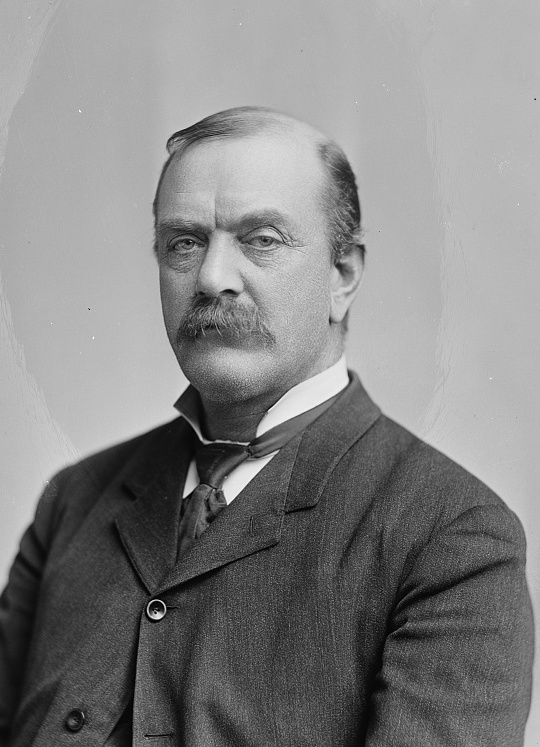
Historical · U.S. House · Kansas · District 6
William Reeder
Former U.S. Representative · Kansas District 6 · 1899–1911 · Republican
William Reeder represented Kansas's District 6 in the United States House of Representatives (1899–1911) for the Republican party. The page below collects sourced biographical facts, term history, committee roles, and provenance for Reeder.
Bioguide ID: R000131
Key facts
- Full name
- William Reeder
- State
- Kansas
- District
- District 6
- Party
- Republican
- House service
- 1899–1911
- First House term
- 1899
- Status
- Left office
- Current term ends
- —
- Born
- 1849
- Bioguide ID
- R000131
- Committee assignments
- —
- Dataset version
- 1.20260606
Biographical narrative
819 words · sourced from the Wikipedia REST extract
William Reeder was a U.S. Representative from Kansas, serving as a member of the Republican Party. His congressional career spanned over a decade, during which he was elected to six consecutive terms in the House of Representatives. Reeder's tenure in Congress was marked by his involvement in various committees, particularly those focused on transportation and irrigation. After leaving Congress, he transitioned into banking and real estate in California, where he lived until his death in 1929.
Early life and career
William Augustus Reeder was born on August 28, 1849, near Shippensburg, Pennsylvania. He was the son of parents who moved the family to Ipava, Illinois, in 1853. Growing up in a rural setting, Reeder received his education in the public schools of Illinois. Demonstrating an early commitment to education, he began teaching in local public schools at the age of 14. This role as an educator would continue for the next 16 years, during which he honed his skills in leadership and community engagement.
In 1871, Reeder relocated to Beloit, Kansas, where he took on the role of principal of the local public schools. His tenure in this position lasted until 1879, during which he contributed to the educational development of the community. Following his time in education, Reeder moved to Logan, Kansas, in 1880, where he shifted his focus to the banking sector. This transition marked a significant change in his career, as he began to engage in financial services and community banking.
Reeder's interests extended beyond banking; he was also involved in irrigation farming from 1891 to 1901. This involvement reflected his awareness of the agricultural challenges faced by farmers in arid regions, and it likely informed his later legislative priorities.
House tenure
William Reeder's political career began when he was elected as a Republican to the Fifty-sixth Congress, which commenced on March 4, 1899. He successfully secured re-election for five subsequent terms, serving in total for six consecutive terms until March 3, 1911. His long tenure in the House of Representatives was characterized by his active participation in various legislative matters and committee work.
During his time in Congress, Reeder served as the chairman of the Committee on Mileage during the Fifty-seventh, Fifty-eighth, and Fifty-ninth Congresses. This committee was responsible for overseeing the reimbursement of members of Congress for travel expenses incurred while performing their official duties. His leadership in this role highlighted his engagement with the logistical aspects of congressional operations.
In addition to his work on the Committee on Mileage, Reeder was also a member of the Committee on the Irrigation of Arid Lands during the Sixtieth and Sixty-first Congresses. This committee focused on issues related to water management and irrigation, which were particularly relevant to the agricultural interests of his constituents in Kansas. His involvement in these committees underscored his commitment to addressing the needs of farmers and the agricultural community.
Despite his successful tenure, Reeder faced challenges in his political career. He was an unsuccessful candidate for renomination in 1910, which marked the end of his time in Congress. Following his departure from the House of Representatives, he shifted his focus away from politics and towards business opportunities.
Legislative focus and committees
Throughout his congressional career, William Reeder demonstrated a particular focus on issues related to transportation and irrigation. His role as chairman of the Committee on Mileage indicated his interest in the operational aspects of Congress, particularly concerning the travel and logistical needs of its members. This position allowed him to influence policies related to the reimbursement of expenses, which was an important aspect of congressional operations.
Reeder's work on the Committee on the Irrigation of Arid Lands further highlighted his commitment to agricultural issues. Given the challenges faced by farmers in arid regions, his involvement in this committee was significant. He advocated for policies that aimed to improve water management and irrigation practices, which were essential for the agricultural economy in Kansas and similar regions.
His legislative focus reflected a broader concern for the economic well-being of his constituents. By addressing transportation and irrigation, Reeder sought to enhance the infrastructure and resources necessary for agricultural success. His background in banking and irrigation farming likely informed his understanding of these issues, allowing him to advocate effectively for policies that would benefit his district.
After leaving Congress, Reeder moved to Los Angeles, California, in 1911, and later settled in Beverly Hills in 1913. In California, he continued to engage in banking and ventured into the real estate business until 1926. His post-congressional career allowed him to apply his skills in finance and management in a different context, contributing to his community in new ways.
William Reeder passed away on November 7, 1929, in Beverly Hills, California. He was interred at Hollywood Cemetery in Hollywood, California. His life and career reflect a commitment to public service, education, and the agricultural community, leaving a legacy as a dedicated representative of Kansas.
Notable legislation
Sponsored and co-sponsored legislation for William Reeder is pending operator curation. The biographical narrative above carries the same provenance trail until per-bill rows are written.
Sources
- [1]https://en.wikipedia.org/wiki/William_Augustus_ReederWikipedia · retrieved 2026-06-06
Notable quotes
Sourced quotes for William Reeder are pending operator curation. Narrative-scope provenance remains attached below.
Sources
- [1]https://en.wikipedia.org/wiki/William_Augustus_ReederWikipedia · retrieved 2026-06-06
Key positions
Curated policy positions for William Reeder are pending operator review. The biographical narrative above carries the same provenance trail until per-topic positions are written.
Sources
- [1]https://en.wikipedia.org/wiki/William_Augustus_ReederWikipedia · retrieved 2026-06-06
Terms served
- 1899–1901U.S. House · Term 1 · Republican
- 1901–1903U.S. House · Term 2 · Republican
- 1903–1905U.S. House · Term 3 · Republican
- 1905–1907U.S. House · Term 4 · Republican
- 1907–1909U.S. House · Term 5 · Republican
- 1909–1911U.S. House · Term 6 · Republican
Sources & provenance
Every attributable claim above carries a per-section [N] marker that resolves to the corresponding URL below. Each entry records the upstream provider, the canonical URL, and the timestamp at which the source was retrieved by the ingest pipeline.
Key facts
- https://bioguide.congress.gov/search/bio/R000131bioguide · retrieved 2026-06-06
- https://www.govtrack.us/congress/members/409110govtrack · retrieved 2026-06-06
Biographical narrative
- https://en.wikipedia.org/wiki/William_Augustus_Reederwikipedia · retrieved 2026-06-06
Find your representative
Every U.S. state elects representatives by district. Browse Kansas’s delegation, the full former-representative roster, or explore the role and term length.
Related on The Candidate
- Preceded by Nelson McCormickEarlier holder of the Kansas District 6 House seat · Populist.Open
- Succeeded by Isaac YoungLater holder of the Kansas District 6 House seat · Republican.Open
- Abel WilderFormer U.S. Representative · Kansas District 1 · RepublicanOpen
- Albert ColeFormer U.S. Representative · Kansas District 1 · RepublicanOpen
- Case BroderickFormer U.S. Representative · Kansas District 1 · RepublicanOpen
- Daniel Anthony Jr.Former U.S. Representative · Kansas District 1 · RepublicanOpen