
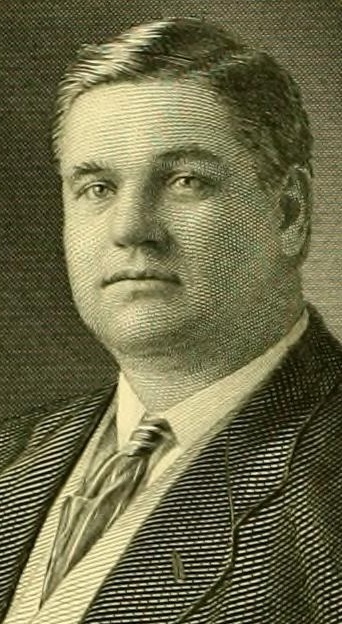
Historical · U.S. House · Kansas · District 7
Edmond Madison
Former U.S. Representative · Kansas District 7 · 1907–1913 · Republican
Edmond Madison represented Kansas's District 7 in the United States House of Representatives (1907–1913) for the Republican party. The page below collects sourced biographical facts, term history, committee roles, and provenance for Madison.
Bioguide ID: M000042
Key facts
- Full name
- Edmond Madison
- State
- Kansas
- District
- District 7
- Party
- Republican
- House service
- 1907–1913
- First House term
- 1907
- Status
- Left office
- Current term ends
- —
- Born
- 1865
- Bioguide ID
- M000042
- Committee assignments
- —
- Dataset version
- 1.20260606
Biographical narrative
1,019 words · sourced from the Wikipedia REST extract
Edmond Madison was a prominent figure in early 20th-century American politics, serving as a U.S. Representative from Kansas. A member of the Republican Party, he represented the 7th congressional district from 1907 until his death in 1911. Madison's career was marked by his legal background and his commitment to public service, which included roles as a teacher, attorney, and judge before entering Congress. His tenure in the House of Representatives was characterized by his engagement in legislative matters pertinent to his constituents and the broader national landscape.
Early life and career
Edmond Haggard Madison was born on December 18, 1865, in Plymouth, Illinois. He grew up in a period of significant change in the United States, which shaped his worldview and career aspirations. Madison attended common schools, where he received a foundational education that would later inform his various professional pursuits. His early career began in education, where he worked as a teacher, imparting knowledge to younger generations and gaining valuable experience in public service.
In 1885, Madison relocated to Wichita, Kansas, a move that would set the stage for his future endeavors in law and politics. His time in Wichita allowed him to immerse himself in the rapidly developing landscape of Kansas, which was experiencing significant growth and transformation during this period. Seeking to further his education and career, Madison studied law and was admitted to the bar in 1888. This achievement marked the beginning of his legal practice, which he established in Dodge City, Kansas.
Madison's legal career quickly progressed, and he became an influential figure in the local legal community. He served as the prosecuting attorney for Ford County, Kansas, from 1889 to 1893, where he was responsible for overseeing legal proceedings and representing the interests of the state. His work in this role helped him build a reputation as a capable and dedicated public servant. In 1900, Madison was appointed as a judge of the thirty-first judicial district of Kansas, a position he held until September 17, 1906. His judicial tenure provided him with extensive experience in the legal system and further solidified his standing in the community.
After resigning from the judiciary, Madison turned his attention to a new challenge: running for a seat in the U.S. House of Representatives. His legal background and experience in public service positioned him as a strong candidate for Congress, and he successfully secured a place in the legislative body.
House tenure
Edmond Madison was elected to the U.S. House of Representatives as a Republican, beginning his first term on March 4, 1907. He served in the Sixtieth, Sixty-first, and Sixty-second Congresses, representing the 7th congressional district of Kansas. Throughout his time in office, Madison was involved in various legislative activities and contributed to discussions on issues relevant to his constituents and the nation.
During his congressional tenure, Madison participated in the legislative process during a time of significant national and international change. The early 20th century was marked by economic growth, social reform movements, and increasing involvement of the United States in global affairs. As a member of the House, Madison had the opportunity to engage with these pressing issues, advocating for policies that aligned with his party's platform and the interests of his district.
Madison's service in Congress was characterized by his commitment to his constituents. He worked to address the needs and concerns of the people in his district, which included a diverse population with varying interests. His legal background likely informed his approach to legislation, allowing him to analyze and understand complex legal issues that arose during his time in office.
Madison's time in Congress was cut short by his untimely death on September 18, 1911, in Dodge City, Kansas. His passing occurred just a few years into his congressional career, leaving a legacy that would be remembered by those he served. Following his death, he was interred at Maple Grove Cemetery, where he rests alongside other notable figures from the region.
Legislative focus and committees
During his tenure in the House of Representatives, Edmond Madison was involved in various legislative matters that reflected the priorities of his constituents and the broader Republican agenda. While specific details regarding the bills he sponsored or supported are not documented, it is evident that his legal expertise and experience in public service would have influenced his legislative focus.
Madison's work in Congress occurred during a time when the United States was grappling with significant social and economic changes. Issues such as labor rights, economic regulation, and infrastructure development were at the forefront of national discussions. As a representative from Kansas, Madison would have been particularly attuned to the agricultural concerns of his constituents, as the state was primarily agrarian during this period. His background in law may have also led him to engage with issues related to property rights and land use, which were critical to the livelihoods of many Kansas residents.
In addition to his legislative work, Madison likely participated in various committees that aligned with his interests and expertise. Committees in the House of Representatives play a crucial role in shaping legislation, and members often serve on those that correspond to their professional backgrounds and the needs of their districts. Madison's legal experience may have made him a valuable member of committees focused on judiciary matters or those addressing issues pertinent to his constituents.
Overall, Edmond Madison's legislative focus and committee involvement would have reflected the complexities of the time, as he navigated the challenges and opportunities presented to him as a member of Congress. His commitment to public service and the legal profession underscored his approach to governance, as he sought to represent the interests of the people of Kansas effectively.
In summary, Edmond Madison's life and career were marked by a dedication to public service, beginning with his early work as a teacher and culminating in his role as a U.S. Representative. His contributions to the legislative process during a transformative period in American history remain a part of his legacy, as he sought to address the needs of his constituents and engage with the pressing issues of his time.
Notable legislation
Sponsored and co-sponsored legislation for Edmond Madison is pending operator curation. The biographical narrative above carries the same provenance trail until per-bill rows are written.
Sources
- [1]https://en.wikipedia.org/wiki/Edmond_H._MadisonWikipedia · retrieved 2026-06-06
Notable quotes
Sourced quotes for Edmond Madison are pending operator curation. Narrative-scope provenance remains attached below.
Sources
- [1]https://en.wikipedia.org/wiki/Edmond_H._MadisonWikipedia · retrieved 2026-06-06
Key positions
Curated policy positions for Edmond Madison are pending operator review. The biographical narrative above carries the same provenance trail until per-topic positions are written.
Sources
- [1]https://en.wikipedia.org/wiki/Edmond_H._MadisonWikipedia · retrieved 2026-06-06
Terms served
- 1907–1909U.S. House · Term 1 · Republican
- 1909–1911U.S. House · Term 2 · Republican
- 1911–1913U.S. House · Term 3 · Republican
Sources & provenance
Every attributable claim above carries a per-section [N] marker that resolves to the corresponding URL below. Each entry records the upstream provider, the canonical URL, and the timestamp at which the source was retrieved by the ingest pipeline.
Key facts
- https://bioguide.congress.gov/search/bio/M000042bioguide · retrieved 2026-06-06
- https://www.govtrack.us/congress/members/407070govtrack · retrieved 2026-06-06
Biographical narrative
- https://en.wikipedia.org/wiki/Edmond_H._Madisonwikipedia · retrieved 2026-06-06
Find your representative
Every U.S. state elects representatives by district. Browse Kansas’s delegation, the full former-representative roster, or explore the role and term length.
Related on The Candidate
- Preceded by Jerry SimpsonEarlier holder of the Kansas District 7 House seat · Populist.Open
- Succeeded by Jouett ShouseLater holder of the Kansas District 7 House seat · Democratic.Open
- Abel WilderFormer U.S. Representative · Kansas District 1 · RepublicanOpen
- Albert ColeFormer U.S. Representative · Kansas District 1 · RepublicanOpen
- Case BroderickFormer U.S. Representative · Kansas District 1 · RepublicanOpen
- Daniel Anthony Jr.Former U.S. Representative · Kansas District 1 · RepublicanOpen