
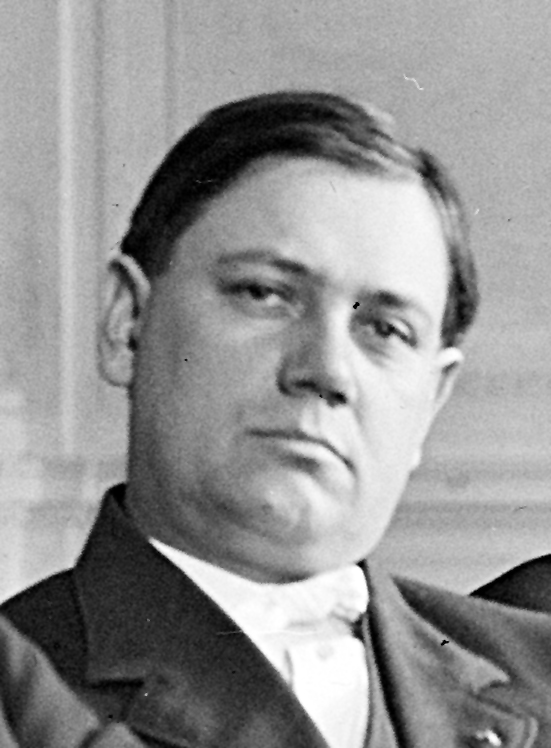
Historical · U.S. House · Kansas · District 7
George Neeley
Former U.S. Representative · Kansas District 7 · 1911–1915 · Democratic
George Neeley represented Kansas's District 7 in the United States House of Representatives (1911–1915) for the Democratic party. The page below collects sourced biographical facts, term history, committee roles, and provenance for Neeley.
Bioguide ID: N000022
Key facts
- Full name
- George Neeley
- State
- Kansas
- District
- District 7
- Party
- Democratic
- House service
- 1911–1915
- First House term
- 1911
- Status
- Left office
- Current term ends
- —
- Born
- 1879
- Bioguide ID
- N000022
- Committee assignments
- —
- Dataset version
- 1.20260606
Biographical narrative
891 words · sourced from the Wikipedia REST extract
George Neeley was a U.S. Representative from Kansas, serving as a member of the Democratic Party. His political career included two terms in the House of Representatives, during which he represented the 7th congressional district of Kansas. Neeley's tenure in Congress spanned from 1911 to 1915, and he was known for stepping into office following a special election to fill a vacancy. After completing his congressional service, he did not seek reelection for a subsequent term but made an unsuccessful bid for the United States Senate. His life and career were marked by his early education, legal practice, and eventual political involvement, culminating in his representation of Kansas in the federal legislature.
Early life and career
George Arthur Neeley was born on August 1, 1879, in Detroit, Illinois. His early education took place in public schools located in Joplin, Missouri, and Wellston, Oklahoma. This foundational education set the stage for his later academic achievements. In 1902, he earned a Bachelor of Science degree from Southwestern Baptist University, which is now known as Union University, located in Jackson, Tennessee. This institution provided him with a solid grounding in various subjects, contributing to his intellectual development.
Following his undergraduate studies, Neeley pursued a legal education and obtained a Juris Doctor degree from the University of Kansas in Lawrence, Kansas, in 1904. This qualification allowed him to enter the legal profession, and he subsequently engaged in private practice as a lawyer. Before fully committing to his legal career, Neeley also worked as a farmer and a teacher, experiences that likely enriched his understanding of the diverse needs and challenges faced by his constituents.
In 1910, Neeley attempted to enter the political arena by running for a seat in the U.S. House of Representatives as a candidate for the 61st Congress. However, this initial bid was unsuccessful, and he did not secure the position. Despite this setback, he continued to pursue a career in public service, which would soon lead to his election to Congress.
House tenure
George Neeley's congressional career began when he was elected as a Democrat in a special election to fill the vacancy left by the death of incumbent Representative Edmond H. Madison. This election marked the beginning of his first term in the 62nd Congress, which commenced on January 9, 1912. Neeley served in this capacity until March 3, 1915, completing a total of two terms in the House of Representatives.
During his time in Congress, Neeley participated in various legislative activities and contributed to discussions on issues pertinent to his constituents and the nation. His role as a U.S. Representative involved engaging with fellow lawmakers, participating in committee work, and addressing the needs and concerns of the people he represented. Although specific details regarding the legislation he supported or opposed are not documented, his service during this period coincided with significant events in American history, including the lead-up to World War I and various domestic reforms.
After completing his second term, Neeley chose not to seek reelection for the 64th Congress in 1914. Instead, he shifted his political aspirations toward a run for the United States Senate. However, this attempt was also unsuccessful, marking the end of his formal political career in the federal legislature.
Legislative focus and committees
While specific details about George Neeley's legislative focus and committee assignments during his time in Congress are not provided, it is important to contextualize his role within the broader framework of the Democratic Party and the political climate of the early 20th century. The period in which he served was characterized by significant social and economic changes, including the Progressive Era, which sought to address issues such as labor rights, women's suffrage, and government reform.
As a member of the Democratic Party, Neeley would have been part of discussions surrounding these critical issues. The Democratic Party during this time was often associated with advocating for the interests of working-class Americans and promoting reforms aimed at reducing the influence of corporate interests in politics. Given his background as a lawyer and educator, it is plausible that Neeley may have been particularly attuned to issues related to education, labor rights, and social justice.
Although specific legislative initiatives or committee memberships are not detailed in the available information, it is reasonable to infer that Neeley's experiences as a farmer, teacher, and lawyer would have informed his perspectives on various legislative matters. His diverse background may have provided him with insights into the challenges faced by different segments of society, allowing him to advocate effectively for his constituents.
After leaving Congress, George Neeley continued to reside in Kansas, where he ultimately passed away on January 1, 1919, in Hutchinson, Kansas. His contributions to public service and his role as a U.S. Representative are remembered as part of the historical narrative of Kansas's political landscape during the early 20th century. He was interred in Oak Park Cemetery, located in Chandler, Oklahoma, marking the final resting place of a figure who engaged in both legal practice and political service.
George Neeley's legacy is further enriched by his family, particularly through his daughter, Margaret St. Clair, who became a noted author in the science fiction genre. This connection highlights the diverse paths that can emerge from a family engaged in public service and the arts, illustrating the multifaceted nature of individual contributions to society.
Notable legislation
Sponsored and co-sponsored legislation for George Neeley is pending operator curation. The biographical narrative above carries the same provenance trail until per-bill rows are written.
Sources
- [1]https://en.wikipedia.org/wiki/George_A._NeeleyWikipedia · retrieved 2026-06-06
Notable quotes
Sourced quotes for George Neeley are pending operator curation. Narrative-scope provenance remains attached below.
Sources
- [1]https://en.wikipedia.org/wiki/George_A._NeeleyWikipedia · retrieved 2026-06-06
Key positions
Curated policy positions for George Neeley are pending operator review. The biographical narrative above carries the same provenance trail until per-topic positions are written.
Sources
- [1]https://en.wikipedia.org/wiki/George_A._NeeleyWikipedia · retrieved 2026-06-06
Terms served
- 1911–1913U.S. House · Term 1 · Democratic
- 1913–1915U.S. House · Term 2 · Democratic
Sources & provenance
Every attributable claim above carries a per-section [N] marker that resolves to the corresponding URL below. Each entry records the upstream provider, the canonical URL, and the timestamp at which the source was retrieved by the ingest pipeline.
Key facts
- https://bioguide.congress.gov/search/bio/N000022bioguide · retrieved 2026-06-06
- https://www.govtrack.us/congress/members/408114govtrack · retrieved 2026-06-06
Biographical narrative
- https://en.wikipedia.org/wiki/George_A._Neeleywikipedia · retrieved 2026-06-06
Find your representative
Every U.S. state elects representatives by district. Browse Kansas’s delegation, the full former-representative roster, or explore the role and term length.
Related on The Candidate
- Preceded by Jerry SimpsonEarlier holder of the Kansas District 7 House seat · Populist.Open
- Succeeded by Jouett ShouseLater holder of the Kansas District 7 House seat · Democratic.Open
- Abel WilderFormer U.S. Representative · Kansas District 1 · RepublicanOpen
- Albert ColeFormer U.S. Representative · Kansas District 1 · RepublicanOpen
- Case BroderickFormer U.S. Representative · Kansas District 1 · RepublicanOpen
- Daniel Anthony Jr.Former U.S. Representative · Kansas District 1 · RepublicanOpen