
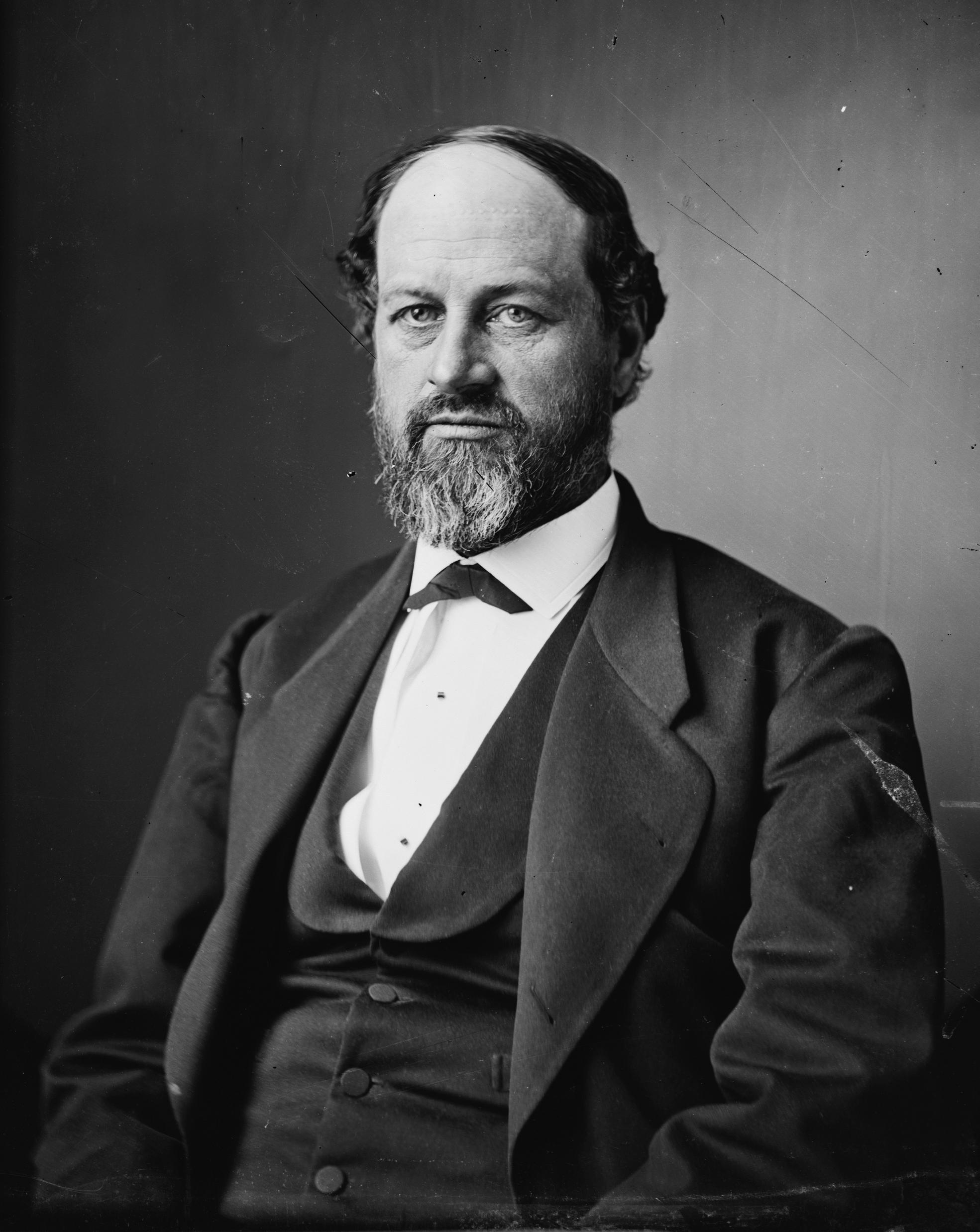
Historical · U.S. House · Kansas · At-Large
David Lowe
Former U.S. Representative · Kansas At-Large · 1871–1875 · Republican
David Lowe represented Kansas's At-Large in the United States House of Representatives (1871–1875) for the Republican party. The page below collects sourced biographical facts, term history, committee roles, and provenance for Lowe.
Bioguide ID: L000473
Key facts
- Full name
- David Lowe
- State
- Kansas
- District
- At-Large
- Party
- Republican
- House service
- 1871–1875
- First House term
- 1871
- Status
- Left office
- Current term ends
- —
- Born
- 1823
- Bioguide ID
- L000473
- Committee assignments
- —
- Dataset version
- 1.20260606
Biographical narrative
804 words · sourced from the Wikipedia REST extract
David Lowe was an American lawyer and politician who served as a U.S. Representative from Kansas. A member of the Republican Party, he held office in the House of Representatives from 1871 to 1875, representing the at-large district of Kansas. His legislative career was marked by his involvement in civil rights issues, and he later served as chief justice of the Utah Territory. Lowe's legal and political contributions have been acknowledged in historical contexts, particularly regarding civil rights legislation.
Early life and career
David Lowe was born on August 22, 1823. He pursued a legal education and graduated from Cincinnati Law College in 1851. Following his graduation, he was admitted to the bar and began practicing law in Cincinnati, Ohio. In 1861, he relocated to Mound City, Kansas, where he continued his legal career. His move to Kansas coincided with a period of significant social and political upheaval in the United States, particularly due to the Civil War.
Lowe's political career began in earnest when he was elected to the Kansas State Senate, serving from 1863 to 1864. His experience in state politics laid the groundwork for his later endeavors at the national level. In 1867, he was appointed as a judge of the sixth judicial district of Kansas, a position he held until 1871. This role further solidified his reputation as a legal authority in the region and provided him with valuable experience in judicial matters.
In 1870, Lowe moved to Fort Scott, Kansas, where he continued to practice law and further engage with the community. His legal background and political involvement positioned him as a prominent figure in local and state affairs, ultimately leading to his election to the U.S. House of Representatives.
House tenure
David Lowe was elected to the U.S. House of Representatives as a Republican, beginning his first term on March 4, 1871. He served in the Forty-second and Forty-third Congresses, with his tenure concluding on March 3, 1875. During his time in Congress, Lowe was involved in various legislative activities and discussions that reflected the political climate of the era, particularly concerning civil rights and social justice.
In the Forty-third Congress, he served as the chairman of the Committee on Mines and Mining, a role that underscored his engagement with issues pertinent to the economic and industrial development of the United States. His leadership in this committee allowed him to influence legislation related to mining practices and regulations, which were significant to the economic landscape of the time.
Despite his contributions, Lowe chose not to seek renomination in 1874, marking the end of his congressional career. His decision to step away from the political arena at this juncture suggests a strategic choice to focus on other opportunities or personal interests.
Legislative focus and committees
Throughout his congressional tenure, David Lowe's legislative focus included a commitment to civil rights, which was a pressing issue during the post-Civil War period. His involvement in civil rights legislation is particularly notable, as it placed him at the forefront of efforts to address injustices faced by marginalized communities. Lowe's support for civil rights initiatives contributed to the broader national discourse on equality and justice, which was gaining momentum in the years following the Civil War.
Lowe's role as chairman of the Committee on Mines and Mining also reflects a dual focus on both economic development and social issues. His engagement with mining legislation was crucial during a time when the industry was expanding rapidly, and regulations were necessary to ensure fair practices and safety standards. This position allowed him to advocate for policies that would benefit both the economy and the workers involved in the mining sector.
After leaving Congress, Lowe's legal career continued to flourish. He was appointed by President Ulysses S. Grant as the chief justice of the Utah Territory in 1875. This appointment marked a significant transition in his career, as he moved from legislative responsibilities to a judicial role in a territory that was experiencing its own unique challenges and developments.
Upon returning to Kansas, Lowe settled in Fort Scott and resumed his legal practice. In 1879, he was again elected as a judge of the sixth judicial district of Kansas, a position he held until his death on April 10, 1882. His judicial service further exemplified his commitment to the legal profession and the principles of justice.
David Lowe's legacy is characterized by his contributions to civil rights and his roles in both legislative and judicial capacities. His involvement in the congressional debates surrounding civil rights legislation has been recognized in historical contexts, highlighting the significance of his work during a transformative period in American history. His life and career reflect the complexities of the political landscape of the 19th century, as well as the ongoing struggle for equality and justice in the United States.
Notable legislation
Sponsored and co-sponsored legislation for David Lowe is pending operator curation. The biographical narrative above carries the same provenance trail until per-bill rows are written.
Sources
- [1]https://en.wikipedia.org/wiki/David_P._LoweWikipedia · retrieved 2026-06-06
Notable quotes
Sourced quotes for David Lowe are pending operator curation. Narrative-scope provenance remains attached below.
Sources
- [1]https://en.wikipedia.org/wiki/David_P._LoweWikipedia · retrieved 2026-06-06
Key positions
Curated policy positions for David Lowe are pending operator review. The biographical narrative above carries the same provenance trail until per-topic positions are written.
Sources
- [1]https://en.wikipedia.org/wiki/David_P._LoweWikipedia · retrieved 2026-06-06
Terms served
- 1871–1873U.S. House · Term 1 · Republican
- 1873–1875U.S. House · Term 2 · Republican
Sources & provenance
Every attributable claim above carries a per-section [N] marker that resolves to the corresponding URL below. Each entry records the upstream provider, the canonical URL, and the timestamp at which the source was retrieved by the ingest pipeline.
Key facts
- https://bioguide.congress.gov/search/bio/L000473bioguide · retrieved 2026-06-06
- https://www.govtrack.us/congress/members/406962govtrack · retrieved 2026-06-06
Biographical narrative
- https://en.wikipedia.org/wiki/David_P._Lowewikipedia · retrieved 2026-06-06
Find your representative
Every U.S. state elects representatives by district. Browse Kansas’s delegation, the full former-representative roster, or explore the role and term length.
Related on The Candidate
- Preceded by Marcus ParrottEarlier holder of the Kansas At-Large House seat · Republican.Open
- Succeeded by Richard BlueLater holder of the Kansas At-Large House seat · Republican.Open
- Abel WilderFormer U.S. Representative · Kansas District 1 · RepublicanOpen
- Albert ColeFormer U.S. Representative · Kansas District 1 · RepublicanOpen
- Case BroderickFormer U.S. Representative · Kansas District 1 · RepublicanOpen
- Daniel Anthony Jr.Former U.S. Representative · Kansas District 1 · RepublicanOpen