
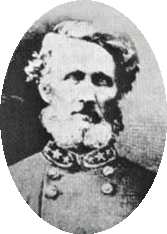
Historical · U.S. House · Kansas · At-Large
John Whitfield
Former U.S. Representative · Kansas At-Large · 1853–1857 · Democratic
John Whitfield represented Kansas's At-Large in the United States House of Representatives (1853–1857) for the Democratic party. The page below collects sourced biographical facts, term history, committee roles, and provenance for Whitfield.
Bioguide ID: W000414
Key facts
- Full name
- John Whitfield
- State
- Kansas
- District
- At-Large
- Party
- Democratic
- House service
- 1853–1857
- First House term
- 1853
- Status
- Left office
- Current term ends
- —
- Born
- 1818
- Bioguide ID
- W000414
- Committee assignments
- —
- Dataset version
- 1.20260606
Biographical narrative
879 words · sourced from the Wikipedia REST extract
John Whitfield was a U.S. Representative who served as a delegate from the Kansas Territory in the mid-19th century. A member of the Democratic Party, he held office during a tumultuous period in American history, marked by the lead-up to the Civil War. His political career was characterized by challenges related to election legitimacy and territorial governance. In addition to his political endeavors, Whitfield served in the military during the Civil War, achieving the rank of brigadier general. His life spanned from 1818 to 1879, during which he transitioned from a political figure to a military leader and later to an agriculturalist in Texas.
Early life and career
John Whitfield was born on March 11, 1818, in Franklin, Williamson County, Tennessee. His early life and education are not extensively documented, but he emerged as a notable figure in military and political spheres. He served as a lieutenant colonel during the Mexican-American War in 1846, a conflict that played a significant role in shaping U.S. territorial expansion. Following this military service, Whitfield relocated to Independence, Missouri, in 1853, where he took on the role of Indian agent for the Pottawatomie tribe and later for the Arkansas Indians in 1855 and 1856. This position involved managing relations and negotiations between the U.S. government and Native American tribes, a critical responsibility during a period of significant westward expansion.
Whitfield's political career began in earnest with the establishment of the Kansas Territory. As the territory prepared for representation in Congress, he was elected as a delegate to the Thirty-third Congress, commencing his term on December 20, 1854. His election was part of the broader Democratic strategy to secure influence in the newly organized territory, which was fraught with conflict over the issue of slavery. Whitfield's tenure as a delegate was marked by the challenges of representing a territory that was experiencing significant turmoil and competition for political power.
House tenure
During his time in the House of Representatives, Whitfield faced considerable obstacles. He was re-elected in October 1855, but his seat was declared vacant on August 1, 1856, due to allegations that the election process had been compromised. The House determined that external influences, particularly from Missouri, had undermined the legitimacy of the electoral process in Kansas. This decision reflected the intense political strife of the era, as pro-slavery and anti-slavery factions vied for control over the territory.
Despite the challenges, Whitfield was elected again to the 34th Congress to fill the vacancy created by the House's earlier decision. His second term was also contentious, as the legitimacy of his election was questioned. The Committee on Elections recommended that he be declared ineligible due to evidence of non-resident voting and disenfranchisement of actual Kansas residents. However, the full House ultimately decided to table the resolution, allowing Whitfield to serve provisionally from December 9, 1856, until March 3, 1857. His time in Congress was characterized by the broader national debate over slavery and its implications for the governance of new territories.
Following his congressional tenure, Whitfield transitioned to a role in land management, serving as the register of the land office in Doniphan, Kansas, from 1857 to 1861. This position involved overseeing land transactions and managing the distribution of land in the rapidly developing territory.
Legislative focus and committees
Whitfield's legislative focus during his time in Congress was shaped by the pressing issues of the Kansas Territory, particularly the contentious debates surrounding slavery and territorial governance. As a delegate, he was involved in discussions that reflected the broader national conflict over the expansion of slavery into new territories. His role as a representative was complicated by the violent confrontations that characterized "Bleeding Kansas," a series of conflicts between pro-slavery and anti-slavery settlers.
Although specific details about the committees he served on during his congressional tenure are not provided, it can be inferred that his work would have involved engagement with issues pertinent to the governance of territories, land management, and relations with Native American tribes. Given the context of his election and the challenges he faced, Whitfield's contributions were likely focused on navigating the complexities of a territory in turmoil.
After his congressional career, Whitfield's life took a different turn as he became involved in military service during the American Civil War. He initially served as a captain in the 27th Texas Cavalry Regiment and was later promoted to colonel and then brigadier general. His military service further illustrates the duality of his career, as he transitioned from a political figure to a military leader during a critical period in American history.
Following the Civil War, Whitfield settled in Lavaca County, Texas, where he engaged in agricultural pursuits and stock raising. He also served in the Texas House of Representatives, continuing his involvement in public service at the state level. He passed away on October 27, 1879, in Hallettsville, Texas, where he was buried.
Whitfield's life and career reflect the complexities of American politics and society in the mid-19th century, particularly in relation to the issues of territorial governance, military service, and the contentious debates surrounding slavery. His experiences as a delegate from the Kansas Territory and as a military officer during the Civil War provide insight into the challenges and transformations that shaped the United States during this pivotal era.
Notable legislation
Sponsored and co-sponsored legislation for John Whitfield is pending operator curation. The biographical narrative above carries the same provenance trail until per-bill rows are written.
Sources
- [1]https://en.wikipedia.org/wiki/John_Wilkins_WhitfieldWikipedia · retrieved 2026-06-06
Notable quotes
Sourced quotes for John Whitfield are pending operator curation. Narrative-scope provenance remains attached below.
Sources
- [1]https://en.wikipedia.org/wiki/John_Wilkins_WhitfieldWikipedia · retrieved 2026-06-06
Key positions
Curated policy positions for John Whitfield are pending operator review. The biographical narrative above carries the same provenance trail until per-topic positions are written.
Sources
- [1]https://en.wikipedia.org/wiki/John_Wilkins_WhitfieldWikipedia · retrieved 2026-06-06
Terms served
- 1853–1855U.S. House · Term 1 · Democratic
- 1855–1857U.S. House · Term 2 · Democratic
Sources & provenance
Every attributable claim above carries a per-section [N] marker that resolves to the corresponding URL below. Each entry records the upstream provider, the canonical URL, and the timestamp at which the source was retrieved by the ingest pipeline.
Key facts
- https://bioguide.congress.gov/search/bio/W000414bioguide · retrieved 2026-06-06
- https://www.govtrack.us/congress/members/411573govtrack · retrieved 2026-06-06
Biographical narrative
- https://en.wikipedia.org/wiki/John_Wilkins_Whitfieldwikipedia · retrieved 2026-06-06
Find your representative
Every U.S. state elects representatives by district. Browse Kansas’s delegation, the full former-representative roster, or explore the role and term length.
Related on The Candidate
- Succeeded by Marcus ParrottLater holder of the Kansas At-Large House seat · Republican.Open
- Abel WilderFormer U.S. Representative · Kansas District 1 · RepublicanOpen
- Albert ColeFormer U.S. Representative · Kansas District 1 · RepublicanOpen
- Case BroderickFormer U.S. Representative · Kansas District 1 · RepublicanOpen
- Daniel Anthony Jr.Former U.S. Representative · Kansas District 1 · RepublicanOpen
- Democratic PartyFederal candidates and office holders on the Democratic line.Open