
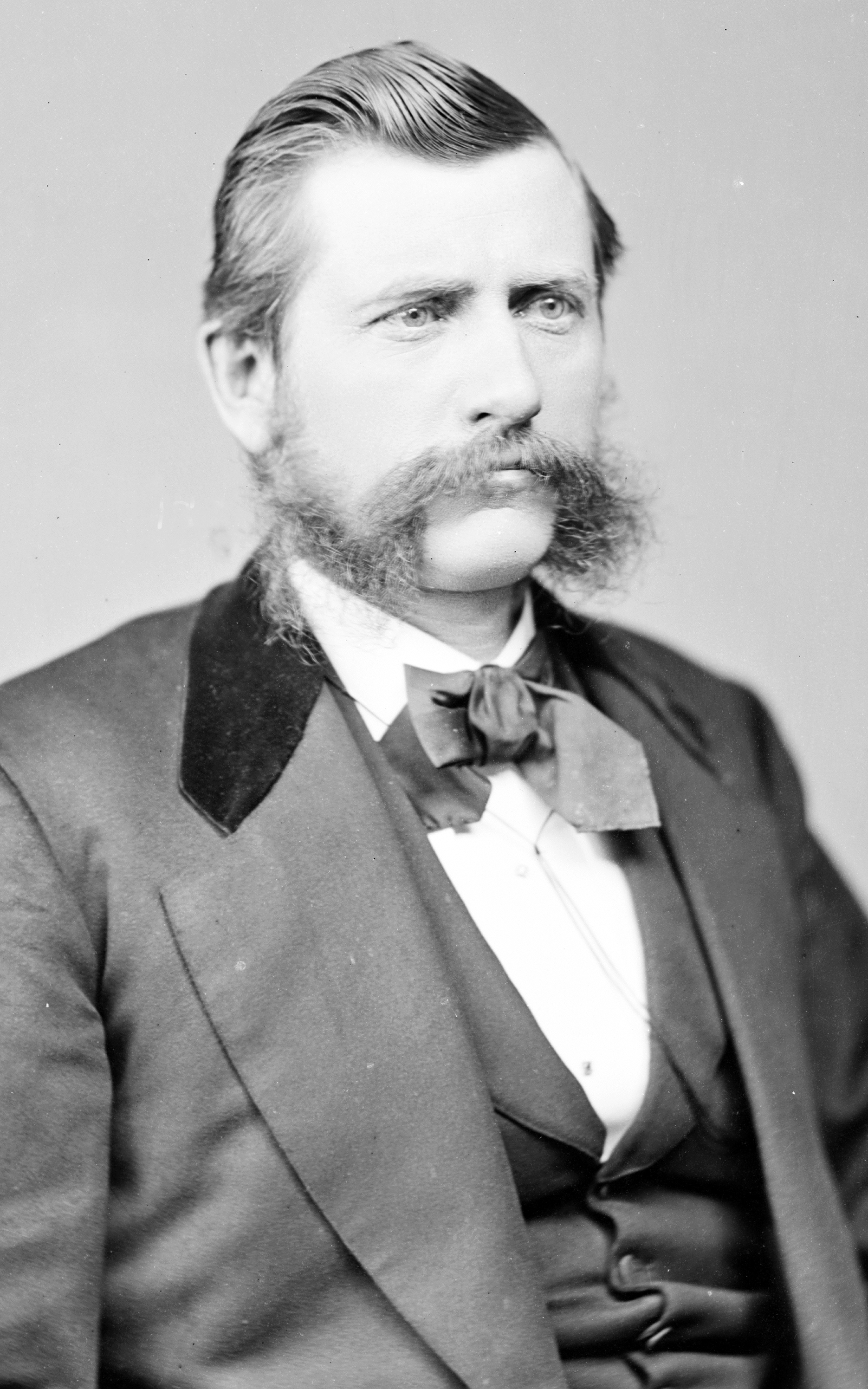
Historical · U.S. House · Kansas · At-Large
Stephen Cobb
Former U.S. Representative · Kansas At-Large · 1873–1875 · Republican
Stephen Cobb represented Kansas's At-Large in the United States House of Representatives (1873–1875) for the Republican party. The page below collects sourced biographical facts, term history, committee roles, and provenance for Cobb.
Bioguide ID: C000551
Key facts
- Full name
- Stephen Cobb
- State
- Kansas
- District
- At-Large
- Party
- Republican
- House service
- 1873–1875
- First House term
- 1873
- Status
- Left office
- Current term ends
- —
- Born
- 1833
- Bioguide ID
- C000551
- Committee assignments
- —
- Dataset version
- 1.20260606
Biographical narrative
968 words · sourced from the Wikipedia REST extract
Stephen Cobb was a U.S. Representative from Kansas, serving as a member of the Republican Party during the early years of the state’s admission to the Union. His political career was marked by a commitment to public service, which included roles in local government and the military, as well as his tenure in the U.S. House of Representatives. Cobb's life spanned a period of significant change in American history, including the Civil War and the westward expansion of the United States.
Early life and career
Stephen Alonzo Cobb was born on June 17, 1833, in Madison, Maine. His early education took place in the common schools of his hometown, which laid the foundation for his future academic pursuits. In 1850, Cobb moved with his father to Minnesota, where he began working in the lumber industry. This early experience in the workforce was pivotal, as it not only provided him with practical skills but also exposed him to the economic opportunities available in the rapidly developing regions of the United States.
Cobb's desire for education led him to study languages and prepare for college. In 1854, he enrolled at Beloit College in Beloit, Wisconsin, where he spent two years furthering his education. His academic journey culminated in his graduation from Brown University in Providence, Rhode Island, in 1858. Following his graduation, Cobb settled in Wyandotte, Kansas, in 1859, where he began practicing law. His legal career would later inform his political endeavors and his understanding of governance.
In addition to his legal profession, Cobb was actively involved in local politics. His commitment to public service was evident early on when he was elected as the mayor of Wyandotte in 1862. He served in this role again in 1868, demonstrating his ongoing dedication to the community. Cobb's political involvement extended beyond local governance; he also served in the Kansas State Senate in 1862, 1869, and 1870, and was a member of the State House of Representatives in 1872, where he held the position of speaker. These roles provided him with valuable experience in legislative processes and governance, preparing him for his future role at the national level.
Cobb's life took a significant turn when he enlisted in the Union Army during the Civil War in 1862. His military service was marked by a rapid rise through the ranks, as he became a captain and commissary sergeant of Volunteers on May 18, 1864. His dedication and leadership were recognized when he was brevetted to the rank of major on August 16, 1865. Cobb was honorably discharged from military service on September 23, 1865, concluding a chapter of his life that was deeply intertwined with the national conflict and the fight for the Union.
House tenure
Cobb's political career reached a new height when he was elected as a Republican to the United States House of Representatives, representing Kansas's at-large district. His term began on March 4, 1873, and lasted until March 3, 1875. During this period, Cobb participated in the Forty-third Congress, a time characterized by post-Civil War reconstruction efforts and the challenges of integrating formerly Confederate states back into the Union.
As a member of the House, Cobb was part of a legislative body that was addressing a range of issues, including civil rights, economic recovery, and the expansion of infrastructure in the rapidly growing western territories. His background in law and experience in state politics likely informed his contributions to discussions and debates on these pressing matters. However, specific details regarding his legislative initiatives or committee assignments during his time in Congress are not documented.
Cobb's tenure in the House was relatively short-lived, as he faced challenges in securing re-election. In 1874, he ran for a second term in the Forty-fourth Congress but was unsuccessful in his bid. This defeat marked the end of his time in federal office, but it did not diminish his contributions to the political landscape of Kansas and the broader national context.
Legislative focus and committees
While specific legislative achievements and committee assignments during Cobb's time in the House of Representatives are not detailed in the available records, it is important to understand the broader context of his service. The Forty-third Congress was a pivotal time in American history, as the nation was grappling with the aftermath of the Civil War and the complexities of Reconstruction. Issues such as civil rights for newly freed African Americans, economic development, and the integration of western territories into the Union were at the forefront of congressional discussions.
Cobb's background as a lawyer and his experience in state government likely influenced his perspectives on these issues. His legal training would have equipped him with a strong understanding of the legislative process and the importance of law in shaping society. Additionally, his prior roles in local and state government provided him with insights into the needs and concerns of his constituents in Kansas.
The political climate of the time was marked by significant tension and division, particularly regarding the rights of African Americans and the reintegration of Southern states. Cobb's participation in the House during this period placed him at the center of debates that would shape the future of the nation. Although the specifics of his legislative focus remain unclear, it is reasonable to infer that he would have been engaged in discussions relevant to the interests of his constituents and the broader goals of the Republican Party.
After leaving Congress, Cobb continued to reside in Wyandotte, Kansas, where he remained active in the community until his death on August 24, 1878. He was interred in Oak Grove Cemetery in Kansas City, Kansas. Cobb's life and career reflect the complexities of American politics during a transformative era, and his contributions to both local and national governance are a testament to his commitment to public service.
Notable legislation
Sponsored and co-sponsored legislation for Stephen Cobb is pending operator curation. The biographical narrative above carries the same provenance trail until per-bill rows are written.
Sources
- [1]https://en.wikipedia.org/wiki/Stephen_A._CobbWikipedia · retrieved 2026-06-06
Notable quotes
Sourced quotes for Stephen Cobb are pending operator curation. Narrative-scope provenance remains attached below.
Sources
- [1]https://en.wikipedia.org/wiki/Stephen_A._CobbWikipedia · retrieved 2026-06-06
Key positions
Curated policy positions for Stephen Cobb are pending operator review. The biographical narrative above carries the same provenance trail until per-topic positions are written.
Sources
- [1]https://en.wikipedia.org/wiki/Stephen_A._CobbWikipedia · retrieved 2026-06-06
Terms served
- 1873–1875U.S. House · Term 1 · Republican
Sources & provenance
Every attributable claim above carries a per-section [N] marker that resolves to the corresponding URL below. Each entry records the upstream provider, the canonical URL, and the timestamp at which the source was retrieved by the ingest pipeline.
Key facts
- https://bioguide.congress.gov/search/bio/C000551bioguide · retrieved 2026-06-06
- https://www.govtrack.us/congress/members/402684govtrack · retrieved 2026-06-06
Biographical narrative
- https://en.wikipedia.org/wiki/Stephen_A._Cobbwikipedia · retrieved 2026-06-06
Find your representative
Every U.S. state elects representatives by district. Browse Kansas’s delegation, the full former-representative roster, or explore the role and term length.
Related on The Candidate
- Preceded by Marcus ParrottEarlier holder of the Kansas At-Large House seat · Republican.Open
- Succeeded by Richard BlueLater holder of the Kansas At-Large House seat · Republican.Open
- Abel WilderFormer U.S. Representative · Kansas District 1 · RepublicanOpen
- Albert ColeFormer U.S. Representative · Kansas District 1 · RepublicanOpen
- Case BroderickFormer U.S. Representative · Kansas District 1 · RepublicanOpen
- Daniel Anthony Jr.Former U.S. Representative · Kansas District 1 · RepublicanOpen