
Historical · U.S. House · Kentucky · District 1
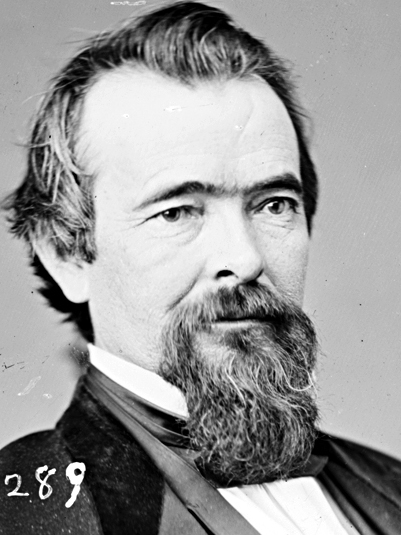
Lawrence Trimble
Former U.S. Representative · Kentucky District 1 · 1865–1871 · Democratic
Lawrence Trimble represented Kentucky's District 1 in the United States House of Representatives (1865–1871) for the Democratic party. The page below collects sourced biographical facts, term history, committee roles, and provenance for Trimble.
Bioguide ID: T000375
Key facts
- Full name
- Lawrence Trimble
- State
- Kentucky
- District
- District 1
- Party
- Democratic
- House service
- 1865–1871
- First House term
- 1865
- Status
- Left office
- Current term ends
- —
- Born
- 1825
- Bioguide ID
- T000375
- Committee assignments
- —
- Dataset version
- 1.20260606
Biographical narrative
889 words · sourced from the Wikipedia REST extract
Lawrence Trimble was a notable figure in American politics during the 19th century, serving as a U.S. Representative for Kentucky's 1st Congressional District. A member of the Democratic Party, Trimble's political career spanned several decades, during which he held various positions, including judge and railroad company president. His legislative tenure in the U.S. House of Representatives lasted from 1865 until 1871, marking a significant period in his life as he navigated the complexities of post-Civil War America. Following his congressional service, Trimble relocated to New Mexico, where he continued his legal career and engaged in local politics, contributing to the establishment of the state's governance.
Early life and career
Lawrence Strother Trimble was born on August 26, 1825, in Fleming County, Kentucky. He was the son of James and Harriet (Triplett) Trimble, who were part of a farming family. Growing up in a rural environment, Trimble completed his preparatory studies in his home county before pursuing a legal education. He studied law diligently and, at the age of 22, was admitted to the bar, allowing him to practice law professionally.
In 1847, Trimble moved to Paducah, Kentucky, where he established a law practice. His move to this city marked the beginning of his active engagement in politics. Between 1851 and 1853, he served as a representative in the Kentucky legislature, where he began to build his reputation as a political figure. His early political career coincided with a tumultuous period in American history, characterized by growing tensions over issues such as slavery and states' rights.
Trimble was a slave-holder prior to the Civil War, a fact that reflects the prevailing attitudes of many in the region during that era. In 1856, he was elected as a judge for the equity and criminal court in the First Judicial District of Kentucky, a position he held until 1860. His judicial role provided him with significant experience in legal matters and governance, further solidifying his standing in the community. After his tenure as a judge, Trimble took on the role of president of the New Orleans & Ohio Railroad Company from 1860 until 1865, a position that likely contributed to his understanding of economic and infrastructural issues relevant to his constituents.
House tenure
Trimble's congressional career began in 1865 when he was elected to represent Kentucky's 1st Congressional District in the U.S. House of Representatives. He served three consecutive terms, reflecting a degree of political stability and support from his constituents during a time of significant national upheaval following the Civil War. His tenure in the House lasted until March 3, 1871.
During his time in Congress, Trimble was involved in various legislative discussions and decisions that shaped the post-war landscape of the United States. Notably, he was one of the 47 representatives who voted against the impeachment of President Andrew Johnson in 1868. This decision positioned him within a faction of Congress that opposed the impeachment efforts, which were rooted in the contentious political climate of the Reconstruction era. His stance on this issue may have reflected his views on executive power and the challenges of rebuilding the nation after the Civil War.
Despite his active participation in Congress, Trimble's political career faced challenges. In 1870, he sought re-nomination from the Democratic Party for another term in the House but was unsuccessful. This defeat marked the end of his congressional service, as he did not return to the House after his last term ended in March 1871.
Legislative focus and committees
Throughout his time in the House of Representatives, Trimble's legislative focus was shaped by the pressing issues of his era. As a member of the Democratic Party, he aligned himself with the party's platform, which often emphasized states' rights, agrarian interests, and opposition to certain federal policies that were perceived as overreaching. His background as a lawyer and judge likely informed his perspectives on legal and judicial matters, which were particularly relevant during the Reconstruction period.
While specific details about the committees he served on during his congressional tenure are not provided, it can be inferred that his legal background and experience in state politics would have made him a valuable member of committees dealing with legal, judicial, and economic issues. His involvement in the railroad industry prior to his congressional service also suggests that he may have had an interest in transportation and infrastructure legislation, which were critical to the economic development of the post-war South.
After leaving Congress, Trimble's career took a new direction when he moved to Albuquerque, New Mexico, in 1879. There, he continued to practice law and re-engaged in the political arena. His election as the only Democrat to the New Mexico Constitutional Convention of 1889 marked a significant return to public service. Representing Bernalillo County, he played a role in shaping the state's constitution and governance. His contributions to the convention included delivering the opening address, which underscored his continued commitment to public service and civic engagement.
Trimble eventually retired to his ranch after the convention, where he lived until his death on August 9, 1904, in Albuquerque. He was laid to rest in Fairview Cemetery, located off Yale Boulevard. His life and career reflect the complexities of American politics in the 19th century, encompassing themes of law, governance, and the evolving landscape of the United States during a transformative period.
Notable legislation
Sponsored and co-sponsored legislation for Lawrence Trimble is pending operator curation. The biographical narrative above carries the same provenance trail until per-bill rows are written.
Sources
- [1]https://en.wikipedia.org/wiki/Lawrence_S._TrimbleWikipedia · retrieved 2026-06-06
Notable quotes
Sourced quotes for Lawrence Trimble are pending operator curation. Narrative-scope provenance remains attached below.
Sources
- [1]https://en.wikipedia.org/wiki/Lawrence_S._TrimbleWikipedia · retrieved 2026-06-06
Key positions
Curated policy positions for Lawrence Trimble are pending operator review. The biographical narrative above carries the same provenance trail until per-topic positions are written.
Sources
- [1]https://en.wikipedia.org/wiki/Lawrence_S._TrimbleWikipedia · retrieved 2026-06-06
Terms served
- 1865–1867U.S. House · Term 1 · Democratic
- 1867–1869U.S. House · Term 2 · Democratic
- 1869–1871U.S. House · Term 3 · Democratic
Sources & provenance
Every attributable claim above carries a per-section [N] marker that resolves to the corresponding URL below. Each entry records the upstream provider, the canonical URL, and the timestamp at which the source was retrieved by the ingest pipeline.
Key facts
- https://bioguide.congress.gov/search/bio/T000375bioguide · retrieved 2026-06-06
- https://www.govtrack.us/congress/members/410944govtrack · retrieved 2026-06-06
Biographical narrative
- https://en.wikipedia.org/wiki/Lawrence_S._Trimblewikipedia · retrieved 2026-06-06
Find your representative
Every U.S. state elects representatives by district. Browse Kentucky’s delegation, the full former-representative roster, or explore the role and term length.
Related on The Candidate
- Preceded by Lucien AndersonEarlier holder of the Kentucky District 1 House seat · Unconditional Unionist.Open
- Succeeded by Edward CrosslandLater holder of the Kentucky District 1 House seat · Democratic.Open
- Andrew BooneFormer U.S. Representative · Kentucky District 1 · DemocraticOpen
- Carroll Hubbard Jr.Former U.S. Representative · Kentucky District 1 · DemocraticOpen
- Charles WheelerFormer U.S. Representative · Kentucky District 1 · DemocraticOpen
- Chittenden LyonFormer U.S. Representative · Kentucky District 1 · JacksonOpen