
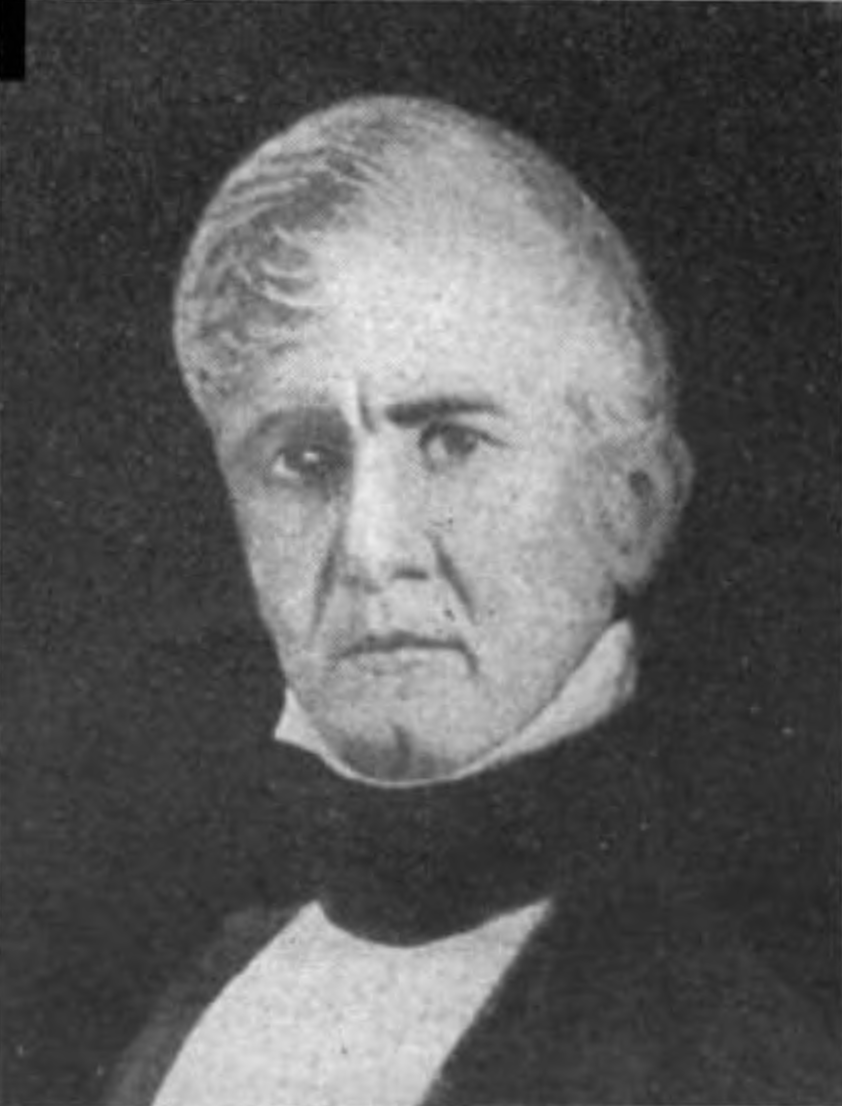
Historical · U.S. House · Kentucky · District 10
John Gaines
Former U.S. Representative · Kentucky District 10 · 1847–1849 · Whig
John Gaines represented Kentucky's District 10 in the United States House of Representatives (1847–1849) for the Whig party. The page below collects sourced biographical facts, term history, committee roles, and provenance for Gaines.
Bioguide ID: G000006
Key facts
- Full name
- John Gaines
- State
- Kentucky
- District
- District 10
- Party
- Whig
- House service
- 1847–1849
- First House term
- 1847
- Status
- Left office
- Current term ends
- —
- Born
- 1795
- Bioguide ID
- G000006
- Committee assignments
- —
- Dataset version
- 1.20260606
Biographical narrative
1,003 words · sourced from the Wikipedia REST extract
John Gaines was a notable figure in 19th-century American politics and military service, representing Kentucky's 10th congressional district as a member of the Whig Party from 1847 to 1849. Born in Virginia in 1795, Gaines's life was marked by his involvement in military conflicts, his tenure in political office, and his later role as the Governor of the Oregon Territory. His legacy is complex, intertwined with the historical context of his time, including issues related to slavery and territorial governance.
Early life and career
John Gaines was born on September 22, 1795, in Augusta County, Virginia, to Abner Gaines and Elizabeth Matthews. His family had a strong military tradition, with both grandfathers and his great-grandfather having served during the American Revolutionary War. This background likely influenced his later military service. Gaines received a formal education and pursued a career in law, which laid the groundwork for his future political endeavors.
In 1819, he married Elizabeth Kincaid, who hailed from Kentucky. Following their marriage, Gaines relocated to Boone County, Kentucky, where he established himself as a lawyer. His legal career coincided with a growing interest in politics, leading him to serve as a state legislator in Kentucky during the 1820s and 1830s. This early political experience provided Gaines with valuable insights into governance and legislative processes, which would later aid him in his congressional career.
Gaines's military involvement began when he volunteered to serve in the War of 1812. His commitment to his country continued into the Mexican-American War, where he was appointed as a Major in 1846. During this conflict, he served as an aide-de-camp to General Winfield Scott. His military service was marked by a significant event in January 1847 when he and approximately 80 soldiers were captured at Encarnacion. They were held captive in Mexico City until August of that year. Despite the challenges of captivity, Gaines was elected to the 30th United States Congress while imprisoned, demonstrating his political influence and the trust his constituents placed in him.
House tenure
Gaines's congressional career began when he took office on March 4, 1847. He represented Kentucky's 10th congressional district as a member of the Whig Party, a political group that emerged in the 1830s in opposition to the policies of President Andrew Jackson and the Democratic Party. During his time in the House of Representatives, Gaines was involved in the legislative discussions and decisions that shaped the nation during a period of significant change and conflict.
His term in Congress lasted until March 3, 1849, at which point he did not seek re-election. The political landscape of the time was marked by intense partisanship, and Gaines faced challenges in maintaining support from his constituents. His alignment with the Whig Party and its policies may have contributed to his electoral difficulties, as the party was often at odds with the prevailing sentiments of the electorate, particularly in the context of the growing sectional tensions over slavery and territorial expansion.
After completing his term in Congress, Gaines returned to Boone County, Kentucky. His political career did not end there, as he was appointed Governor of the Oregon Territory in October 1849. This appointment came after the previous territorial secretary and governor declined the position, indicating the political maneuvering and patronage that characterized the era. Gaines's transition from Congress to governorship marked a significant shift in his career, as he moved from legislative responsibilities to executive leadership in a newly established territory.
Legislative focus and committees
During his brief tenure in the House of Representatives, Gaines's legislative focus reflected the priorities of the Whig Party and the pressing issues of the time. The Whigs advocated for a range of policies, including internal improvements, a national bank, and protective tariffs. However, specific details regarding Gaines's committee assignments or individual legislative initiatives during his time in Congress are not extensively documented.
Following his congressional career, Gaines's role as Governor of the Oregon Territory was marked by significant challenges. His administration began under difficult circumstances, as he faced personal tragedies, including the loss of two daughters to yellow fever shortly after arriving in the territory. Additionally, his wife died in 1851 after a riding accident, compounding the difficulties of his governorship.
Gaines's term in Oregon was characterized by political strife and opposition from both the press and the Democratic-controlled territorial legislature. His efforts to maintain the territorial capital at Oregon City were met with resistance, and he struggled to implement Whig policies that often clashed with the sentiments of the local populace. This disconnect led to perceptions of Gaines as an outsider, further complicating his ability to govern effectively.
In June 1850, Gaines became a member of an Indian Commission established to negotiate treaties with Native American tribes in the region. This commission was created in response to the Donation Land Act of 1850, which aimed to facilitate settlement in the territory by allowing citizens to claim land. The commission's efforts resulted in the ratification of 19 treaties, although they were limited in scope and did not fully address the needs and rights of the Native American tribes involved.
Gaines's governorship ended in 1853 when he was succeeded by Democrat Joseph Lane. Despite the challenges he faced, Gaines chose to remain in Oregon after leaving office. He remarried in 1853 and settled on a farm near Salem, where he continued to engage in agricultural pursuits, including the establishment of a beef cattle industry in the region.
Gaines's legacy is further complicated by his ownership of enslaved individuals, including Margaret Garner, whose life story inspired Toni Morrison's novel "Beloved." Gaines's involvement in slavery and the broader implications of his actions reflect the complexities of American history during this period, particularly regarding issues of race and human rights.
John Gaines passed away on December 9, 1857, and is interred in the Old Pioneer Cemetery at Salem, Oregon. His life and career illustrate the multifaceted nature of American political and social history in the 19th century, encompassing military service, governance, and the contentious issues of his time.
Notable legislation
Sponsored and co-sponsored legislation for John Gaines is pending operator curation. The biographical narrative above carries the same provenance trail until per-bill rows are written.
Sources
- [1]https://en.wikipedia.org/wiki/John_P._GainesWikipedia · retrieved 2026-06-06
Notable quotes
Sourced quotes for John Gaines are pending operator curation. Narrative-scope provenance remains attached below.
Sources
- [1]https://en.wikipedia.org/wiki/John_P._GainesWikipedia · retrieved 2026-06-06
Key positions
Curated policy positions for John Gaines are pending operator review. The biographical narrative above carries the same provenance trail until per-topic positions are written.
Sources
- [1]https://en.wikipedia.org/wiki/John_P._GainesWikipedia · retrieved 2026-06-06
Terms served
- 1847–1849U.S. House · Term 1 · Whig
Sources & provenance
Every attributable claim above carries a per-section [N] marker that resolves to the corresponding URL below. Each entry records the upstream provider, the canonical URL, and the timestamp at which the source was retrieved by the ingest pipeline.
Key facts
- https://bioguide.congress.gov/search/bio/G000006bioguide · retrieved 2026-06-06
- https://www.govtrack.us/congress/members/404383govtrack · retrieved 2026-06-06
Biographical narrative
- https://en.wikipedia.org/wiki/John_P._Gaineswikipedia · retrieved 2026-06-06
Find your representative
Every U.S. state elects representatives by district. Browse Kentucky’s delegation, the full former-representative roster, or explore the role and term length.
Related on The Candidate
- Preceded by John TibbattsEarlier holder of the Kentucky District 10 House seat · Democratic.Open
- Succeeded by Richard StantonLater holder of the Kentucky District 10 House seat · Democratic.Open
- Andrew BooneFormer U.S. Representative · Kentucky District 1 · DemocraticOpen
- Carroll Hubbard Jr.Former U.S. Representative · Kentucky District 1 · DemocraticOpen
- Charles WheelerFormer U.S. Representative · Kentucky District 1 · DemocraticOpen
- Chittenden LyonFormer U.S. Representative · Kentucky District 1 · JacksonOpen