
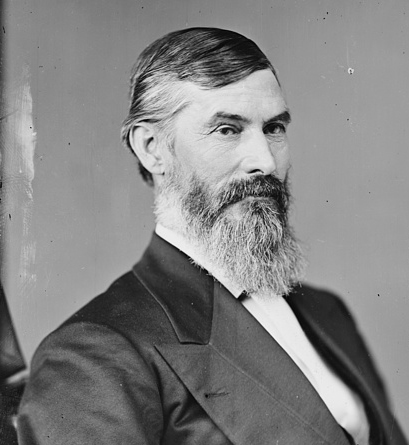
Historical · U.S. House · Kentucky · District 10
John Young
Former U.S. Representative · Kentucky District 10 · 1873–1875 · Democratic
John Young represented Kentucky's District 10 in the United States House of Representatives (1873–1875) for the Democratic party. The page below collects sourced biographical facts, term history, committee roles, and provenance for Young.
Bioguide ID: Y000044
Key facts
- Full name
- John Young
- State
- Kentucky
- District
- District 10
- Party
- Democratic
- House service
- 1873–1875
- First House term
- 1873
- Status
- Left office
- Current term ends
- —
- Born
- 1823
- Bioguide ID
- Y000044
- Committee assignments
- —
- Dataset version
- 1.20260606
Biographical narrative
860 words · sourced from the Wikipedia REST extract
John Young was a U.S. Representative from Kentucky, serving in the House of Representatives during the early 1870s. A member of the Democratic Party, he represented Kentucky's 10th congressional district. His political career was marked by a brief term in Congress, which began in 1873 and ended in 1875. Prior to his congressional service, Young held various positions in local government and engaged in agricultural pursuits. He was born in 1823 and passed away in 1910.
Early life and career
John Young was born on September 22, 1823, in Owingsville, Kentucky. He received his early education at local common schools, which laid the foundation for his later pursuits in law and public service. After completing his education, Young studied law and was admitted to the bar in 1854. He began practicing law in his hometown of Owingsville, where he also became involved in agricultural activities.
In addition to his legal career, Young held several significant positions in local governance. He served as the acting marshal of Kentucky during the presidency of Franklin Pierce, which provided him with valuable experience in public administration. His involvement in local politics continued when he was elected as the judge of the quarterly court of Bath County in 1858, a role he held for four years. Young was re-elected to this position in 1866, serving until 1867 when he resigned to pursue a congressional seat.
Young's early political career was not without controversy. In 1867, he presented his credentials as a Member-elect to the Fortieth Congress. However, he was not allowed to qualify for the position due to allegations of electoral fraud and voter intimidation during his campaign. A Congressional inquiry revealed that many individuals, including disqualified ex-rebel soldiers, had voted fraudulently, which ultimately led to the overturning of his election. This inquiry highlighted the intense political strife in Kentucky during the Reconstruction era, as Young's campaign was marked by intimidation tactics aimed at suppressing votes from African Americans and Republican voters.
House tenure
John Young's congressional career began when he was elected as a Democrat to the Forty-third Congress, serving from March 4, 1873, to March 3, 1875. His election came during a period of significant political change in the United States, particularly in the Southern states, where issues related to Reconstruction and civil rights were at the forefront of national discourse. Young's tenure in the House of Representatives was relatively brief, as he did not seek renomination in 1874 after completing his first term.
During his time in Congress, Young participated in the legislative process, although specific details regarding his contributions to particular bills or initiatives are not extensively documented. His service coincided with a period when the Democratic Party was regaining power in the South, following the Civil War and the subsequent Reconstruction efforts. Young's election and service in Congress reflected the shifting political landscape of the time, as former Confederates and their sympathizers sought to re-establish their influence in government.
After concluding his term in the House, Young returned to his agricultural pursuits. His decision not to seek re-election may have been influenced by the political climate of the time or personal considerations regarding his career and family life.
Legislative focus and committees
While specific details regarding John Young's legislative focus and committee assignments during his time in Congress are not readily available, it is important to contextualize his service within the broader political environment of the 1870s. The period was marked by significant debates over issues such as civil rights, economic development, and the reintegration of Southern states into the Union following the Civil War.
As a member of the Democratic Party, Young likely aligned with the party's positions on various issues, which at the time included opposition to Reconstruction policies and a focus on states' rights. The Democratic Party in the South was often characterized by its resistance to federal intervention in local affairs, particularly concerning civil rights for African Americans. Given the political dynamics of the era, Young's legislative priorities may have reflected these broader party principles.
In addition to his congressional service, Young continued to engage in public service after leaving the House. He served as the state railroad commissioner of Kentucky from 1884 to 1889, a role that involved oversight of the state's railroad operations during a time of significant expansion in the transportation sector. This position allowed him to influence infrastructure development in Kentucky, which was crucial for economic growth in the post-Civil War era.
Young also returned to the judiciary, serving again as the judge of the quarterly court of Bath County from 1890 to 1895. His continued involvement in local governance and the judiciary demonstrates a commitment to public service that extended beyond his congressional tenure.
John Young passed away on December 26, 1910, in Mount Sterling, Kentucky. He was interred in Machpelah Cemetery, leaving behind a legacy intertwined with the complex political history of Kentucky and the United States during a transformative period. His life and career reflect the challenges and changes faced by individuals and communities in the aftermath of the Civil War, as well as the ongoing struggles for political representation and civil rights in the South.
Notable legislation
Sponsored and co-sponsored legislation for John Young is pending operator curation. The biographical narrative above carries the same provenance trail until per-bill rows are written.
Sources
- [1]https://en.wikipedia.org/wiki/John_Duncan_YoungWikipedia · retrieved 2026-06-06
Notable quotes
Sourced quotes for John Young are pending operator curation. Narrative-scope provenance remains attached below.
Sources
- [1]https://en.wikipedia.org/wiki/John_Duncan_YoungWikipedia · retrieved 2026-06-06
Key positions
Curated policy positions for John Young are pending operator review. The biographical narrative above carries the same provenance trail until per-topic positions are written.
Sources
- [1]https://en.wikipedia.org/wiki/John_Duncan_YoungWikipedia · retrieved 2026-06-06
Terms served
- 1873–1875U.S. House · Term 1 · Democratic
Sources & provenance
Every attributable claim above carries a per-section [N] marker that resolves to the corresponding URL below. Each entry records the upstream provider, the canonical URL, and the timestamp at which the source was retrieved by the ingest pipeline.
Key facts
- https://bioguide.congress.gov/search/bio/Y000044bioguide · retrieved 2026-06-06
- https://www.govtrack.us/congress/members/411976govtrack · retrieved 2026-06-06
Biographical narrative
- https://en.wikipedia.org/wiki/John_Duncan_Youngwikipedia · retrieved 2026-06-06
Find your representative
Every U.S. state elects representatives by district. Browse Kentucky’s delegation, the full former-representative roster, or explore the role and term length.
Related on The Candidate
- Preceded by John MenziesEarlier holder of the Kentucky District 10 House seat · Unionist.Open
- Succeeded by John ClarkeLater holder of the Kentucky District 10 House seat · Democratic.Open
- Andrew BooneFormer U.S. Representative · Kentucky District 1 · DemocraticOpen
- Carroll Hubbard Jr.Former U.S. Representative · Kentucky District 1 · DemocraticOpen
- Charles WheelerFormer U.S. Representative · Kentucky District 1 · DemocraticOpen
- Chittenden LyonFormer U.S. Representative · Kentucky District 1 · JacksonOpen