
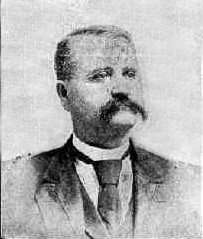
Historical · U.S. House · Kentucky · District 11
Silas Adams
Former U.S. Representative · Kentucky District 11 · 1893–1895 · Republican
Silas Adams represented Kentucky's District 11 in the United States House of Representatives (1893–1895) for the Republican party. The page below collects sourced biographical facts, term history, committee roles, and provenance for Adams.
Bioguide ID: A000047
Key facts
- Full name
- Silas Adams
- State
- Kentucky
- District
- District 11
- Party
- Republican
- House service
- 1893–1895
- First House term
- 1893
- Status
- Left office
- Current term ends
- —
- Born
- 1839
- Bioguide ID
- A000047
- Committee assignments
- —
- Dataset version
- 1.20260606
Biographical narrative
1,004 words · sourced from the Wikipedia REST extract
Silas Adams was an American attorney and politician who served as a U.S. Representative for Kentucky's 11th congressional district. A member of the Republican Party, he held office during the 53rd Congress from 1893 to 1895. His career was marked by significant involvement in both military service during the Civil War and public service in various legal and political capacities. Adams was born in 1839 and passed away in 1896, leaving a legacy that reflects the tumultuous period of American history in which he lived and worked.
Early life and career
Silas Adams was born on February 9, 1839, in Pulaski County, Kentucky. His family relocated to Casey County in 1841, where he spent much of his early life. The environment of Kentucky during his formative years likely influenced his future pursuits in law and politics. Adams pursued higher education at Kentucky University, which is now known as Transylvania University. This institution has a long history of educating future leaders and professionals, and it provided Adams with a foundation in the principles of law and governance.
With the outbreak of the Civil War, Adams joined the Union Army, enlisting in the 1st Kentucky Cavalry Regiment. His military service began as a first lieutenant, and through his dedication and leadership, he rose through the ranks to become a captain, lieutenant colonel, and ultimately a colonel. His tenure in the military concluded with his mustering out on December 31, 1864. The experiences he gained during the war were significant, as they not only shaped his character but also influenced his later political career. Adams's military service is documented in the book "The Wild Riders of the First Kentucky Cavalry," authored by Eastham Tarrant, which highlights the challenges and experiences faced by soldiers in the regiment.
After the Civil War, Adams returned to civilian life and pursued a legal career. In 1867, he enrolled in the Lexington Law School, where he furthered his education in the legal field. Following his graduation, he was admitted to the bar and began practicing law, establishing himself as a respected attorney in Kentucky. His legal career included serving as county attorney for two terms, which provided him with valuable experience in public service and governance.
In addition to his legal practice, Adams ventured into politics. He served as a member of the Kentucky House of Representatives from 1889 to 1892, where he contributed to the legislative process at the state level. His political ambitions extended to a campaign for the United States Senate in 1892, where he ran as a Republican candidate. Although this campaign was unsuccessful, it demonstrated his commitment to public service and his desire to represent the interests of his constituents on a larger scale.
House tenure
Silas Adams was elected to the United States House of Representatives as a Republican, taking office during the 53rd Congress, which lasted from March 4, 1893, to March 3, 1895. His election to Congress marked a significant achievement in his political career, as he transitioned from state-level politics to the national stage. During his time in the House, Adams represented Kentucky's 11th congressional district, a region that encompassed a diverse population with various economic and social interests.
Adams's tenure in the House was characterized by the challenges and dynamics of the political landscape of the time. The early 1890s were marked by economic uncertainty and social change, which influenced the legislative priorities of Congress. As a member of the Republican Party, Adams aligned with the party's platform, which included support for business interests, infrastructure development, and a strong national defense. His experiences as a military officer likely informed his perspectives on issues related to national security and veterans' affairs.
Despite his efforts and contributions during his time in office, Adams was not re-elected for a second term. He ran as an independent candidate in the 1894 election for the 54th Congress but was unsuccessful in his bid for re-election. Following his departure from Congress, he returned to his legal practice, where he continued to serve his community and engage with the legal issues of the day.
Legislative focus and committees
During his time in the House of Representatives, Silas Adams participated in various legislative activities and discussions that were pertinent to his constituents and the broader national context. While specific details regarding the bills he sponsored or the committees on which he served are not provided, it is reasonable to infer that his legal background and military experience would have influenced his legislative focus. As a member of the Republican Party, he likely engaged with issues related to economic development, infrastructure, and veteran affairs, reflecting the priorities of his party and the needs of his district.
Adams's legal expertise would have been an asset in navigating the complexities of legislation and contributing to debates on various issues. His role as a former county attorney and state legislator would have equipped him with insights into the legal and political processes, allowing him to advocate effectively for his constituents' interests. The challenges of the period, including economic fluctuations and social changes, would have required legislators like Adams to be adaptable and responsive to the needs of their districts.
After his congressional term ended in 1895, Adams returned to his law practice, continuing to contribute to his community through legal work. His decision to step back into the legal field rather than pursue further political ambitions indicates a commitment to the profession he had cultivated over the years. Adams's life and career reflect the interconnectedness of military service, legal practice, and political engagement during a significant era in American history.
Silas Adams passed away on May 5, 1896, in Liberty, Kentucky. He was laid to rest in Brown Cemetery in Casey County, where he is remembered as a figure who navigated the complexities of his time through service in the military, law, and politics. His contributions to Kentucky and the nation during a transformative period in American history remain a part of the legacy of public service in the United States.
Notable legislation
Sponsored and co-sponsored legislation for Silas Adams is pending operator curation. The biographical narrative above carries the same provenance trail until per-bill rows are written.
Sources
- [1]https://en.wikipedia.org/wiki/Silas_AdamsWikipedia · retrieved 2026-06-06
Notable quotes
Sourced quotes for Silas Adams are pending operator curation. Narrative-scope provenance remains attached below.
Sources
- [1]https://en.wikipedia.org/wiki/Silas_AdamsWikipedia · retrieved 2026-06-06
Key positions
Curated policy positions for Silas Adams are pending operator review. The biographical narrative above carries the same provenance trail until per-topic positions are written.
Sources
- [1]https://en.wikipedia.org/wiki/Silas_AdamsWikipedia · retrieved 2026-06-06
Terms served
- 1893–1895U.S. House · Term 1 · Republican
Sources & provenance
Every attributable claim above carries a per-section [N] marker that resolves to the corresponding URL below. Each entry records the upstream provider, the canonical URL, and the timestamp at which the source was retrieved by the ingest pipeline.
Key facts
- https://bioguide.congress.gov/search/bio/A000047bioguide · retrieved 2026-06-06
- https://www.govtrack.us/congress/members/400708govtrack · retrieved 2026-06-06
Biographical narrative
- https://en.wikipedia.org/wiki/Silas_Adamswikipedia · retrieved 2026-06-06
Find your representative
Every U.S. state elects representatives by district. Browse Kentucky’s delegation, the full former-representative roster, or explore the role and term length.
Related on The Candidate
- Preceded by John WilsonEarlier holder of the Kentucky District 11 House seat · Republican.Open
- Succeeded by David ColsonLater holder of the Kentucky District 11 House seat · Republican.Open
- Andrew BooneFormer U.S. Representative · Kentucky District 1 · DemocraticOpen
- Carroll Hubbard Jr.Former U.S. Representative · Kentucky District 1 · DemocraticOpen
- Charles WheelerFormer U.S. Representative · Kentucky District 1 · DemocraticOpen
- Chittenden LyonFormer U.S. Representative · Kentucky District 1 · JacksonOpen