
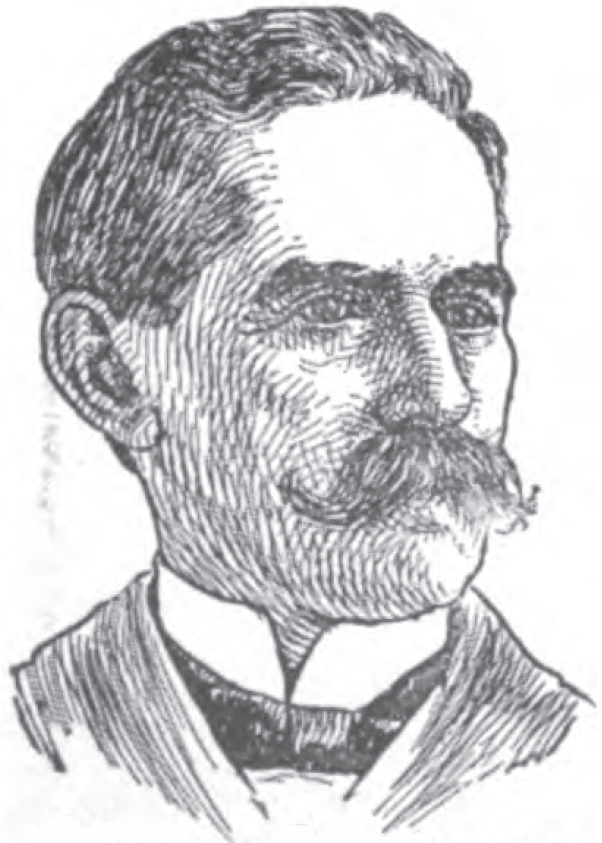
Historical · U.S. House · Kentucky · District 11
Vincent Boreing
Former U.S. Representative · Kentucky District 11 · 1899–1905 · Republican
Vincent Boreing represented Kentucky's District 11 in the United States House of Representatives (1899–1905) for the Republican party. The page below collects sourced biographical facts, term history, committee roles, and provenance for Boreing.
Bioguide ID: B000637
Key facts
- Full name
- Vincent Boreing
- State
- Kentucky
- District
- District 11
- Party
- Republican
- House service
- 1899–1905
- First House term
- 1899
- Status
- Left office
- Current term ends
- —
- Born
- 1839
- Bioguide ID
- B000637
- Committee assignments
- —
- Dataset version
- 1.20260606
Biographical narrative
905 words · sourced from the Wikipedia REST extract
Vincent Boreing was a U.S. Representative from Kentucky, serving as a member of the Republican Party. His congressional career spanned three terms from 1899 until his death in 1903. Boreing was known for his involvement in local education and community affairs prior to his election to Congress, and he played a significant role in the political landscape of southeastern Kentucky during his lifetime.
Early life and career
Vincent Boreing was born on November 24, 1839, near Jonesboro in Washington County, Tennessee. His early life was marked by a significant move when he relocated with his father to Laurel County, Kentucky, in 1847. This transition to Kentucky would shape much of his future endeavors, both personally and professionally. Boreing received his education at Laurel Seminary in London, Kentucky, and later attended Tusculum College in Greenville, Tennessee. His educational background provided him with a foundation that would support his later roles in public service and politics.
Boreing's commitment to public service began during the Civil War when he enlisted as a private in Company A of the 24th Regiment Kentucky Volunteer Infantry on November 1, 1861. His service in the Union Army was distinguished by his promotion to first lieutenant, a rank he achieved due to his meritorious conduct during the conflict. This military experience not only shaped his character but also influenced his later involvement in veteran affairs and community leadership.
After the war, Boreing returned to Kentucky and began a career in education and public administration. From 1868 to 1872, he served as the county superintendent of public schools, where he was responsible for overseeing educational initiatives in the region. His tenure in this role demonstrated his commitment to improving educational opportunities for the youth in his community. In 1875, he took a significant step in the realm of media and communication by founding the Mountain Echo, the first Republican newspaper published in southeastern Kentucky. This publication played a crucial role in disseminating Republican ideals and information to the local populace.
Throughout the 1880s, Boreing continued to expand his influence in various capacities. In 1886, he was elected as a county judge, a position that allowed him to exercise judicial authority and contribute to the governance of his community. The following year, he became the president of the Cumberland Valley Land Company, where he was involved in land development and management. In 1888, he took on the role of president of the First National Bank of London, further solidifying his standing in the local business community. Additionally, in 1889, he served as the department commander of the Grand Army of the Republic in Kentucky, an organization dedicated to the welfare of Union veterans and their families.
House tenure
Vincent Boreing's political career in the U.S. House of Representatives began when he was elected as a Republican to the Fifty-sixth Congress, which commenced on March 4, 1899. He was subsequently re-elected to the Fifty-seventh and Fifty-eighth Congresses, serving until his death on September 16, 1903. His tenure in Congress was marked by his representation of Kentucky's 11th congressional district, a role that involved advocating for the interests of his constituents at the national level.
During his time in office, Boreing participated in various legislative activities and contributed to discussions on issues pertinent to his district and the nation. His background in education and local governance likely informed his perspectives on educational policies and community development initiatives. While specific legislative achievements during his terms are not detailed, his role as a congressman would have involved engaging with a range of issues, from local economic concerns to broader national policies.
Boreing's service in Congress came to an end with his untimely death in 1903. He passed away in London, Kentucky, and was interred at Pine Grove Cemetery. His legacy continued in the community, where he is remembered as a significant figure in local history.
Legislative focus and committees
While specific details regarding the committees on which Vincent Boreing served during his congressional tenure are not provided, it is common for representatives to focus on issues that align with their backgrounds and the needs of their constituents. Given Boreing's extensive experience in education, banking, and local governance, it is reasonable to infer that he may have been involved in committees related to education, finance, or veterans' affairs.
His early career as a county superintendent and his involvement with the Grand Army of the Republic suggest a strong commitment to educational reform and veteran support. These areas often intersect with broader legislative agendas, particularly in the context of post-Civil War America, where issues of education and veteran care were of significant importance.
Boreing's contributions to the Republican Party and his role in local media through the Mountain Echo would have also positioned him to advocate for policies that aligned with Republican values during a time of significant political change in the United States. His ability to communicate effectively through his newspaper likely enhanced his capacity to engage with constituents and promote legislative priorities.
In summary, Vincent Boreing's life and career reflect a dedication to public service that spanned education, local governance, and national politics. His journey from a local educator to a U.S. Representative illustrates the pathways through which individuals can impact their communities and contribute to the larger political landscape. His legacy endures in the community of Boreing, Kentucky, which bears his name, serving as a reminder of his contributions to the region and the nation.
Notable legislation
Sponsored and co-sponsored legislation for Vincent Boreing is pending operator curation. The biographical narrative above carries the same provenance trail until per-bill rows are written.
Sources
- [1]https://en.wikipedia.org/wiki/Vincent_BoreingWikipedia · retrieved 2026-06-06
Notable quotes
Sourced quotes for Vincent Boreing are pending operator curation. Narrative-scope provenance remains attached below.
Sources
- [1]https://en.wikipedia.org/wiki/Vincent_BoreingWikipedia · retrieved 2026-06-06
Key positions
Curated policy positions for Vincent Boreing are pending operator review. The biographical narrative above carries the same provenance trail until per-topic positions are written.
Sources
- [1]https://en.wikipedia.org/wiki/Vincent_BoreingWikipedia · retrieved 2026-06-06
Terms served
- 1899–1901U.S. House · Term 1 · Republican
- 1901–1903U.S. House · Term 2 · Republican
- 1903–1905U.S. House · Term 3 · Republican
Sources & provenance
Every attributable claim above carries a per-section [N] marker that resolves to the corresponding URL below. Each entry records the upstream provider, the canonical URL, and the timestamp at which the source was retrieved by the ingest pipeline.
Key facts
- https://bioguide.congress.gov/search/bio/B000637bioguide · retrieved 2026-06-06
- https://www.govtrack.us/congress/members/401602govtrack · retrieved 2026-06-06
Biographical narrative
- https://en.wikipedia.org/wiki/Vincent_Boreingwikipedia · retrieved 2026-06-06
Find your representative
Every U.S. state elects representatives by district. Browse Kentucky’s delegation, the full former-representative roster, or explore the role and term length.
Related on The Candidate
- Preceded by David ColsonEarlier holder of the Kentucky District 11 House seat · Republican.Open
- Succeeded by Don EdwardsLater holder of the Kentucky District 11 House seat · Republican.Open
- Andrew BooneFormer U.S. Representative · Kentucky District 1 · DemocraticOpen
- Carroll Hubbard Jr.Former U.S. Representative · Kentucky District 1 · DemocraticOpen
- Charles WheelerFormer U.S. Representative · Kentucky District 1 · DemocraticOpen
- Chittenden LyonFormer U.S. Representative · Kentucky District 1 · JacksonOpen