
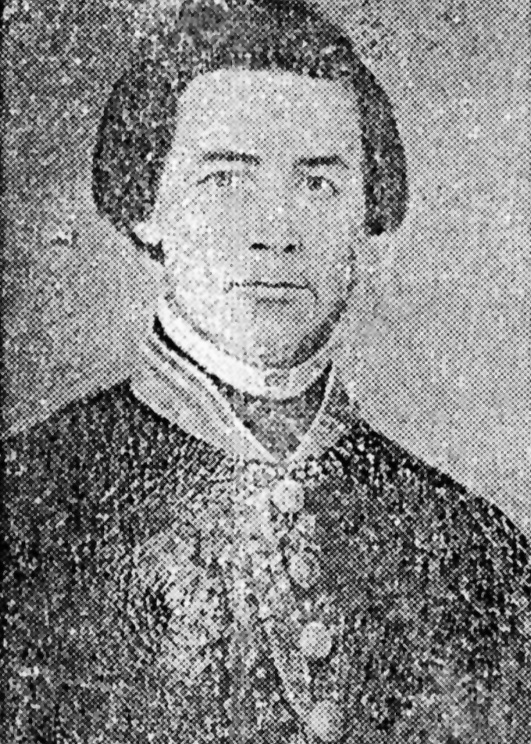
Historical · U.S. House · Kentucky · District 2
Beverly Clarke
Former U.S. Representative · Kentucky District 2 · 1847–1849 · Democratic
Beverly Clarke represented Kentucky's District 2 in the United States House of Representatives (1847–1849) for the Democratic party. The page below collects sourced biographical facts, term history, committee roles, and provenance for Clarke.
Bioguide ID: C000458
Key facts
- Full name
- Beverly Clarke
- State
- Kentucky
- District
- District 2
- Party
- Democratic
- House service
- 1847–1849
- First House term
- 1847
- Status
- Left office
- Current term ends
- —
- Born
- 1809
- Bioguide ID
- C000458
- Committee assignments
- —
- Dataset version
- 1.20260606
Biographical narrative
995 words · sourced from the Wikipedia REST extract
Beverly Clarke was a U.S. Representative from Kentucky, serving as a member of the Democratic Party. His political career was marked by a single term in the House of Representatives, which lasted from 1847 to 1849. Clarke's early life began in Virginia, where he was born on February 11, 1809, and he later moved to Kentucky, where he pursued a career in law and politics. After his congressional tenure, he was appointed as a U.S. Minister to Guatemala and Honduras, where he served until his death in 1860.
Early life and career
Beverly Clarke was born in Winterfield, Chesterfield County, Virginia, on February 11, 1809. Winterfield was a plantation that spanned 210 acres and featured a horse racetrack, indicative of the agricultural and social practices of the time. The plantation's land was later subdivided in the 1870s, leading to the establishment of several modern subdivisions that carry the name of the original estate, although they are not located on the same land.
Clarke's early education took place at a common school, which laid the groundwork for his future academic pursuits. In 1823, he relocated to Kentucky, a move that would significantly influence his career trajectory. He studied law in Franklin, Kentucky, and graduated from the Lexington Law School in 1831. Following his graduation, Clarke was admitted to the bar in 1833, allowing him to begin his legal practice in Franklin. His legal career provided him with a foundation in public service and governance, which would later inform his political endeavors.
In addition to his legal career, Clarke was actively involved in state politics. He served as a member of the Kentucky House of Representatives in 1841 and 1842, where he gained experience in legislative processes and governance. His early political involvement helped establish his reputation within the Democratic Party and set the stage for his election to the U.S. Congress.
House tenure
Beverly Clarke was elected to the Thirtieth Congress as a Democrat, serving from March 4, 1847, to March 3, 1849. His election to the U.S. House of Representatives marked a significant milestone in his political career, as he transitioned from state-level politics to a national platform. During his time in Congress, Clarke participated in various legislative discussions and contributed to the political discourse of the era.
Clarke's congressional term occurred during a period marked by significant political and social changes in the United States. The nation was grappling with issues related to territorial expansion, slavery, and the balance of power between free and slave states. Although specific details of his legislative actions during this term are not documented, his role as a member of the Democratic Party positioned him within the political debates of the time, particularly those concerning the extension of slavery into new territories.
After his congressional term, Clarke continued to engage in public service. In 1849, he served as a delegate to the State constitutional convention, further demonstrating his commitment to shaping Kentucky's governance and legal framework. His involvement in both state and national politics reflects a dedication to public service that characterized his career.
Legislative focus and committees
While specific details regarding Clarke's legislative focus and committee assignments during his time in the House of Representatives are not available, his political affiliations and the context of his era provide some insight into the issues he may have addressed. As a member of the Democratic Party, Clarke likely engaged with topics pertinent to the party's platform, which during the late 1840s included support for states' rights, territorial expansion, and the protection of slavery in the southern states.
The political climate of the time was heavily influenced by the ongoing debates over slavery and its expansion into new territories acquired through events such as the Mexican-American War. As a representative from Kentucky, a slave state, Clarke would have been involved in discussions surrounding these contentious issues, which were central to the national dialogue. The Democratic Party, particularly in the South, often advocated for the interests of slaveholders and sought to maintain the institution of slavery.
In addition to his legislative duties, Clarke's later appointment as U.S. Minister to Guatemala and Honduras highlights his continued involvement in public service beyond his congressional tenure. His diplomatic roles allowed him to represent U.S. interests abroad and engage with international relations, further expanding his political influence.
Clarke's appointment as U.S. Minister occurred during a time when the United States was seeking to strengthen its diplomatic ties in Central America. His dual appointment to both Guatemala and Honduras underscores the significance of his role in fostering relations with these nations. Clarke's diplomatic service began on January 7, 1858, and he presented his credentials in Guatemala on July 13, 1858, and in Honduras on August 10, 1858. His tenure in these positions lasted until his death in Guatemala City on March 17, 1860.
Throughout his life, Clarke was known for his integrity, gentlemanly manners, and polished oratory skills, which likely contributed to his effectiveness as both a legislator and a diplomat. His ability to communicate effectively and navigate complex political landscapes would have been essential in both his congressional and diplomatic roles.
Clarke's personal life also reflects the social dynamics of his time. He was married to Mariah Louise Clarke, a devout Roman Catholic, and together they had four children. After Mariah's death, he remarried Zenobia Turner, with whom he had another son. Clarke's family life, particularly his marriage to a Catholic woman, played a role in his own conversion to Catholicism later in life, which was well-received by the people in Guatemala.
Beverly Clarke's life came to an end in Guatemala City, where he died of diabetes while serving as U.S. Minister. Initially buried in Guatemala, his remains were later relocated to the State Cemetery in Frankfort, Kentucky, following an act of the Kentucky Legislature. Clarke's legacy is preserved through his contributions to both state and national politics, as well as his diplomatic service, reflecting a career dedicated to public service and governance.
Notable legislation
Sponsored and co-sponsored legislation for Beverly Clarke is pending operator curation. The biographical narrative above carries the same provenance trail until per-bill rows are written.
Sources
- [1]https://en.wikipedia.org/wiki/Beverly_L._ClarkeWikipedia · retrieved 2026-06-06
Notable quotes
Sourced quotes for Beverly Clarke are pending operator curation. Narrative-scope provenance remains attached below.
Sources
- [1]https://en.wikipedia.org/wiki/Beverly_L._ClarkeWikipedia · retrieved 2026-06-06
Key positions
Curated policy positions for Beverly Clarke are pending operator review. The biographical narrative above carries the same provenance trail until per-topic positions are written.
Sources
- [1]https://en.wikipedia.org/wiki/Beverly_L._ClarkeWikipedia · retrieved 2026-06-06
Terms served
- 1847–1849U.S. House · Term 1 · Democratic
Sources & provenance
Every attributable claim above carries a per-section [N] marker that resolves to the corresponding URL below. Each entry records the upstream provider, the canonical URL, and the timestamp at which the source was retrieved by the ingest pipeline.
Key facts
- https://bioguide.congress.gov/search/bio/C000458bioguide · retrieved 2026-06-06
- https://www.govtrack.us/congress/members/402596govtrack · retrieved 2026-06-06
Biographical narrative
- https://en.wikipedia.org/wiki/Beverly_L._Clarkewikipedia · retrieved 2026-06-06
Find your representative
Every U.S. state elects representatives by district. Browse Kentucky’s delegation, the full former-representative roster, or explore the role and term length.
Related on The Candidate
- Preceded by John McHenryEarlier holder of the Kentucky District 2 House seat · Whig.Open
- Succeeded by James JohnsonLater holder of the Kentucky District 2 House seat · Whig.Open
- Andrew BooneFormer U.S. Representative · Kentucky District 1 · DemocraticOpen
- Carroll Hubbard Jr.Former U.S. Representative · Kentucky District 1 · DemocraticOpen
- Charles WheelerFormer U.S. Representative · Kentucky District 1 · DemocraticOpen
- Chittenden LyonFormer U.S. Representative · Kentucky District 1 · JacksonOpen