
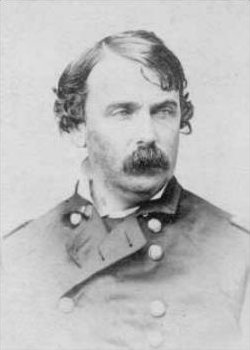
Historical · U.S. House · Kentucky · District 2
James Jackson
Former U.S. Representative · Kentucky District 2 · 1861–1863 · Unionist
James Jackson represented Kentucky's District 2 in the United States House of Representatives (1861–1863) for the Unionist party. The page below collects sourced biographical facts, term history, committee roles, and provenance for Jackson.
Bioguide ID: J000019
Key facts
- Full name
- James Jackson
- State
- Kentucky
- District
- District 2
- Party
- Unionist
- House service
- 1861–1863
- First House term
- 1861
- Status
- Left office
- Current term ends
- —
- Born
- 1823
- Bioguide ID
- J000019
- Committee assignments
- —
- Dataset version
- 1.20260606
Biographical narrative
933 words · sourced from the Wikipedia REST extract
James Jackson was a notable figure in American history, serving as a U.S. Representative from Kentucky during a tumultuous period in the nation's past. A member of the Unionist Party, he held office in the House of Representatives from 1861 until his resignation in 1861 to join the Union Army during the American Civil War. In addition to his political career, Jackson was also a brigadier general who played a significant role in military operations during the war. His life and career reflect the complexities of the era, marked by both political service and military engagement.
Early life and career
James Streshly Jackson was born on September 27, 1823, in Fayette County, Kentucky. He grew up in a region that would later become significant in the context of the Civil War. Jackson pursued a classical education, attending Centre College in Danville, Kentucky, where he engaged in studies that would prepare him for a career in law and public service. After completing his studies at Centre College, he graduated from Jefferson College in Canonsburg, Pennsylvania, in 1844. The following year, he furthered his education by attending the law department of Transylvania University in Lexington, Kentucky. Upon completing his legal education, he was admitted to the bar and began practicing law in Greenupsburg, Kentucky.
Jackson's early career was marked by his involvement in the military during the Mexican-American War. He enlisted in the 1st Kentucky Cavalry on June 9, 1846, starting as a private. His leadership abilities were recognized early on, as he was elected to the rank of third lieutenant just one month after his enlistment. However, his military service was not without controversy; he was involved in a duel with Captain Thomas Francis Marshall, which led him to resign from the Army on October 10, 1846, to avoid a potential court martial. Following his military service, Jackson returned to Kentucky, where he continued his legal practice and became a prominent figure in his community.
In 1859, Jackson relocated to Hopkinsville, Kentucky, where he continued to build his career and establish his reputation. His political aspirations began to take shape, and he became involved in the Unionist Party, which was particularly relevant during the escalating tensions leading up to the Civil War. His commitment to the Unionist cause would eventually lead him to seek election to the United States Congress.
House tenure
James Jackson was elected to the Thirty-seventh Congress as a Unionist representative for Kentucky's 2nd congressional district. His term in the House of Representatives began on March 4, 1861. Jackson's election came at a critical time in American history, as the nation was on the brink of civil war. His tenure in Congress was relatively short-lived, as he resigned on December 13, 1861, to join the Union Army. During his time in the House, Jackson was part of a legislative body that was grappling with the profound divisions within the country and the pressing issues surrounding the Civil War.
Although Jackson's time in Congress was brief, it coincided with significant legislative efforts aimed at addressing the challenges posed by the war. The political landscape was dominated by debates over issues such as states' rights, slavery, and the preservation of the Union. Jackson's alignment with the Unionist Party indicated his commitment to the Union cause, which was a central theme for many politicians during this period. His decision to resign from Congress to serve in the military underscored his dedication to the Union and his belief in the necessity of military action to preserve the nation.
Legislative focus and committees
During his time in the House, Jackson's specific legislative contributions and committee assignments are not extensively documented. However, given the context of his election and the prevailing issues of the time, it can be inferred that his focus would have aligned with the priorities of the Unionist Party, particularly in relation to the Civil War. The Unionist Party was primarily concerned with maintaining the integrity of the United States and opposing the secessionist movements that were gaining traction in various Southern states.
Jackson's resignation from Congress to join the Union Army marked a significant transition in his career. After leaving the House, he raised a cavalry company and was appointed as colonel of the newly formed 3rd Kentucky Cavalry on December 13, 1861. His military service further highlighted his commitment to the Union cause, as he took on leadership roles within the Army. On July 16, 1862, he was promoted to the rank of brigadier general of volunteers, reflecting his growing influence and responsibility within the military hierarchy.
As a brigadier general, Jackson was placed in command of the 10th Division in the Army of the Ohio. His leadership during this period was marked by participation in key battles and military engagements that were critical to the Union's efforts in the Civil War. Unfortunately, his military career was cut short when he was killed in action on October 8, 1862, during the Battle of Perryville. This battle was one of the significant confrontations in the Civil War, and Jackson's death represented a loss not only for his military unit but also for the Unionist cause in Kentucky.
Following his death, Jackson was initially buried at Cave Hill Cemetery in Louisville, Kentucky. However, in a posthumous recognition of his service and contributions, he was reinterred on March 24, 1863, at Riverside Cemetery in Hopkinsville. His legacy as both a politician and a military leader remains a part of Kentucky's history during the Civil War era, illustrating the intertwined nature of political and military service during this critical period in American history.
Notable legislation
Sponsored and co-sponsored legislation for James Jackson is pending operator curation. The biographical narrative above carries the same provenance trail until per-bill rows are written.
Sources
- [1]https://en.wikipedia.org/wiki/James_S._JacksonWikipedia · retrieved 2026-06-06
Notable quotes
Sourced quotes for James Jackson are pending operator curation. Narrative-scope provenance remains attached below.
Sources
- [1]https://en.wikipedia.org/wiki/James_S._JacksonWikipedia · retrieved 2026-06-06
Key positions
Curated policy positions for James Jackson are pending operator review. The biographical narrative above carries the same provenance trail until per-topic positions are written.
Sources
- [1]https://en.wikipedia.org/wiki/James_S._JacksonWikipedia · retrieved 2026-06-06
Terms served
- 1861–1863U.S. House · Term 1 · Unionist
Sources & provenance
Every attributable claim above carries a per-section [N] marker that resolves to the corresponding URL below. Each entry records the upstream provider, the canonical URL, and the timestamp at which the source was retrieved by the ingest pipeline.
Key facts
- https://bioguide.congress.gov/search/bio/J000019bioguide · retrieved 2026-06-06
- https://www.govtrack.us/congress/members/405926govtrack · retrieved 2026-06-06
Biographical narrative
- https://en.wikipedia.org/wiki/James_S._Jacksonwikipedia · retrieved 2026-06-06
Find your representative
Every U.S. state elects representatives by district. Browse Kentucky’s delegation, the full former-representative roster, or explore the role and term length.
Related on The Candidate
- Preceded by Samuel PeytonEarlier holder of the Kentucky District 2 House seat · Democratic.Open
- Succeeded by Burwell RitterLater holder of the Kentucky District 2 House seat · Democratic.Open
- Andrew BooneFormer U.S. Representative · Kentucky District 1 · DemocraticOpen
- Carroll Hubbard Jr.Former U.S. Representative · Kentucky District 1 · DemocraticOpen
- Charles WheelerFormer U.S. Representative · Kentucky District 1 · DemocraticOpen
- Chittenden LyonFormer U.S. Representative · Kentucky District 1 · JacksonOpen