
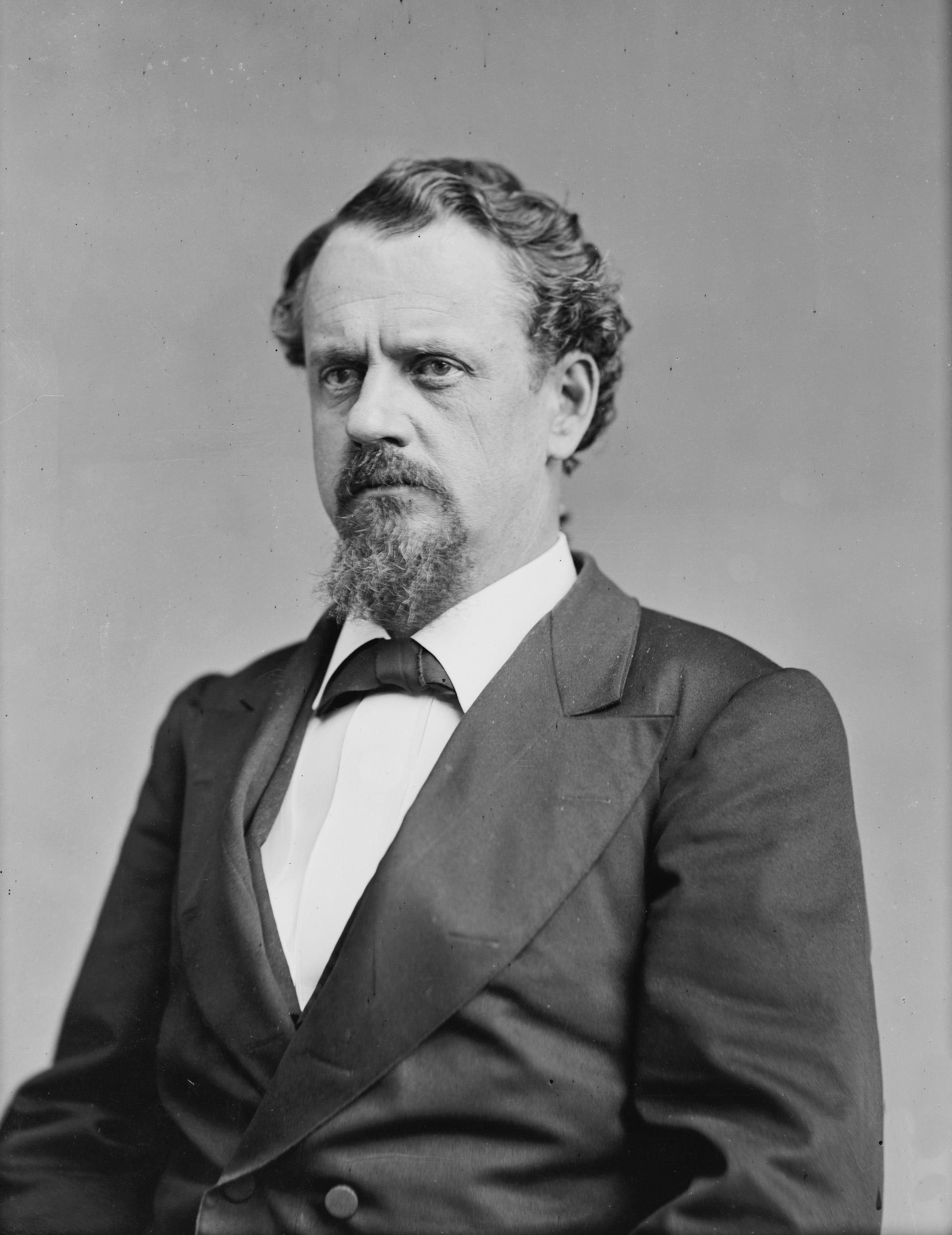
Historical · U.S. House · Kentucky · District 2
John Brown
Former U.S. Representative · Kentucky District 2 · 1859–1877 · Democratic
John Brown represented Kentucky's District 2 in the United States House of Representatives (1859–1877) for the Democratic party. The page below collects sourced biographical facts, term history, committee roles, and provenance for Brown.
Bioguide ID: B000933
Key facts
- Full name
- John Brown
- State
- Kentucky
- District
- District 2
- Party
- Democratic
- House service
- 1859–1877
- First House term
- 1859
- Status
- Left office
- Current term ends
- —
- Born
- 1835
- Bioguide ID
- B000933
- Committee assignments
- —
- Dataset version
- 1.20260606
Biographical narrative
910 words · sourced from the Wikipedia REST extract
John Brown was a prominent American politician from Kentucky who served as a U.S. Representative for the state's 2nd congressional district. A member of the Democratic Party, Brown's political career spanned several decades, marked by both achievements and controversies. He was first elected to the House of Representatives in 1859 and served a total of four terms, with his last term concluding in 1877. His political journey was characterized by significant events, including his early election despite being underage, his alleged disloyalty during the Civil War, and various challenges in his subsequent political endeavors.
Early life and career
John Brown was born on June 28, 1835, in Claysville, a community near Elizabethtown in Hardin County, Kentucky. He was the son of Thomas Dudley Brown and Elizabeth Young Brown. His father was an influential figure in Kentucky politics, having served in the state legislature and participated as a delegate in the 1849 state constitutional convention. This familial background instilled in Brown an early interest in political affairs, as he often accompanied his father to the state capitol.
Brown's education began in local schools in Elizabethtown, and by the age of sixteen, he enrolled at Centre College in Danville, Kentucky. He graduated in 1855 and returned to Hardin County to pursue a legal career. After studying law, he was admitted to the bar in 1857 and established his legal practice in Elizabethtown. His skills as an orator quickly gained him recognition, although his outspoken criticism of the Know Nothing Party led to threats against his life.
In 1857, Brown married Lucie Barbee, but she passed away shortly thereafter. He remarried in September 1860 to Rebecca Hart Dixon, the daughter of former U.S. Senator Archibald Dixon. Together, they had eight children, further solidifying his ties to Kentucky's political and social fabric.
House tenure
Brown's political career in the U.S. House of Representatives began in 1859 when he was nominated by local Democrats in Bardstown to run for the seat held by Joshua Jewett. Despite being under the constitutional age requirement of twenty-five, Brown was elected by a margin of approximately two thousand votes. However, he could not take his seat until the second session of Congress, as he had not yet reached the legal age.
During his first term, Brown became a member of the Douglas National Committee in 1860 and participated in debates against supporters of John C. Breckinridge in the presidential election. His political alignment during the Civil War was contentious; he was perceived as sympathetic to the Confederacy, which would later impact his political career.
In 1866, Brown sought re-election to the House from Henderson, Kentucky. However, his election was overshadowed by allegations of disloyalty to the Union during the Civil War, leading to his seat being declared vacant. The voters in his district chose not to elect another representative, resulting in the seat remaining unfilled throughout the Fortieth Congress. This period of political turmoil reflected the divisions within the state and the nation during the post-war era.
After a failed gubernatorial bid in 1871, Brown returned to Congress in 1872, winning election to the House for a third term. He served three consecutive terms during this period, during which he faced various challenges, including a formal censure for a speech he delivered criticizing Massachusetts Representative Benjamin F. Butler. This censure was later expunged from the congressional record, indicating the contentious nature of his political interactions.
Brown's tenure in the House concluded on March 3, 1877, marking the end of his service in that capacity. His time in Congress was characterized by significant political challenges, reflecting the complexities of the era in which he served.
Legislative focus and committees
Throughout his time in the House of Representatives, John Brown's legislative focus was shaped by the political landscape of the 19th century, particularly the aftermath of the Civil War and the shifting dynamics within the Democratic Party. Although specific details about the bills he sponsored or the committees he served on are not extensively documented, his political actions and speeches indicate a commitment to the interests of his constituents and the Democratic Party's platform during his tenure.
Brown's early involvement in the Douglas National Committee suggests a focus on issues related to the Democratic Party's direction, particularly during the contentious presidential election of 1860. His participation in debates against Breckinridge's supporters highlights his engagement in significant political discourse of the time.
The controversies surrounding his alleged disloyalty during the Civil War and the subsequent vacancy of his seat in Congress reflect the challenges he faced in maintaining political support. His eventual return to Congress in 1872 and the censure he received for his remarks against Butler illustrate the contentious nature of his political career and the polarized environment of the post-war period.
After leaving Congress, Brown's political aspirations did not diminish. He sought the Democratic nomination for governor of Kentucky in 1891 and won the general election, although his administration faced internal divisions within the party regarding monetary policy. His later political endeavors, including his involvement in the gubernatorial race against William Goebel, further demonstrate his continued engagement in Kentucky's political landscape.
John Brown's life and career encapsulate the complexities of American politics during a transformative period in the nation's history. His experiences reflect the broader themes of loyalty, political ambition, and the challenges of governance in a divided society. Brown's legacy as a U.S. Representative and a state governor remains a part of Kentucky's rich political history.
Notable legislation
Sponsored and co-sponsored legislation for John Brown is pending operator curation. The biographical narrative above carries the same provenance trail until per-bill rows are written.
Sources
- [1]https://en.wikipedia.org/wiki/John_Y._Brown_(politician%2C_born_1835)Wikipedia · retrieved 2026-06-06
Notable quotes
Sourced quotes for John Brown are pending operator curation. Narrative-scope provenance remains attached below.
Sources
- [1]https://en.wikipedia.org/wiki/John_Y._Brown_(politician%2C_born_1835)Wikipedia · retrieved 2026-06-06
Key positions
Curated policy positions for John Brown are pending operator review. The biographical narrative above carries the same provenance trail until per-topic positions are written.
Sources
- [1]https://en.wikipedia.org/wiki/John_Y._Brown_(politician%2C_born_1835)Wikipedia · retrieved 2026-06-06
Terms served
- 1859–1861U.S. House · Term 1 · Democratic
- 1867–1869U.S. House · Term 2 · Democratic
- 1873–1875U.S. House · Term 3 · Democratic
- 1875–1877U.S. House · Term 4 · Democratic
Sources & provenance
Every attributable claim above carries a per-section [N] marker that resolves to the corresponding URL below. Each entry records the upstream provider, the canonical URL, and the timestamp at which the source was retrieved by the ingest pipeline.
Key facts
- https://bioguide.congress.gov/search/bio/B000933bioguide · retrieved 2026-06-06
- https://www.govtrack.us/congress/members/401887govtrack · retrieved 2026-06-06
Biographical narrative
- https://en.wikipedia.org/wiki/John_Y._Brown_(politician%2C_born_1835)wikipedia · retrieved 2026-06-06
Find your representative
Every U.S. state elects representatives by district. Browse Kentucky’s delegation, the full former-representative roster, or explore the role and term length.
Related on The Candidate
- Preceded by John Campbell Jr.Earlier holder of the Kentucky District 2 House seat · American.Open
- Succeeded by James McKenzieLater holder of the Kentucky District 2 House seat · Democratic.Open
- Andrew BooneFormer U.S. Representative · Kentucky District 1 · DemocraticOpen
- Carroll Hubbard Jr.Former U.S. Representative · Kentucky District 1 · DemocraticOpen
- Charles WheelerFormer U.S. Representative · Kentucky District 1 · DemocraticOpen
- Chittenden LyonFormer U.S. Representative · Kentucky District 1 · JacksonOpen