
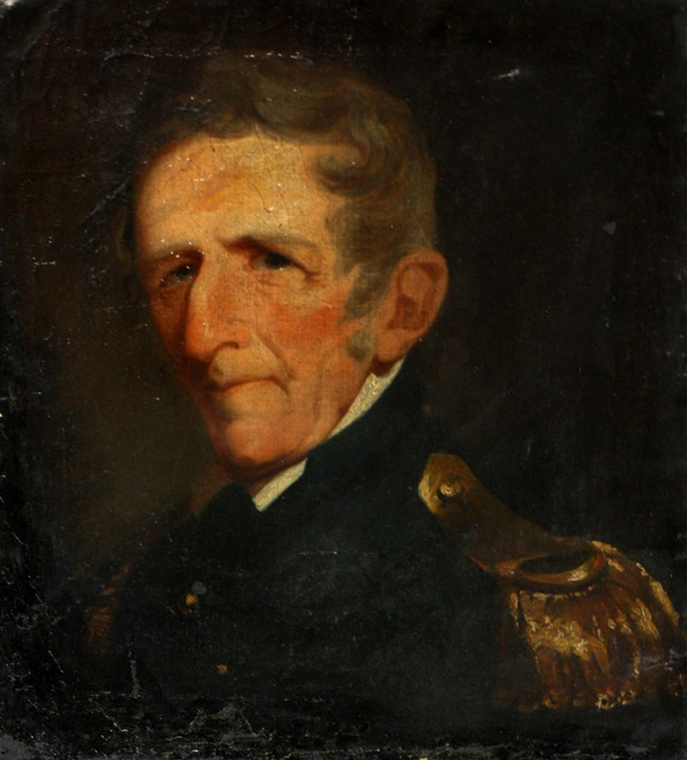
Historical · U.S. House · Kentucky · District 5
Samuel Hopkins
Former U.S. Representative · Kentucky District 5 · 1813–1815 · Republican
Samuel Hopkins represented Kentucky's District 5 in the United States House of Representatives (1813–1815) for the Republican party. The page below collects sourced biographical facts, term history, committee roles, and provenance for Hopkins.
Bioguide ID: H000778
Key facts
- Full name
- Samuel Hopkins
- State
- Kentucky
- District
- District 5
- Party
- Republican
- House service
- 1813–1815
- First House term
- 1813
- Status
- Left office
- Current term ends
- —
- Born
- 1753
- Bioguide ID
- H000778
- Committee assignments
- —
- Dataset version
- 1.20260606
Biographical narrative
945 words · sourced from the Wikipedia REST extract
Samuel Hopkins was an American lawyer, soldier, and politician who served as a U.S. Representative for Kentucky's 5th congressional district. He was a member of the Republican Party and held office during the 13th Congress from 1813 to 1815. Born in 1753, Hopkins had a distinguished military career during the American Revolutionary War and later transitioned into a political role in Kentucky, where he contributed to the state's early governance and development. His legacy includes the establishment of several places named in his honor, reflecting his influence in the region.
Early life and career
Samuel Hopkins was born on April 9, 1753, in Albemarle County, Virginia. He was the son of Dr. Samuel Hopkins and Isabella Taylor Hopkins. Growing up in the Virginia Colony, he was exposed to the political and social dynamics of the time, which would later influence his career. As a young man, Hopkins joined the military during the American Revolutionary War, enlisting in the 10th Virginia Regiment. Under the command of General George Washington, he participated in several significant battles, including those at Trenton, Princeton, and Brandywine. His military service was marked by bravery and resilience, particularly during the Battle of Germantown, where he sustained serious injuries while leading his battalion, which faced considerable losses.
Following his promotion to Lieutenant Colonel, Hopkins took command of the 10th Virginia Regiment during the Siege of Charleston. Unfortunately, he was captured during this siege but was later released as part of a prisoner exchange. After the war, he relocated to Kentucky in 1796, settling near the Ohio River at a location known as Red Banks. His move to Kentucky coincided with the westward expansion of the United States and the establishment of new settlements.
In Kentucky, Hopkins began to study law and was admitted to the bar, which allowed him to embark on a political career. His early contributions to the state's legal system included an appointment as Chief Justice of the First Court of Criminal Law and Chancery in 1799, a position he held until his resignation in 1801. This role was significant, as it placed him at the forefront of legal matters in the region during a formative period in Kentucky's history.
Hopkins's political career continued to flourish as he served in the Kentucky House of Representatives in the early 1800s, holding office in 1800, 1801, and again from 1803 to 1806. His legislative work during this time reflected his commitment to the principles of governance and law, as well as his advocacy for the rights of the state. He later served in the Kentucky State Senate from 1809 until 1813, further solidifying his role as a prominent figure in Kentucky politics.
House tenure
Samuel Hopkins's tenure in the U.S. House of Representatives began when he was elected as a Democratic-Republican to the 13th Congress, which convened from March 4, 1813, to March 3, 1815. His election came during a tumultuous period in American history, marked by the War of 1812, which was fought between the United States and Great Britain. As a representative from Kentucky's 5th congressional district, Hopkins was part of a legislative body that faced significant challenges, including issues related to national defense, trade, and territorial expansion.
During his time in Congress, Hopkins participated in discussions and decisions that would shape the future of the nation. His military background likely informed his perspectives on matters of defense and military readiness, particularly given the ongoing conflict with Britain. However, specific details regarding his contributions to particular legislation or debates during his congressional term are not extensively documented.
Hopkins did not seek renomination in 1814, concluding his single term in the House of Representatives. His decision not to run for re-election may have been influenced by various factors, including the political climate of the time and his personal circumstances. After leaving Congress, he returned to Kentucky, where he continued to engage with his community and contribute to local affairs.
Legislative focus and committees
While specific details regarding Samuel Hopkins's legislative focus and committee assignments during his time in Congress are not extensively recorded, his background as a lawyer and military officer likely influenced his priorities. Given the context of the War of 1812, it is reasonable to infer that he may have been involved in discussions surrounding military appropriations, defense strategies, and the implications of the war on Kentucky and the broader western frontier.
In addition to his congressional responsibilities, Hopkins's earlier political career in Kentucky showcased his commitment to governance and legal matters. His support for the Kentucky and Virginia Resolutions indicated his alignment with states' rights and a belief in the importance of local governance. Furthermore, his sympathies toward Aaron Burr during Burr's trials for alleged treason suggest that he was engaged in the political controversies of his time, reflecting a willingness to navigate complex political landscapes.
After his congressional term, Hopkins retired to his estate, Spring Garden, located near Henderson, Kentucky. His retirement marked the end of his formal political career, but he remained a respected figure in his community. Samuel Hopkins passed away on September 16, 1819, at his estate, where he was interred in the family burying ground.
In recognition of his contributions to the region, Hopkinsville, Kentucky, was named in his honor by the Kentucky Assembly in 1804, followed by the establishment of Hopkins County, Kentucky, two years later. These commemorations reflect his lasting impact on the state and its development during a critical period in American history. Samuel Hopkins's life and career exemplify the intertwining of military service and political engagement in the early years of the United States, highlighting the contributions of individuals who shaped the nation's governance and expansion.
Notable legislation
Sponsored and co-sponsored legislation for Samuel Hopkins is pending operator curation. The biographical narrative above carries the same provenance trail until per-bill rows are written.
Sources
- [1]https://en.wikipedia.org/wiki/Samuel_Hopkins_(congressman)Wikipedia · retrieved 2026-06-06
Notable quotes
Sourced quotes for Samuel Hopkins are pending operator curation. Narrative-scope provenance remains attached below.
Sources
- [1]https://en.wikipedia.org/wiki/Samuel_Hopkins_(congressman)Wikipedia · retrieved 2026-06-06
Key positions
Curated policy positions for Samuel Hopkins are pending operator review. The biographical narrative above carries the same provenance trail until per-topic positions are written.
Sources
- [1]https://en.wikipedia.org/wiki/Samuel_Hopkins_(congressman)Wikipedia · retrieved 2026-06-06
Terms served
- 1813–1815U.S. House · Term 1 · Republican
Sources & provenance
Every attributable claim above carries a per-section [N] marker that resolves to the corresponding URL below. Each entry records the upstream provider, the canonical URL, and the timestamp at which the source was retrieved by the ingest pipeline.
Key facts
- https://bioguide.congress.gov/search/bio/H000778bioguide · retrieved 2026-06-06
- https://www.govtrack.us/congress/members/405628govtrack · retrieved 2026-06-06
Biographical narrative
- https://en.wikipedia.org/wiki/Samuel_Hopkins_(congressman)wikipedia · retrieved 2026-06-06
Find your representative
Every U.S. state elects representatives by district. Browse Kentucky’s delegation, the full former-representative roster, or explore the role and term length.
Related on The Candidate
- Preceded by Benjamin HowardEarlier holder of the Kentucky District 5 House seat · Republican.Open
- Succeeded by Alney McLeanLater holder of the Kentucky District 5 House seat · Republican.Open
- Andrew BooneFormer U.S. Representative · Kentucky District 1 · DemocraticOpen
- Carroll Hubbard Jr.Former U.S. Representative · Kentucky District 1 · DemocraticOpen
- Charles WheelerFormer U.S. Representative · Kentucky District 1 · DemocraticOpen
- Chittenden LyonFormer U.S. Representative · Kentucky District 1 · JacksonOpen