
Historical · U.S. House · Kentucky · District 5
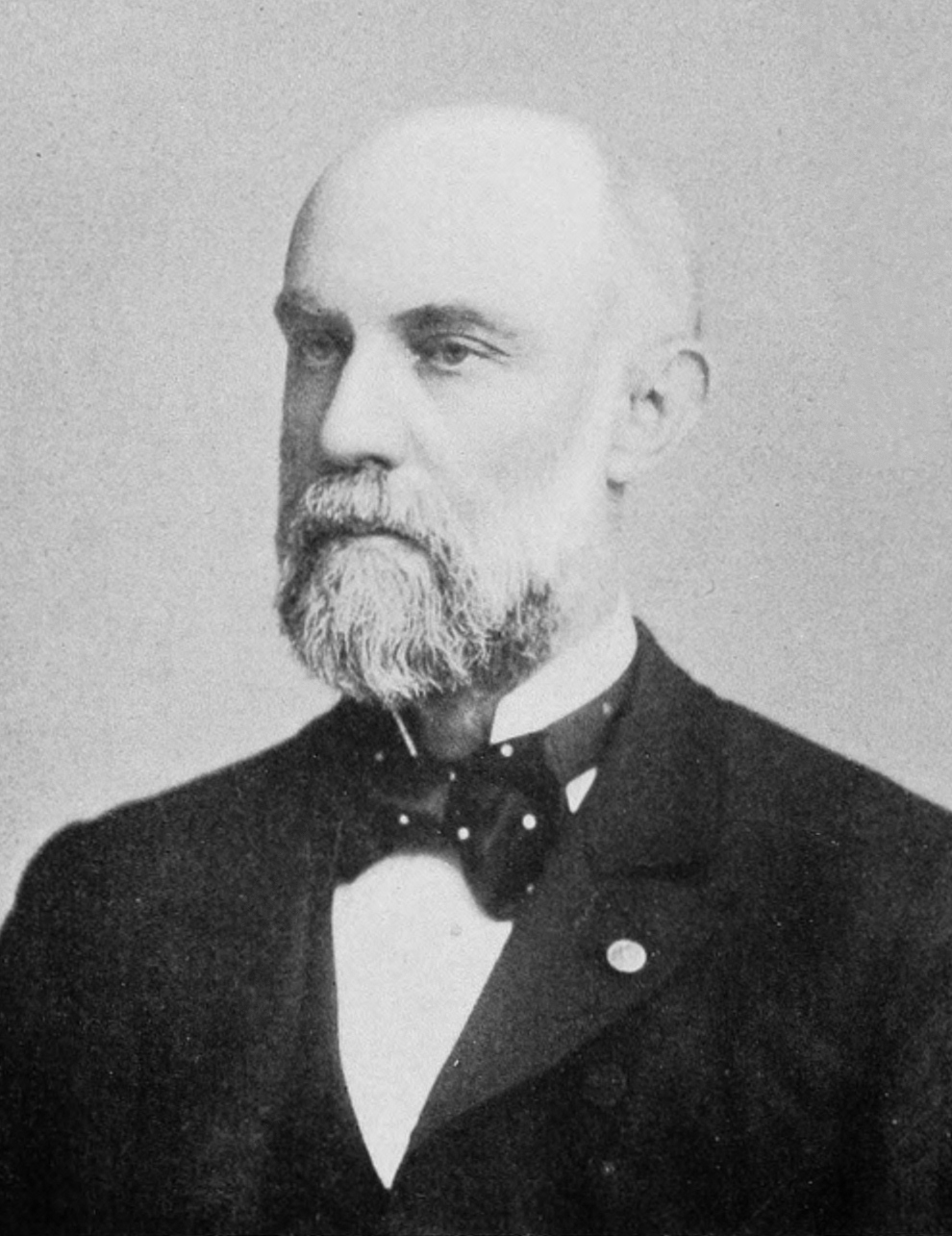
Walter Evans
Former U.S. Representative · Kentucky District 5 · 1895–1899 · Republican
Walter Evans represented Kentucky's District 5 in the United States House of Representatives (1895–1899) for the Republican party. The page below collects sourced biographical facts, term history, committee roles, and provenance for Evans.
Bioguide ID: E000260
Key facts
- Full name
- Walter Evans
- State
- Kentucky
- District
- District 5
- Party
- Republican
- House service
- 1895–1899
- First House term
- 1895
- Status
- Left office
- Current term ends
- —
- Born
- 1842
- Bioguide ID
- E000260
- Committee assignments
- —
- Dataset version
- 1.20260606
Biographical narrative
956 words · sourced from the Wikipedia REST extract
Walter Evans was a prominent figure in American politics during the late 19th and early 20th centuries. Born on September 18, 1842, in Glasgow, Kentucky, he served as a U.S. Representative for Kentucky's 5th congressional district and later as a United States district judge. His political career was marked by significant roles within both the legislative and judicial branches of the government. Evans's contributions to public service spanned several decades, reflecting a commitment to his state and country.
Early life and career
Walter Evans was born into a period of significant change in the United States, particularly in the context of the Civil War and its aftermath. He grew up in Glasgow, Kentucky, and received his early education in the public schools near Harrodsburg. His formative years were shaped by the socio-political environment of the time, which likely influenced his later career in law and politics. In 1859, at the age of 17, he began his public service career as a deputy county clerk in Hopkinsville, Kentucky. This early experience in local government provided him with valuable insights into the workings of public administration.
With the outbreak of the Civil War, Evans enlisted in the Union Army, serving from 1861 to 1863. His military service not only demonstrated his commitment to the Union cause but also exposed him to the complexities of leadership and governance during a tumultuous period in American history. After his military service, he returned to Kentucky, where he continued his education in law. He read law and was admitted to the bar in 1864, marking the beginning of his legal career.
Evans entered private practice in Hopkinsville, where he worked until 1871. His legal career was complemented by his political involvement; he served as a delegate to several Republican National Conventions, including those in 1868, 1872, 1880, and 1884. His participation in these conventions highlighted his growing influence within the Republican Party. Additionally, he held various political offices, including a term in the Kentucky House of Representatives from 1871 to 1873 and a subsequent term in the Kentucky Senate from 1873 to 1875. These roles provided him with a deeper understanding of state governance and legislative processes.
After his time in the state legislature, Evans resumed private practice in Louisville, Kentucky, from 1875 to 1883. His legal expertise and political connections led to his appointment as Commissioner of the Bureau of Internal Revenue by President Chester Arthur, serving from May 21, 1883, to April 20, 1885. This position placed him at the forefront of federal tax policy during a critical period of economic development in the United States. Following his tenure in this role, he returned to private practice in Louisville until he transitioned to Congress.
House tenure
Walter Evans's congressional career began when he was elected as a Republican to represent Kentucky's 5th congressional district in the United States House of Representatives. He served in the 54th and 55th Congresses, with his term commencing on March 4, 1895, and concluding on March 3, 1899. During his time in the House, Evans participated in various legislative discussions and contributed to the development of policies that affected his constituents and the nation.
His election to Congress marked a significant achievement in his political career, reflecting his growing prominence within the Republican Party and his ability to connect with voters in his district. However, his tenure was not without challenges. In 1898, he sought reelection for the 56th Congress but was unsuccessful in his bid. This defeat marked the end of his time in the House, but it did not conclude his public service career.
Legislative focus and committees
During his time in Congress, Walter Evans was involved in a range of legislative activities, although specific details about his committee assignments and the bills he supported are not extensively documented. His background in law and experience in public administration likely informed his legislative priorities, which may have included issues related to taxation, governance, and civil rights, reflecting the broader concerns of the Republican Party during that era.
Following his congressional service, Evans transitioned to a significant role in the federal judiciary. On March 3, 1899, he was nominated by President William McKinley to a seat on the United States District Court for the District of Kentucky, which had been vacated by Judge John W. Barr. His confirmation by the United States Senate occurred on the same day, marking a swift transition from legislative to judicial responsibilities. This appointment underscored his legal acumen and the trust placed in him by the executive branch.
Evans's judicial career continued to evolve when, on July 1, 1901, he was reassigned to the United States District Court for the Western District of Kentucky, a position created by legislative action. He served in this capacity until his death on December 30, 1923, in Louisville, Kentucky. His long tenure on the bench reflected his commitment to upholding the law and administering justice in Kentucky.
Throughout his life, Walter Evans maintained connections to his family and the broader political landscape. He was the nephew of Burwell C. Ritter, who also served as a U.S. Representative, indicating a familial legacy of public service. Evans's contributions to both the legislative and judicial branches of government illustrate a career dedicated to the principles of governance and the rule of law.
In summary, Walter Evans's life and career were characterized by a commitment to public service, legal expertise, and political engagement. His journey from local government to the halls of Congress and ultimately to the federal judiciary highlights the diverse roles he played in shaping the political landscape of Kentucky and the United States during a pivotal time in history. His legacy continues to be recognized in the context of American political history.
Notable legislation
Sponsored and co-sponsored legislation for Walter Evans is pending operator curation. The biographical narrative above carries the same provenance trail until per-bill rows are written.
Sources
- [1]https://en.wikipedia.org/wiki/Walter_Evans_(American_politician)Wikipedia · retrieved 2026-06-06
Notable quotes
Sourced quotes for Walter Evans are pending operator curation. Narrative-scope provenance remains attached below.
Sources
- [1]https://en.wikipedia.org/wiki/Walter_Evans_(American_politician)Wikipedia · retrieved 2026-06-06
Key positions
Curated policy positions for Walter Evans are pending operator review. The biographical narrative above carries the same provenance trail until per-topic positions are written.
Sources
- [1]https://en.wikipedia.org/wiki/Walter_Evans_(American_politician)Wikipedia · retrieved 2026-06-06
Terms served
- 1895–1897U.S. House · Term 1 · Republican
- 1897–1899U.S. House · Term 2 · Republican
Sources & provenance
Every attributable claim above carries a per-section [N] marker that resolves to the corresponding URL below. Each entry records the upstream provider, the canonical URL, and the timestamp at which the source was retrieved by the ingest pipeline.
Key facts
- https://bioguide.congress.gov/search/bio/E000260bioguide · retrieved 2026-06-06
- https://www.govtrack.us/congress/members/403941govtrack · retrieved 2026-06-06
Biographical narrative
- https://en.wikipedia.org/wiki/Walter_Evans_(American_politician)wikipedia · retrieved 2026-06-06
Find your representative
Every U.S. state elects representatives by district. Browse Kentucky’s delegation, the full former-representative roster, or explore the role and term length.
Related on The Candidate
- Preceded by Asher CaruthEarlier holder of the Kentucky District 5 House seat · Democratic.Open
- Succeeded by Oscar TurnerLater holder of the Kentucky District 5 House seat · Democratic.Open
- Andrew BooneFormer U.S. Representative · Kentucky District 1 · DemocraticOpen
- Carroll Hubbard Jr.Former U.S. Representative · Kentucky District 1 · DemocraticOpen
- Charles WheelerFormer U.S. Representative · Kentucky District 1 · DemocraticOpen
- Chittenden LyonFormer U.S. Representative · Kentucky District 1 · JacksonOpen