
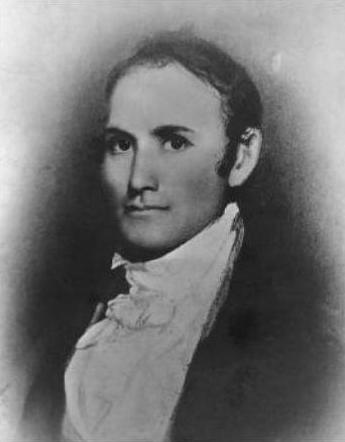
Historical · U.S. House · Kentucky · District 6
Solomon Sharp
Former U.S. Representative · Kentucky District 6 · 1813–1817 · Republican
Solomon Sharp represented Kentucky's District 6 in the United States House of Representatives (1813–1817) for the Republican party. The page below collects sourced biographical facts, term history, committee roles, and provenance for Sharp.
Bioguide ID: S000295
Key facts
- Full name
- Solomon Sharp
- State
- Kentucky
- District
- District 6
- Party
- Republican
- House service
- 1813–1817
- First House term
- 1813
- Status
- Left office
- Current term ends
- —
- Born
- —
- Bioguide ID
- S000295
- Committee assignments
- —
- Dataset version
- 1.20260606
Biographical narrative
1,028 words · sourced from the Wikipedia REST extract
Solomon Sharp was an American lawyer and politician who served as a U.S. Representative for Kentucky's 6th congressional district from 1813 until 1817. A member of the Republican Party, Sharp's political career included significant roles in both the Kentucky General Assembly and the U.S. Congress. He is also known for his tragic death in 1825, which became a notable event in Kentucky history, referred to as the Beauchamp–Sharp Tragedy.
Early life and career
Solomon Porcius Sharp was born on August 22, 1787, in Abingdon, Virginia, to Captain Thomas Sharp and Jean Maxwell. His family had Scottish roots, and through his paternal lineage, he was a great-great-grandson of John Sharp, the Archbishop of York. His father was a veteran of the Revolutionary War and participated in the Battle of King's Mountain. The Sharp family moved several times during Solomon's childhood, briefly residing near Nashville, Tennessee, and in North Carolina before settling in Russellville, Logan County, Kentucky, around 1795. They lived in a log cabin near the Muddy River.
During his formative years, Sharp attended local academies in Logan County, which were characterized by their primitive educational standards. He pursued a legal education by reading law and was admitted to the bar in 1806. Initially, he established his law practice in Russellville but later moved to Bowling Green, the seat of Warren County, which was experiencing growth at the time. In addition to his legal career, Sharp engaged in land speculation, often partnering with his brother, Dr. Leander Sharp. By 1824, he had amassed a substantial landholding of approximately 11,000 acres, primarily located north of the Barren River in Warren County.
Sharp's personal life included his marriage to Eliza T. Scott on December 17, 1818. Eliza was the daughter of a physician who had served as an officer during the War of 1812. The couple had three children together and relocated to Frankfort, Kentucky, in 1820 to further Sharp's political ambitions.
Sharp's political career began in 1809 when he was elected to represent Warren County in the Kentucky House of Representatives. During his time in the legislature, he supported various initiatives, including the election of Henry Clay to the U.S. Senate, the establishment of a state lottery, and the creation of an academy in Barren County. He served on multiple committees and held the position of interim speaker of the house during one session. Sharp was re-elected in 1810 and 1811, where he continued to advocate for legislative reforms, including a bill aimed at preventing dueling among state officers and attorneys.
His political service was temporarily interrupted by the War of 1812. Sharp enlisted in the Kentucky militia on September 18, 1812, and quickly rose to the rank of major, serving on the staff of Lieutenant Colonel Young Ewing. The unit was later placed under the command of General Samuel Hopkins during an expedition against the Shawnee, which ultimately did not engage the enemy. Sharp recognized the importance of military service in Kentucky politics and was later promoted to colonel.
House tenure
Sharp's tenure in the U.S. House of Representatives began when he was elected to the Thirteenth Congress in 1812, taking his seat at the age of 25, the minimum age required for election. He aligned himself with the War Hawks, supporting President James Madison's decision to engage in the War of 1812. Sharp was vocal in his opposition to Federalist obstructionism regarding the war effort and advocated for measures to attract British deserters to the American side by offering land incentives.
During his time in Congress, Sharp was involved in significant legislative discussions, including opposing indemnity for those defrauded in the Yazoo land scandal in Mississippi. He formed alliances with other prominent politicians, including South Carolina's John C. Calhoun, in support of the establishment of the Second Bank of the United States.
Sharp was re-elected to the Fourteenth Congress, where he served as chairman of the Committee on Private Land Claims. His support for the Compensation Act of 1816, which changed the payment structure for Congress members from a daily allowance to a flat salary, proved controversial among his constituents. Although he later voted to repeal the law, the backlash from his initial support contributed to his defeat in the subsequent election.
After leaving Congress in 1817, Sharp returned to the Kentucky House of Representatives, where he continued to engage in state politics. In 1821, he was appointed Attorney General of Kentucky by Governor John Adair, a position he retained under Adair's successor, Joseph Desha. Sharp's political career saw a resurgence, but he ultimately resigned from his role as attorney general in 1825 to return to the Kentucky House.
Legislative focus and committees
Throughout his congressional career, Sharp's legislative focus reflected the political climate of his time, particularly with regard to issues surrounding the War of 1812 and economic policies. His alignment with the War Hawks demonstrated his commitment to national defense and military engagement. Sharp's support for land incentives for British deserters illustrated his strategic approach to bolstering the U.S. military ranks during a time of conflict.
As chairman of the Committee on Private Land Claims, Sharp played a significant role in addressing land-related legislation, which was a critical issue in the expanding United States. His involvement in the Compensation Act of 1816 highlighted the complexities of congressional compensation and the political ramifications of such decisions. Despite the unpopularity of the act, Sharp's willingness to later support its repeal indicated his responsiveness to the concerns of his constituents.
In addition to his legislative duties, Sharp's political alliances with figures such as John C. Calhoun showcased his engagement with broader national issues, including banking and economic policy. His efforts to promote legislative reforms in the Kentucky House prior to his congressional service laid the groundwork for his later political endeavors.
Sharp's life and career were ultimately marked by both political achievements and personal tragedy. His murder in 1825 by Jereboam O. Beauchamp, motivated by personal and political grievances, underscored the volatile nature of the political landscape in early 19th-century America. The circumstances surrounding his death have since been memorialized in various literary works, reflecting the lasting impact of his life and career on Kentucky history.
Notable legislation
Sponsored and co-sponsored legislation for Solomon Sharp is pending operator curation. The biographical narrative above carries the same provenance trail until per-bill rows are written.
Sources
- [1]https://en.wikipedia.org/wiki/Solomon_P._SharpWikipedia · retrieved 2026-06-06
Notable quotes
Sourced quotes for Solomon Sharp are pending operator curation. Narrative-scope provenance remains attached below.
Sources
- [1]https://en.wikipedia.org/wiki/Solomon_P._SharpWikipedia · retrieved 2026-06-06
Key positions
Curated policy positions for Solomon Sharp are pending operator review. The biographical narrative above carries the same provenance trail until per-topic positions are written.
Sources
- [1]https://en.wikipedia.org/wiki/Solomon_P._SharpWikipedia · retrieved 2026-06-06
Terms served
- 1813–1815U.S. House · Term 1 · Republican
- 1815–1817U.S. House · Term 2 · Republican
Sources & provenance
Every attributable claim above carries a per-section [N] marker that resolves to the corresponding URL below. Each entry records the upstream provider, the canonical URL, and the timestamp at which the source was retrieved by the ingest pipeline.
Key facts
- https://bioguide.congress.gov/search/bio/S000295bioguide · retrieved 2026-06-06
- https://www.govtrack.us/congress/members/409794govtrack · retrieved 2026-06-06
Biographical narrative
- https://en.wikipedia.org/wiki/Solomon_P._Sharpwikipedia · retrieved 2026-06-06
Find your representative
Every U.S. state elects representatives by district. Browse Kentucky’s delegation, the full former-representative roster, or explore the role and term length.
Related on The Candidate
- Preceded by George BedingerEarlier holder of the Kentucky District 6 House seat · Republican.Open
- Succeeded by David WalkerLater holder of the Kentucky District 6 House seat · Republican.Open
- Andrew BooneFormer U.S. Representative · Kentucky District 1 · DemocraticOpen
- Carroll Hubbard Jr.Former U.S. Representative · Kentucky District 1 · DemocraticOpen
- Charles WheelerFormer U.S. Representative · Kentucky District 1 · DemocraticOpen
- Chittenden LyonFormer U.S. Representative · Kentucky District 1 · JacksonOpen