
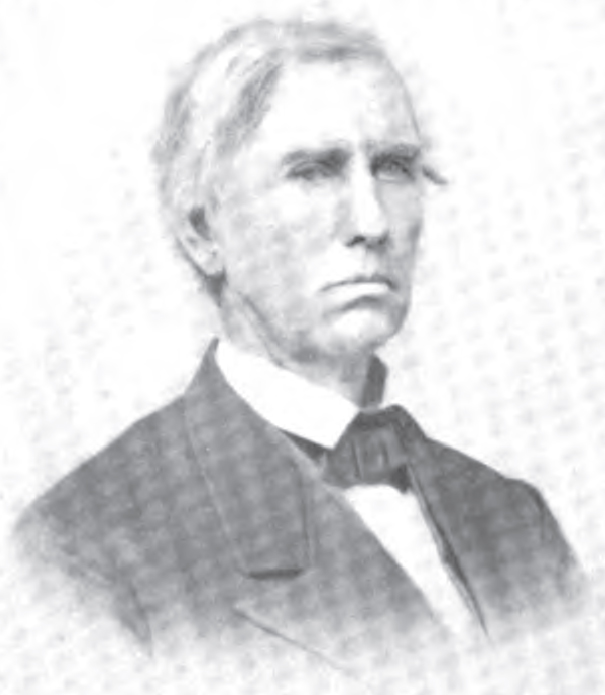
Historical · U.S. House · Kentucky · District 7
Brutus Clay
Former U.S. Representative · Kentucky District 7 · 1863–1865 · Unionist
Brutus Clay represented Kentucky's District 7 in the United States House of Representatives (1863–1865) for the Unionist party. The page below collects sourced biographical facts, term history, committee roles, and provenance for Clay.
Bioguide ID: C000479
Key facts
- Full name
- Brutus Clay
- State
- Kentucky
- District
- District 7
- Party
- Unionist
- House service
- 1863–1865
- First House term
- 1863
- Status
- Left office
- Current term ends
- —
- Born
- 1808
- Bioguide ID
- C000479
- Committee assignments
- —
- Dataset version
- 1.20260606
Biographical narrative
906 words · sourced from the Wikipedia REST extract
Brutus Clay was a U.S. Representative from Kentucky, serving the 7th congressional district during the American Civil War. A member of the Unionist Party, Clay's political career was marked by his commitment to agricultural interests and his involvement in local governance. His tenure in the House of Representatives lasted from 1863 to 1865, after which he returned to his agricultural pursuits in Kentucky.
Early life and career
Brutus Clay was born on July 1, 1808, in Richmond, Kentucky, to Green Clay and Sally Lewis. He was one of seven children, of whom six survived to adulthood. His family was prominent in Kentucky, with his father being a wealthy landowner and influential politician. Brutus had a notable family background; his brother, Cassius Marcellus Clay, also pursued a political career, and their sister Elizabeth married John Speed Smith, who became a politician as well.
Clay received his education at common schools and graduated from Centre College in Danville, Kentucky. After completing his education, he engaged in agricultural activities and stock raising, which became a significant part of his life. In 1827, he settled in Bourbon County, where he established himself as one of the most successful stock raisers in the region. His family's wealth and land holdings contributed to his prominence in the agricultural community of central Kentucky, particularly within the Inner Bluegrass region.
In his personal life, Brutus Clay married Amelia Field on February 10, 1831. Amelia was the daughter of Ezekiel H. and Patsy Field and hailed from Madison County. The couple had four children: Martha, Christopher Field, Green, and Ezekiel Field Clay. The latter would later serve as a colonel in the Confederate Army during the Civil War. Following Amelia's death in 1843, Clay remarried on November 8, 1844, to Ann Field, who was Amelia's sister. Together, they had one son, Cassius M. Clay, who continued to live at the family homestead in Bourbon County after his parents' deaths.
Brutus Clay's early political career began with his election to the Kentucky House of Representatives in 1840. He was also active in agricultural organizations, serving as president of the Bourbon County Agricultural Association for thirty years and later as president of the Kentucky Agricultural Association from 1853 to 1861. His involvement in these organizations underscored his dedication to agricultural development and the interests of farmers in Kentucky.
House tenure
Brutus Clay's congressional career began when he was elected to the Thirty-eighth Congress, serving from March 4, 1863, to March 3, 1865. His election came during a tumultuous period in American history, as the nation was embroiled in the Civil War. Clay aligned himself with the Unionist Party, reflecting the political sentiments of many in Kentucky who supported the Union cause. His tenure in the House of Representatives was characterized by his focus on agricultural issues, which were crucial to the economy of his district and the state.
During his time in Congress, Clay served as the chairman of the Committee on Agriculture, where he played a role in shaping policies related to farming and rural development. His leadership in this committee highlighted his commitment to the agricultural sector, which was vital for both the local economy and the broader national context during the war. Clay's efforts in Congress were aimed at supporting the interests of farmers and ensuring that their needs were addressed in legislative discussions.
Despite his contributions, Clay did not seek re-election after his term ended in 1865. Following his departure from Congress, he returned to Kentucky, where he resumed his agricultural pursuits. His decision to step away from politics marked a return to his roots in farming and stock raising, areas in which he had already established a successful career prior to his congressional service.
Legislative focus and committees
Throughout his time in the House of Representatives, Brutus Clay's legislative focus was primarily on agricultural issues, reflecting his background and expertise in farming and stock raising. As chairman of the Committee on Agriculture, he was involved in discussions and decisions that impacted the agricultural community, which was a significant part of Kentucky's economy. His leadership in this committee allowed him to advocate for policies that supported farmers and addressed the challenges they faced during the Civil War.
Clay's tenure coincided with a period of significant change and upheaval in the United States, particularly for those involved in agriculture. The Civil War had profound effects on farming practices, land ownership, and the economy as a whole. Clay's role in Congress during this time was critical, as he sought to represent the interests of his constituents and ensure that agricultural concerns were prioritized in legislative discussions.
While specific legislative achievements during his term are not detailed, it is clear that Clay's commitment to agriculture was a defining aspect of his congressional career. His background as a successful stock raiser and his leadership in agricultural organizations provided him with a unique perspective on the issues facing farmers, enabling him to contribute meaningfully to the legislative process.
After concluding his service in the House, Clay returned to his agricultural roots, where he continued to influence the farming community in Kentucky. His legacy as a U.S. Representative is intertwined with his lifelong dedication to agriculture and the well-being of farmers in his district. Brutus Clay passed away on October 11, 1878, near Paris, Kentucky, and was interred in his family burial ground, leaving behind a legacy of public service and commitment to the agricultural sector.
Notable legislation
Sponsored and co-sponsored legislation for Brutus Clay is pending operator curation. The biographical narrative above carries the same provenance trail until per-bill rows are written.
Sources
- [1]https://en.wikipedia.org/wiki/Brutus_J._ClayWikipedia · retrieved 2026-06-06
Notable quotes
Sourced quotes for Brutus Clay are pending operator curation. Narrative-scope provenance remains attached below.
Sources
- [1]https://en.wikipedia.org/wiki/Brutus_J._ClayWikipedia · retrieved 2026-06-06
Key positions
Curated policy positions for Brutus Clay are pending operator review. The biographical narrative above carries the same provenance trail until per-topic positions are written.
Sources
- [1]https://en.wikipedia.org/wiki/Brutus_J._ClayWikipedia · retrieved 2026-06-06
Terms served
- 1863–1865U.S. House · Term 1 · Unionist
Sources & provenance
Every attributable claim above carries a per-section [N] marker that resolves to the corresponding URL below. Each entry records the upstream provider, the canonical URL, and the timestamp at which the source was retrieved by the ingest pipeline.
Key facts
- https://bioguide.congress.gov/search/bio/C000479bioguide · retrieved 2026-06-06
- https://www.govtrack.us/congress/members/402617govtrack · retrieved 2026-06-06
Biographical narrative
- https://en.wikipedia.org/wiki/Brutus_J._Claywikipedia · retrieved 2026-06-06
Find your representative
Every U.S. state elects representatives by district. Browse Kentucky’s delegation, the full former-representative roster, or explore the role and term length.
Related on The Candidate
- Preceded by Humphrey MarshallEarlier holder of the Kentucky District 7 House seat · American.Open
- Succeeded by George ShanklinLater holder of the Kentucky District 7 House seat · Democratic.Open
- Andrew BooneFormer U.S. Representative · Kentucky District 1 · DemocraticOpen
- Carroll Hubbard Jr.Former U.S. Representative · Kentucky District 1 · DemocraticOpen
- Charles WheelerFormer U.S. Representative · Kentucky District 1 · DemocraticOpen
- Chittenden LyonFormer U.S. Representative · Kentucky District 1 · JacksonOpen